Breast cancer is still surrounded by silence. It does not need explanations, causes, or moral narratives – only to be spoken about without shame, speculation, or judgment.
This is one story among many. Not a lesson, not a reflection, not a recommendation; only the path I took.
On April 11, 2014, I was diagnosed with breast cancer, and for a moment everything stopped. I was completely unprepared. How could this possibly happen to me?
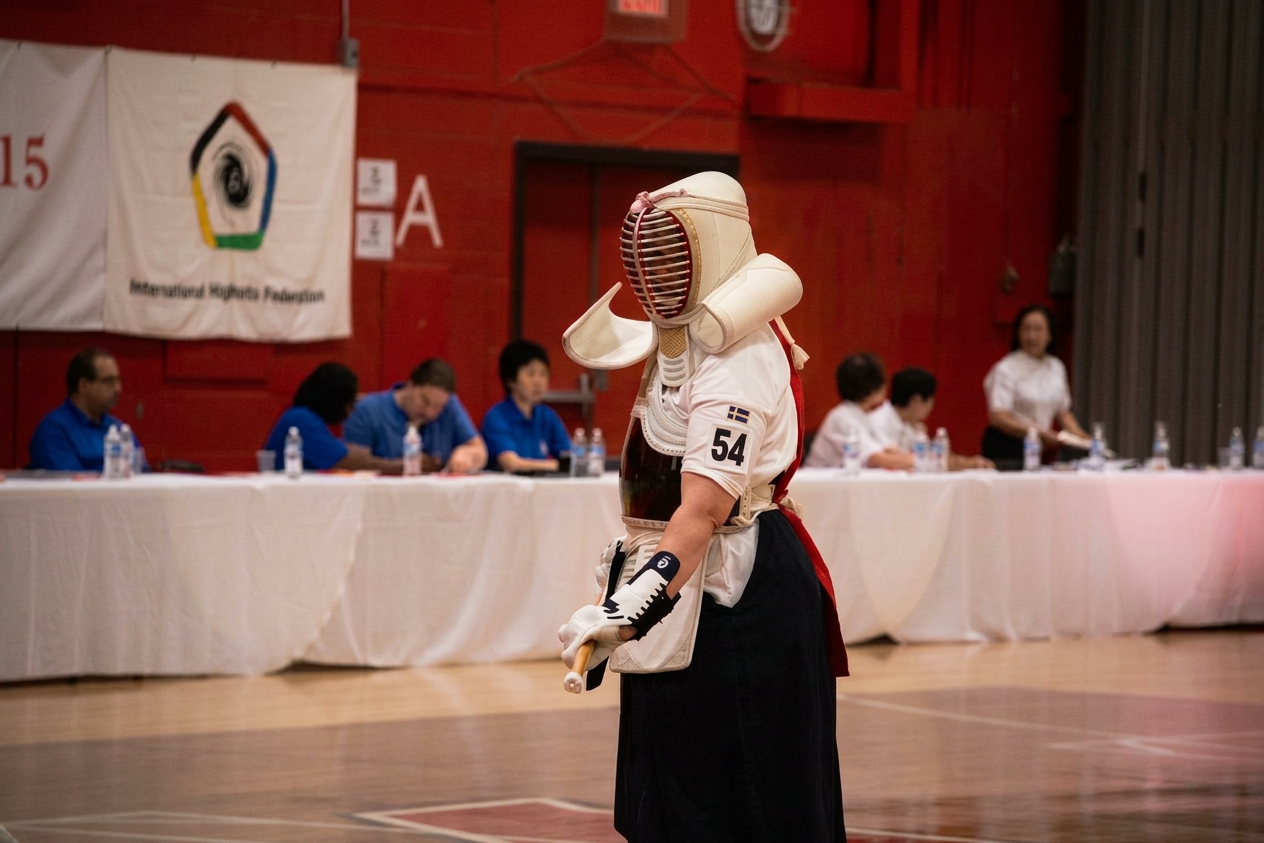
My first instinct was to think that I did not belong to any risk group – quite the opposite. I was barely 40, had given birth to and breastfed children, never smoked, and was in the best shape of my life. I had done everything “right”. I was also in the middle of intense preparations for the 2015 World Naginata Championships.
After the first shock, I had only one thought: This is my life, and I’m going to live it the way I want to.
I shared what I called The Cancer Carousel on social media, mostly so people would stop looking at me with questions in their eyes, and so I could talk about something else. My first post, written on April 12, read:
“I got some slightly unsettling news yesterday – I have breast cancer and will need surgery. Don’t pity me. I don’t want to talk about it, but it’s perfectly okay to ask how I’m doing. I am still me.”
People called it brave, but at the time I didn’t really understand why. Now I do. Cancer is surrounded by silence. It remains taboo. When it is spoken about, it often turns into judgment instead. A taxi driver even told me I had probably caused it myself through unhealthy habits. He knew nothing about me, yet still felt free to judge me. This is what silence does: it leaves space for explanations that turn illness into shame and morality.
The tumour was aggressive and fast-growing, but surgery showed that the lymph nodes were clear. I could choose whether to undergo chemotherapy or not. It was not framed as survival versus death, but as a small statistical difference in recurrence risk. Numbers that do not feel small when they apply to your own life.
The treatment eventually involved surgery, chemotherapy, radiation therapy, and hormone treatment.
Chemotherapy did not only attack cancer cells; it attacked everything: sleep, taste, muscles, joints, the nervous system. Pain took over my body, and training for the championships was gone. Everything I had worked for – gone.
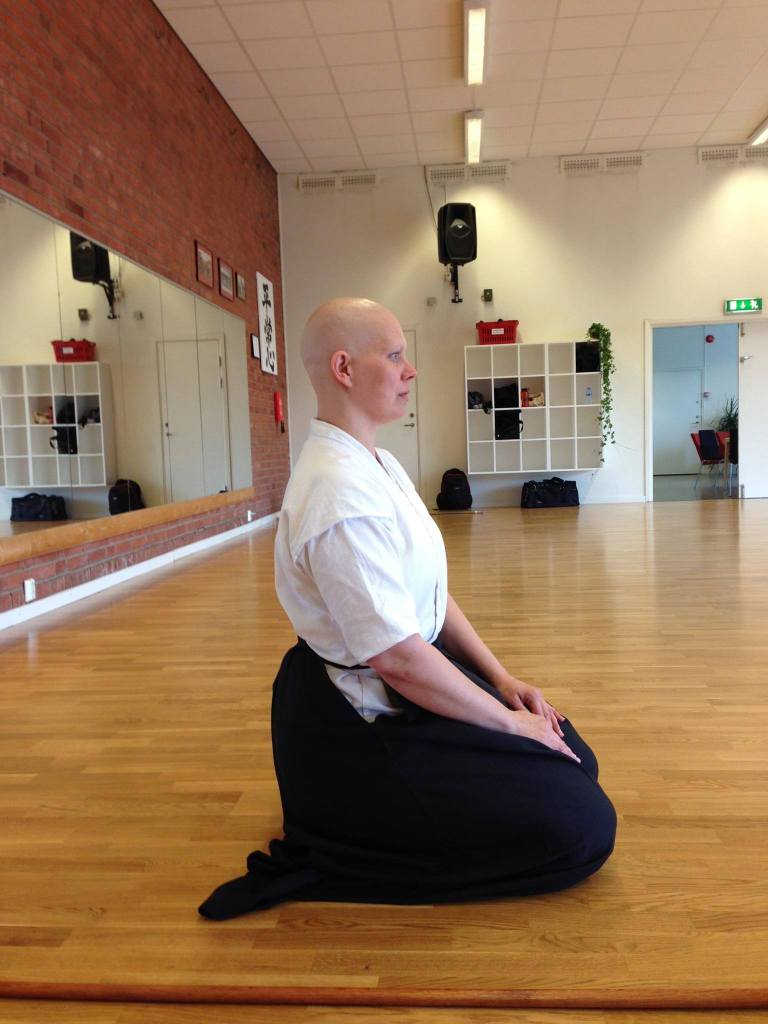
Soon after, I lost my hair as well. In the moment, it did not feel dramatic, but there was a clear before and after. I felt that my baldness screamed cancer patient from miles away. People said I looked good, but every time I looked in the mirror, all I could see was cancer.
I was frustrated with my body but kept doing things anyway. I rode my motorcycle. I went to concerts with a weakened immune system. I went to Medieval Week in Visby, even when walking uphill felt like punishment. I went to training sessions and sat on a chair, instructing others when I could not participate.
Nothing about it was balanced or careful, but I refused to stop living my life.
“The past week I’ve slept 10–12 hours a day, felt nauseous, and cursed my muscles, which are as sluggish as the engine in my first car. I press the gas pedal and nothing happens.”
Chemotherapy also pushed me into menopause. Energy, recovery, mood, stability – none of it followed any predictable pattern. The body stopped responding consistently. That was the only reliable fact.
When treatment ended, I went straight back to training. Not because I felt recovered, but because that was my way forward. I had lost more than half a year of preparation for the championships, along with muscle, endurance, coordination. Even automatic movements were gone, as if my body had forgotten itself.
Still, just over six months after my radiation treatment, I entered the World Naginata Championships.
My body responded, but not the way it should have. During a quick turn in my final match, coordination between my upper and lower body failed. I injured my back, nothing serious, but I spent the rest of the competition lying on a treatment table.
Should I have been more careful?
No. When entering a competition, you don’t negotiate with your limitations. You move the body you have – not despite it, but with it.
After all:
“I am still me.”
Sisu is a Finnish word often described as a quiet inner strength. But to me, it has never felt quiet. It is what happens when stopping is not an option. Not courage. Just continuation.
About Kirsi Nording Cronsten
Kirsi Nording Cronsten began practicing Naginata in 1999 at age 27 and has since become one of the art’s leading figures. A 5‑dan practitioner, she serves as head teacher of KFUM Uppsala Naginata and head coach of the Swedish national team, combining technical skill with a deeply human teaching philosophy. She has also placed 4th at the 2007 World Naginata Championships (shiai) and 4th at the 2011 WNC (engi).
Her leadership spans national and international levels: vice president of the Swedish Budo and Martial Arts Federation, president of the European Naginata Federation, and director of the European Zone within the International Naginata Federation. These roles reflect her long-standing commitment to developing Naginata across Europe and beyond.
Kirsi’s academic background—a PhD in Finno‑Ugric languages, a bachelor’s degree in psychology, and training as a chemical engineer—shapes her inclusive, thoughtful approach to teaching. She works to build a Naginata community that welcomes people who might never have entered a sports environment without this art, emphasising diversity, accessibility, and authenticity.
Alongside her professional responsibilities, she is a mother and a wife, balancing family life with international leadership while modeling the message she teaches: strength and humanity belong together.
Disclosure Statement
The articles published on this website present the owner of this blog website’s perspective, based on personal experiences, unless stated otherwise. They do not represent those of people, institutions or organisations that the owner may or may not be affiliated with in a personal or professional capacity unless explicitly stated. All content in these articles are for informational purposes only. People’s perspectives that may appear as information in these articles do not reflect the perspective of the owner or other people’s perspectives. Any views or opinions are not intended to malign any religion, ethnic group, club, organisation, company or individual. The owner of this blog makes no representations as to the accuracy or completeness on this site or found by following a link on this site. The owner will not be liable for any errors or omissions in this information nor for the availability of this information. The owner will not be liable for any loses, injuries or damages from the display or use of this website.

