Foreword by Kate Sylvester
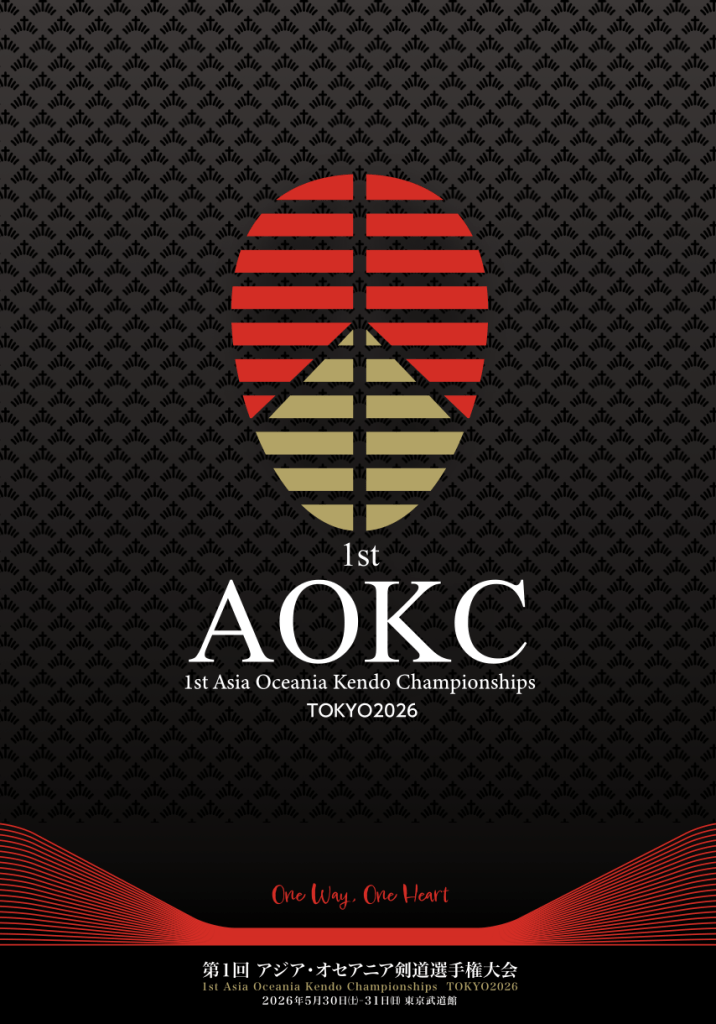
The first Asia Oceania Kendo Championship (AOC) took place at the Tokyo Budokan in Japan May 30-31st 2026 and was organised by the newly formed Asia Oceania Kendo Federation and hosted by the All Japan Kendo Federation and Tokyo Metropolitan Government.
It was an excellent opportunity for countries included in the zone to compete alongside the worlds best teams. There has been a need for focused attention on the development for eligible countries. Especially considering that the level of competitive kendo in Europe has developed significantly in recent years. The format of the competition was seemingly organised to purposefully develop kendo in the region. For example, the tournament consisted of two individual categories for women and men; 3rd dan and under and dan (no limit). Two competitors from each country entered the individual competitions. According to the tournament pamphlet, 32 women were registered to compete in the 3rd dan and under, and 38 women in the dan (no limit) category. Competitors from Japan and Korea did not enter in the 3rd dan and under competition which, provided competitors from other countries to win a division within the tournament.
Seventeen women’s team competed in the direct knockout competition, which was unlike the pool format at the WKC and European Kendo Championships (EKC). Matches in all divisions were 5-minutes in duration and following on from the changes at the previous WKC, women and men were given equal opportunity in regards to time allocation.
As a researcher of women in kendo, I take note of the overall development. It was inspiring to see two women Youn jung PARK and Yun yeong LEE listed as coaches on the Korean team. The women’s team final between Korea and Japan was certainly closer in terms of technical skill. Japan continues to have an advantage in terms of explosiveness, which may have determined that some of Korea’s strikes were not scored. The 2027 WKC women’s events are anticipated to be exciting presenting an opportunity for history to be made.
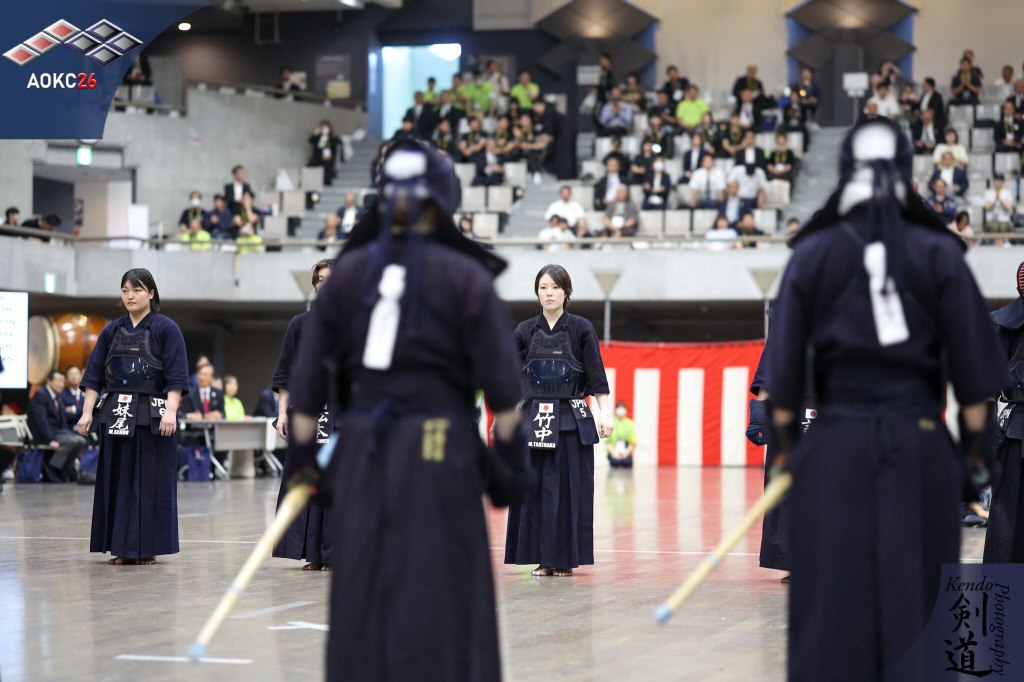
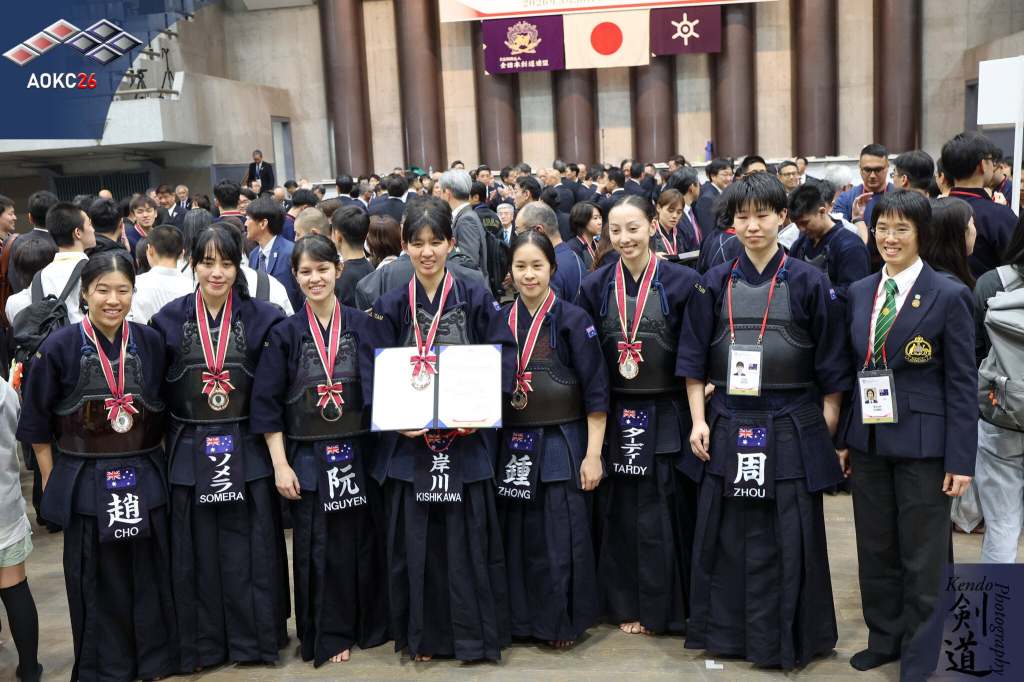
See 2026 AOC results, recordings, and pamphlet here.
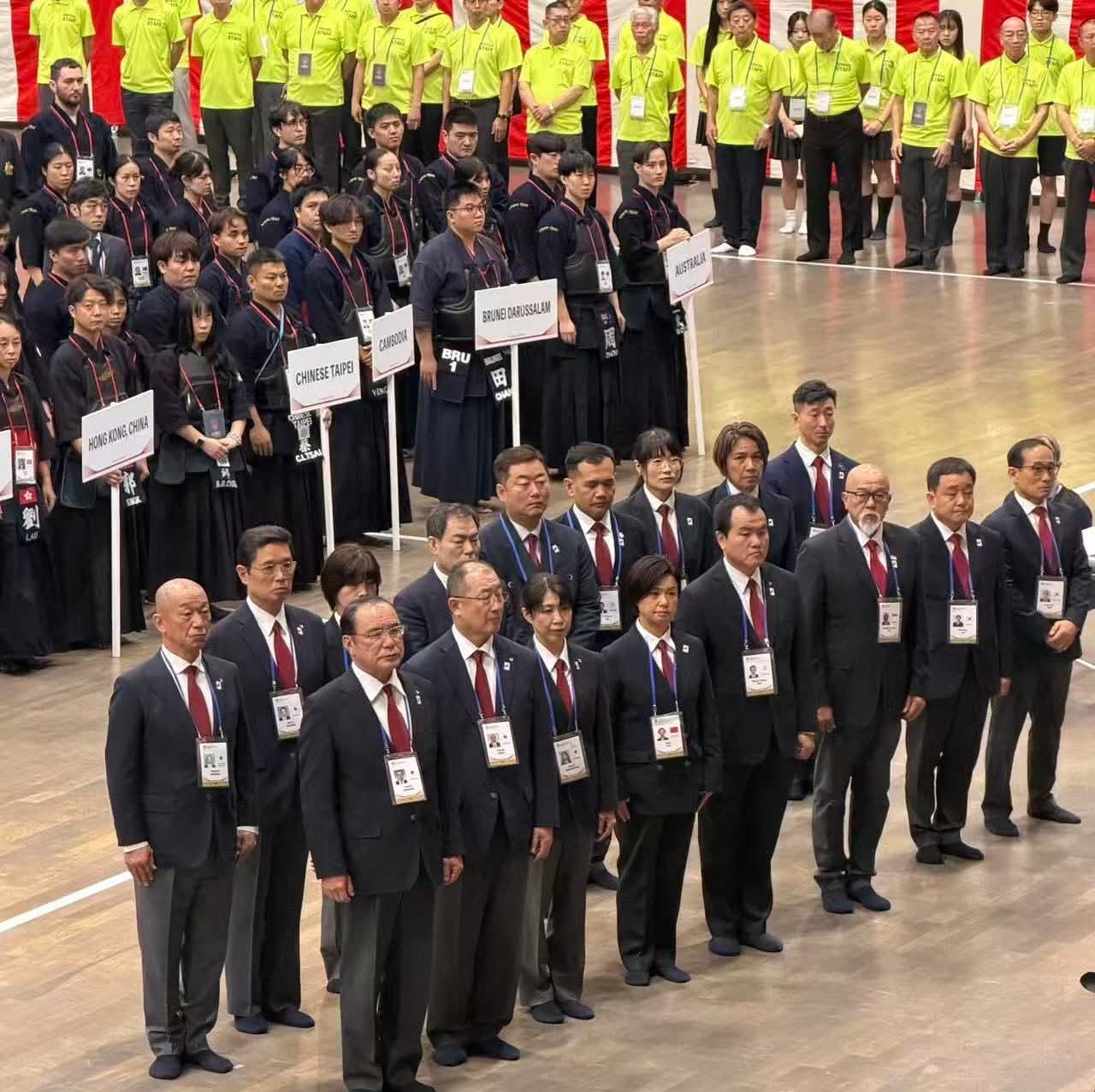
Another notable development were the number of female shimpan selected. Out of the 36 shimpan, 10 of those were women from across the region (in alphabetical order by country. Surname in capital letters):
Australia: Noriko MATSUMOTO, China: Qian LIU, Kwanwai LIU, Elizabeth BERGEN-BARTEL, Hong Kong, China: Kai Fan Eda CHEN, Japan: Mariko ISHIDA, Tokiko ABE, Naoko MORISHIMA, Korea: Ji Hee YOO, Singapore: Suyi Daphne WONG.
The high number of women selected to shimpan demonstrates an active interest in developing women’s kendo through leadership and networking opportunities. The following text shares the experience of Noriko Matsumoto sensei refereeing at the tournament. She describes the great honour of refereering at the tournament and the pressure that accompanied the opportunity.
The Honour and Challenge of Refereeing at the First Asia-Oceania Kendo Championships by Noriko Matsumoto (Australia).
In this essay, I share my experience at the 1st Asia–Oceania Kendo Championship that was held in Japan in May, 2026. Being part of the inaugural Asia–Oceania Kendo Championship was more than an honor — it was a meaningful milestone in my kendo journey. I hope that by sharing my experience, I can help foster the development of women’s refereeing in Asia and raise refereeing standards across the region.
Sixteen years ago, I moved to Australia and returned to practising Kendo after 15 years away from it. Since then, I have been fortunate to learn and grow within the Australian Kendo Community. About three years ago, I began to set my sights on refereeing at the highest international level, and that aspiration led me to seek out every opportunity for learning and exchange.
Last year, the Asia–Oceania Kendo Federation was formed, and this year saw the first Asia–Oceania Kendo Championships — an unprecedented opportunity for referees and practitioners across the region. I attended the AOKC referees’ seminar in Hong Kong last November and the FIK Asia Zone Referees Seminar in Katsuura, Chiba, this February. These seminars were intensive, inspiring, and invaluable; following them, I was humbled and proud to be selected as one of the referees for the championship. Notably, six female referees from Asia and Oceania (excluding Japan and Korea) were selected — the first time we’ve seen such representation — and that alone felt revolutionary.
The path to the tournament involved many small but important steps. Attending the FIK Asia Zone Referee Seminar nearly every year (except during the COVID years) enabled me to exchange ideas with referees and practitioners from diverse countries. These international exchanges broadened my perspective on refereeing technique, interpretation, and the spirit of fair play. Refereeing at national and regional tournaments taught me about responsibility, integrity, and the discipline needed to remain impartial under pressure.
From the pre-tournament referees’ briefing through to the final match on the last day, I felt a constant sense of pressure — not from personal fear, but from the weight of responsibility. Referees are expected to make accurate decisions not only for players, coaches, and spectators at the venue but also for viewers watching on social media platforms such as YouTube. In today’s connected world, the yuko-datotsu decision is instantly visible to viewers around the globe via streams and social media, adding a new layer of scrutiny. Referees must therefore strive for accuracy and clarity in every decision.
Alongside the professional challenge came the emotional burden. We sometimes face immediate criticism or, more hurtfully, abusive remarks online. While such reactions are painful and often unfair, they also underscore the need for ongoing education — for referees to be supported and for audiences to better understand what refereeing entails. Many elements behind a decision cannot be captured on screen: angle, timing, peripheral movement, and subtle situational context are often discernible only to those on the floor. A referee’s call reflects not only visible contact but also an assessment of the whole scene — posture, intent, zanshin, and the precise timing of a strike. For that reason, I sincerely encourage those who question calls to step into the role of referee at least once; experiencing refereeing firsthand fosters empathy and a deeper appreciation of the task’s difficulty.
This tournament reaffirmed for me how vital referees are to the integrity and future of kendo. It also reinforced my belief in the need to increase women’s participation in refereeing roles. Female referees bring diverse perspectives and serve as role models, encouraging younger practitioners to imagine themselves in leadership positions within the Kendo and other sports. Seeing six female referees selected from across Asia and Oceania was not only historic but also inspiring; it suggested a positive shift towards inclusivity within our community.
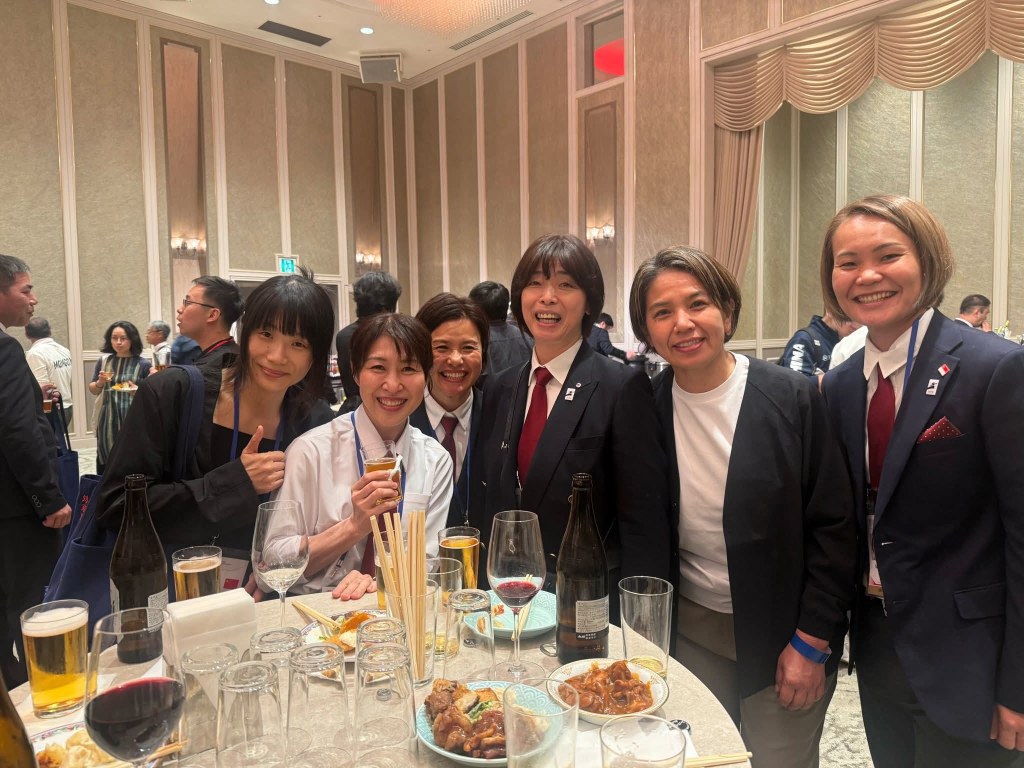
Qian LIU, Naoko MORISHIMA and Kwanwai LIU.
I am deeply grateful to everyone who supported me on this journey — mentors, fellow referees, coaches, and athletes. Their guidance, patience, and feedback have been invaluable. Participating in the Asia–Oceania Kendo Championship was a tremendous honor and a profound learning experience. It strengthened my confidence, broadened my understanding of international refereeing practices, and deepened my commitment to contributing more actively to the global kendo community.
Looking ahead, I will continue to work hard — through refereeing, international exchange, and mentorship — to raise standards and support the development of women referees. Kendo offers unique opportunities for personal and communal growth; by embracing them, we can help ensure a vibrant future for Kendo in Asia and Oceania.
A big thank you to everyone who helped make this experience possible! I’m deeply grateful to the Australian Kendo Renmei for their generous support — it made this opportunity possible. I’m excited to continue this journey and to share what I discover along the way with all of you.
About Noriko Matsumoto
Matsumoto sensei is ranked 7th dan and began training at age five and continued through high school in Japan. She resumed kendo after moving to Melbourne, Australia, in 2010. She trains at Melbourne Budokai (Kenshikan Dojo) in Melbourne and has been actively involved in the Australian kendo community. Having served in various roles, including six years as a Australian Kendo Renmei board member. Matsumoto sensei is passionate about encouraging children and women to participate in kendo, and is committed to pursuing social contribution through Kendo. She visits Japan twice a year to train and deepen her practice, continually learning and sharing what she learns.
Disclosure Statement
The articles published on this website present the owner of this blog website’s perspective, based on personal experiences, unless stated otherwise. They do not represent those of people, institutions or organisations that the owner may or may not be affiliated with in a personal or professional capacity unless explicitly stated. All content in these articles are for informational purposes only. People’s perspectives that may appear as information in these articles do not reflect the perspective of the owner or other people’s perspectives. Any views or opinions are not intended to malign any religion, ethnic group, club, organisation, company or individual. The owner of this blog makes no representations as to the accuracy or completeness on this site or found by following a link on this site. The owner will not be liable for any errors or omissions in this information nor for the availability of this information. The owner will not be liable for any loses, injuries or damages from the display or use of this website.
 Kate Sylvester Perspectives