Women Kendo Luminaries:
There are a number of women in kendo that continue to strive achieving personal goals and supporting the growth of kendo in their countries post their national team careers and amidst work/family commitments. This is the fourth (04) article under the category “Women Kendo Luminaries” that acknowledges the perspectives, achievements, and contributions of women in kendo from around the world.
04 Daniela Kimura (Switzerland)
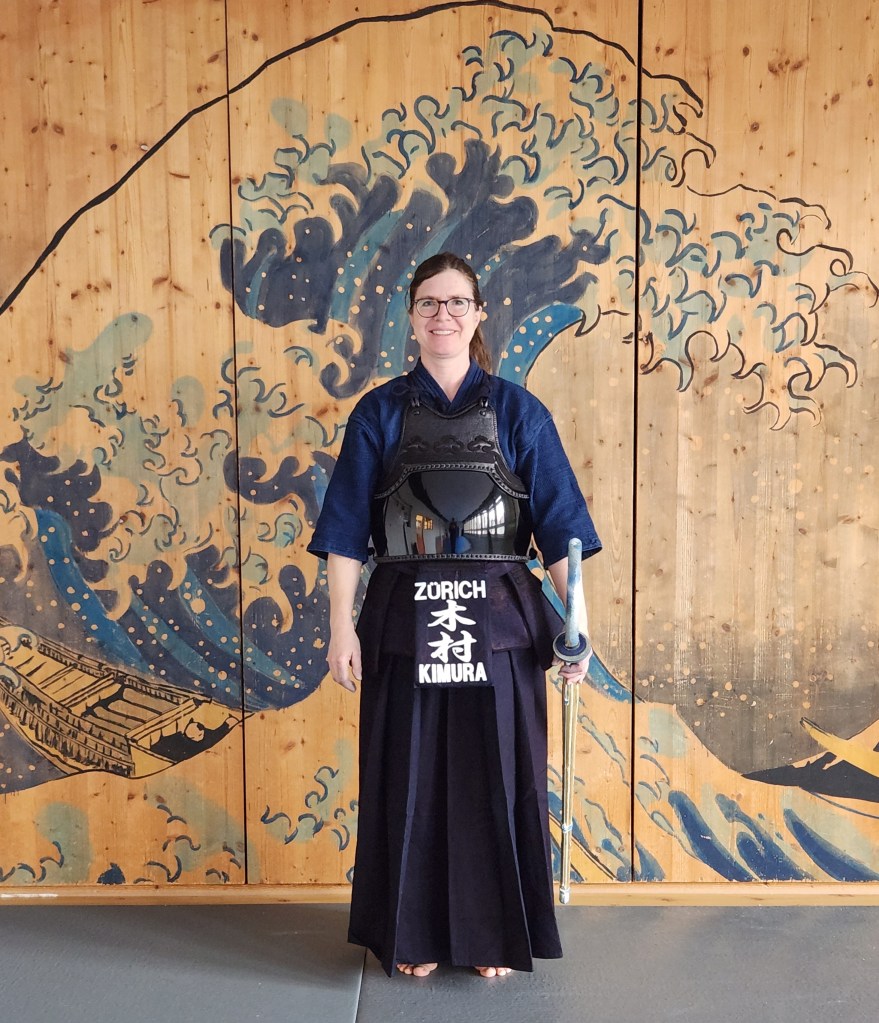
Introduction by Kate Sylvester
This article focuses on the perspectives, experiences and achievements of Daniela Kimura sensei. A trainer at Budokan Zürich, Daniela is 6 dan in kendo and has practiced for almost 40-years. She has an impressive kendo resume, having trained at International Budo University (Budai) for 2-years, and has won the Swiss national championships on numerous occasions. She was a national team member between 1995-2006, during which the team won gold in 1998 and a number of bronze medals at the European Kendo Championships (EKC). In 2021, Daniela was appointed as one of the coaches of the Swiss National Kendo Team (both women and men).
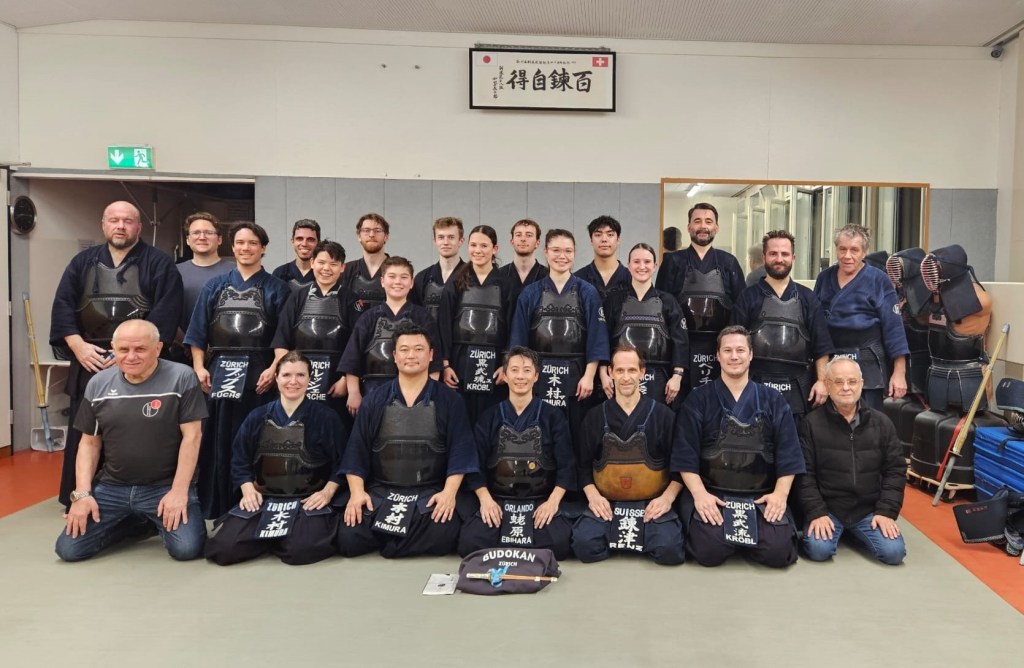
There is an impressive presence of women and female role models in Swiss kendo. There are just under 600 kendo practitioners registered in Switzerland and approximately, 130 of these, or 21% are women and girls. Judith Bösiger was president of the Swiss Kendo Federation for 5-years between 1995-2000. Another important figure in the community is Katja Fleury, who is currently the Vice President and Irene Zühlke is the Director of Mass Sports. Notably, Fleury was one of the first women ever to be selected to referee at the World Kendo Championships (WKC) in 2024.

The Swiss Women’s National Team has enjoyed podium success at the European Kendo Championships (EKC) on a number of occasions and also fielded a national team at most World Kendo Championships since the women’s events started to take on a more “official” presence from 2000. In 1998, the women’s team won gold at the EKC that was held in Switzerland. Notably at the 1979 WKC held in Sapporo, three women, Monika Haas, Gertraud Orasch and Judith Isenmschid (now Bösiger) represented Switzerland alongside men in the “official categories.” Orasch also represented her country alongside men at the 1982 WKC in Brazil.
Although Daniela expresses an affable and unassuming demeanor, she is a prominent figure in the Swiss kendo community, distinguished by her active involvement and esteemed position as a leader. Through my personal experience, when I have spoken with and observed Daniela as a shinpan, coach and during keiko, it is evident that she has a deep understanding of kendo. One that has developed through an array of rich life experiences. In addition to Daniela’s knowledge and skills, her balanced and optimistic outlook on kendo and life, qualities needed for leaders in kendo, present her as inspirational role model for both genders. She advocates that qualified women can lead men in kendo and it is also important that we raise our voices where we see injustice or in situations where we feel uncomfortable or realise that another person feels uncomfortable. Daniela also notes that bumps are inevitable part of our kendo journeys and that “the key is continuity.”
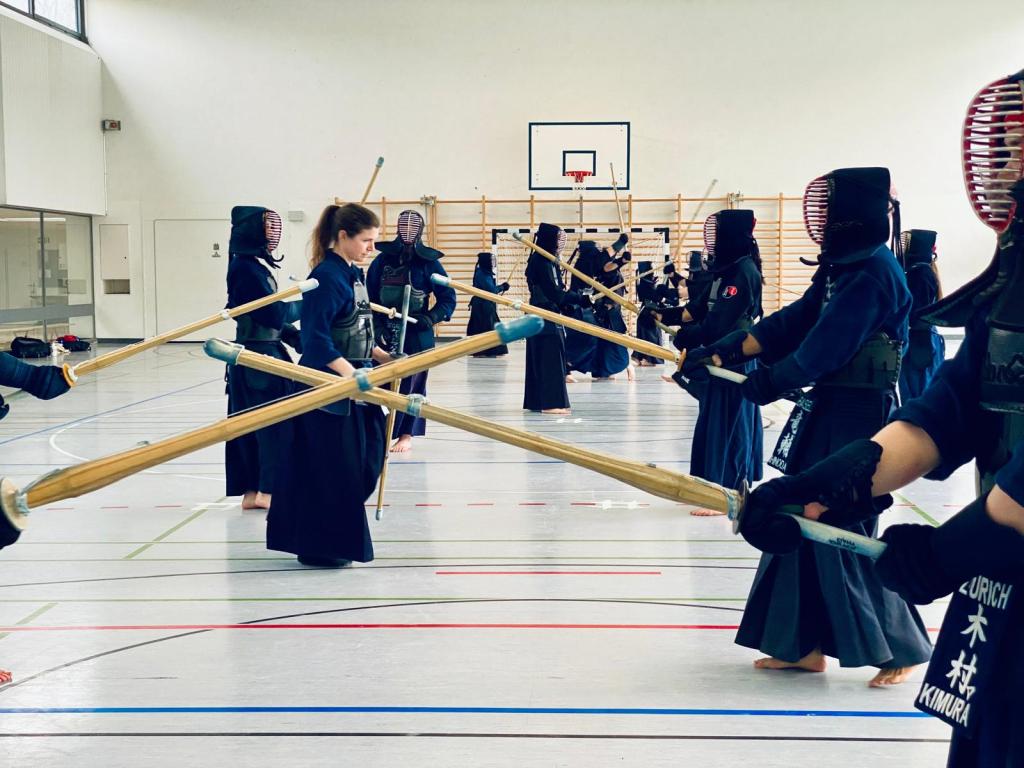
Photo credit: Annick Chevillot
The following passages of the article are responses to a series of questions that are answered in Daniela’s own words.
About Daniela Kimura (Switzerland)
Please share a little about yourself.
Kendo defines or enriches my life on pretty much every level except my job. My father does kendo, I met my husband through kendo and our three children also do kendo. I am a big family person and very happy and grateful that I can do kendo together with my closest family. Many of my long-standing friendships have been formed through kendo, even though some of these people have quit kendo a long time ago.
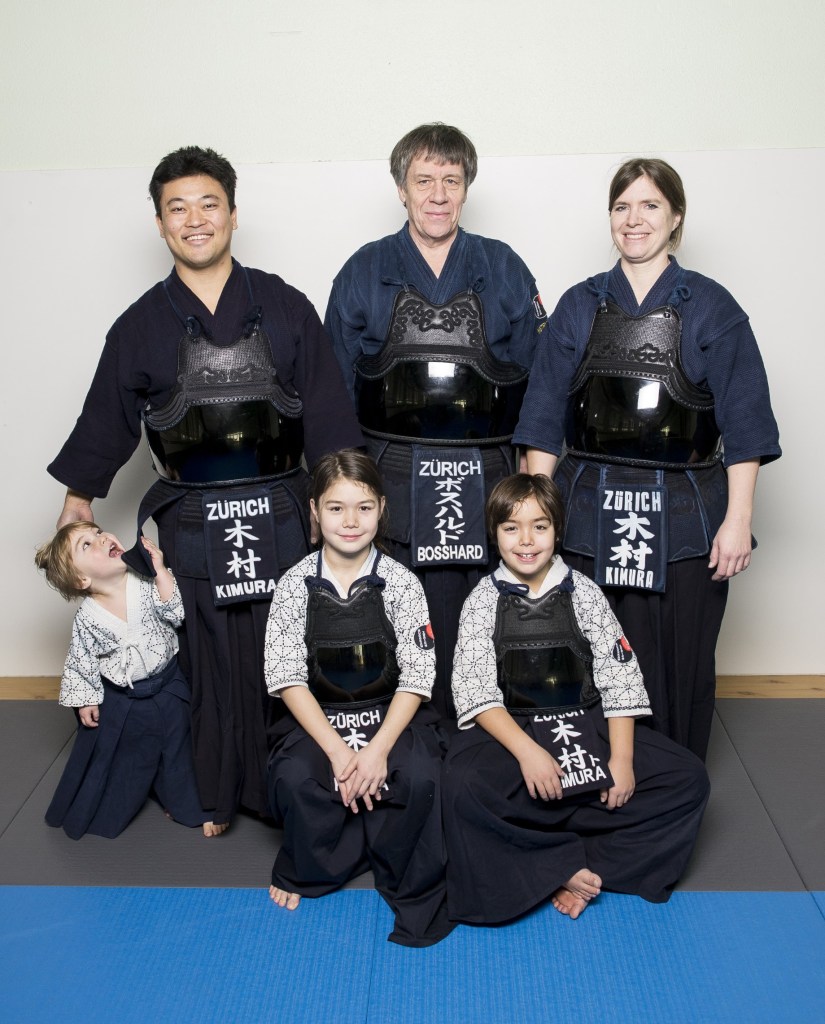
Bottom row: Thaís and Tadeu
Top row: Yuya, Oscar, Hansruedi Bosshard and Daniela
Photo credit: Migros Magazin and Daniel Winkler
I work in the HR department of Zürich Tourism. I have a lot to do with people at work, which I really like. I like being with people from different backgrounds and of different ages. I find the dialogue exciting.
When I’m not at kendo or doing something with my family, I’m involved in volunteer projects in our community. For several years now, I’ve been part of a team that organises regular events for an integration meeting point. I find peace and quiet on long walks with our dog. We live right next to a protected nature reserve. Even as a child, nature was an important retreat for me. I can recharge my batteries there.
How and why did you start kendo?
My father did judo in the ’60s and ’70s. After a long break, during which he started a family and built up his own business as an interior decorator, he didn’t want to take the risk of an injury that would have damaged his business as a craftsman. Nevertheless, at the age of 38 he wanted to return to the sport of budo and, if possible, take part in competitions again. When he heard that there was a dojo near where we lived where kendo could be practised alongside judo, ju-jitsu, karate and iaido, he signed up for kendo training there.
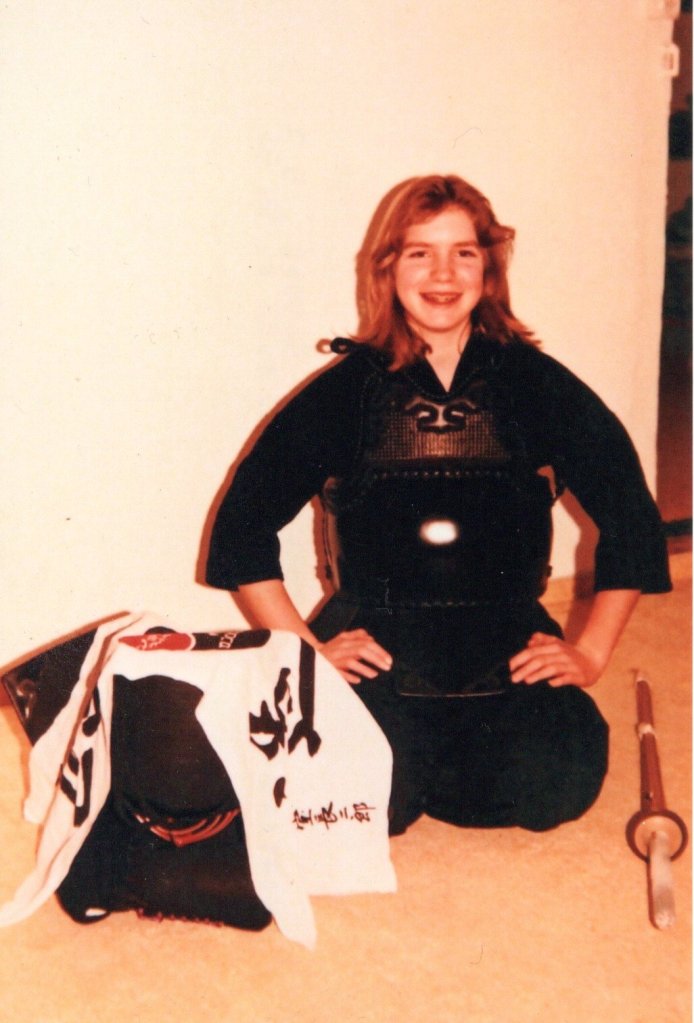
I was already interested in Japan as a child, so my father motivated me to try a trial lesson in kendo. So, I started kendo six months after him. I was 12-years-old at the time. In 1986, I started kendo at Budokan Zürich under Gerry Tscherter sensei. I trained with the adults right from the start because we couldn’t travel to Zürich until after my father’s shop closed and were therefore too late for children’s training. I still sometimes wonder today why I persevered, although from my point of view at the time, there were only old men in training with whom I had hardly anything in common. I think it was the joy of competing and the closeness to Japanese culture that kept me going back then. I also enjoyed spending time with my father.
As a teenager, I had to struggle a bit because I was the only one in a circle of friends who regularly attended sports training and everyone in the dojo was still quite a bit older than me, even if I was no longer the only woman. At that time, my motivation was limited. Nevertheless, I didn’t want to stop completely because I felt that I would like it better again at some point. And that’s how it was. Suddenly I was completely hooked and wanted to do kendo as often as possible.
That’s why I understood when one of our children suddenly wanted to stop kendo as a teenager. I agreed with her that she would train less, but would have to stick with it for at least another year. And suddenly she began to enjoy kendo.
Can you tell us about a special kendo experience?
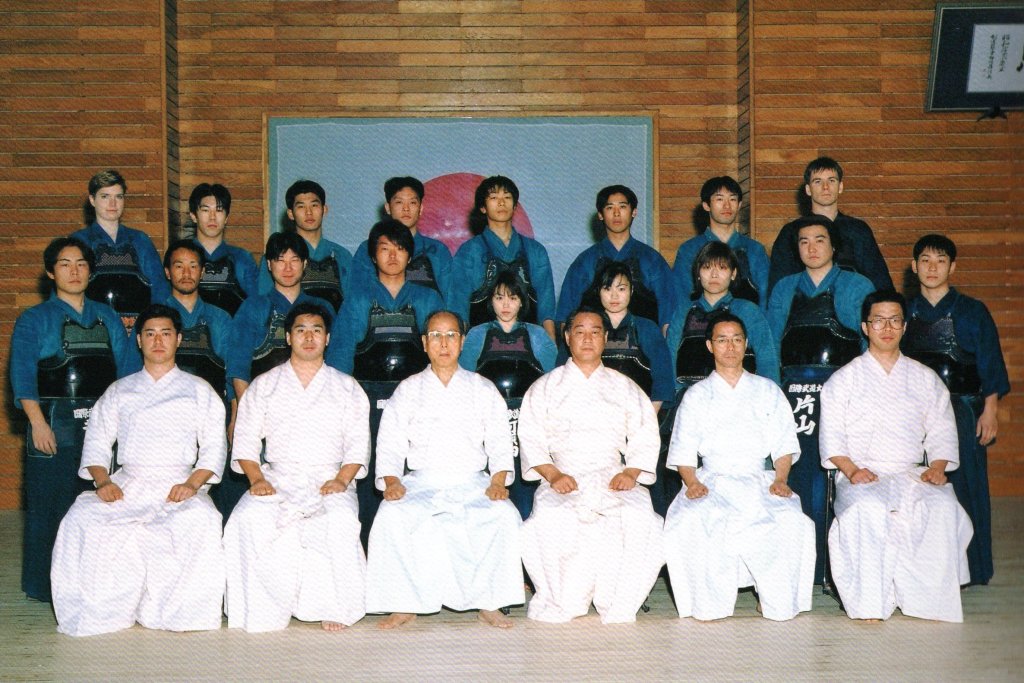
I find it difficult to pick out one particular kendo experience. Kendo has given me so much and opened so many doors. I have met so many wonderful people through kendo. Without kendo, I would hardly have spent two years in Japan and would never have thought of living in Brazil for a year. Kendo has opened up new horizons for me and I have learnt so much through kendo. I feel that kendo has greatly enriched my life. I can’t and don’t want to imagine what my life would have been like without kendo.
What inspires you to keep continuing kendo?
Kendo is a lifelong school. We can always learn new things and refine our skills. Kendo also helps us to remain open to change. Our body changes with age and our focus shifts depending on our situation in life. Continuing and adapting our kendo path is a challenge, but also a satisfaction.
My children in particular, but also the children and young people in our dojo, are also an inspiration to me. I want to accompany them on their journey and support and follow their development. I know that kendo still has a lot to offer me and I look forward to the future with excitement.
Are there any barriers to training kendo for women and girls in Switzerland?
I don’t see that there are any structural barriers for women and girls in Swiss kendo. We are a small group of people who train kendo and every member counts and is welcome. As there were only a few women in kendo in Switzerland in my early days, we were allowed to fight at the Swiss championships in both the women’s category and together with the men in the open category. Today there are many more women, but they are still allowed to fight in both the women’s and open categories. I see that as promoting women, and I think it’s great.
In addition, historically women have held strong leadership positions in Swiss kendo. From 1995-2000, a woman, Judith Bösiger was president of the Swiss Kendo Federation. Katja Fleury is currently the Vice President and Irene Zühlke is the Director of Mass Sports. Therefore, if women wish to take up decision making roles in kendo, they have the role models and the opportunity to do so.
The Swiss Kendo Federation was also always very open and supportive in regards to providing the environment that allowed mothers with young children to train in kendo. In the past, when our children were small, we always travelled to tournaments with a playpen and later with a small IKEA tent full of toys. Setting up a children’s corner and storing breast milk in one of the fridges was never a problem. We organised a children’s cot for the training camp. Later, we introduced and ran the children’s training programme during the national training camp so that the children were kept busy while the parents trained in other groups.
Do you think gender inequality is an issue in kendo?
I grew up in a dojo where I was never reduced to my gender. Tips and corrections were always related to kendo. However, I have also had negative experiences outside of the dojo. Most women/girls will have received inappropriate feedback after a keiko during their kendo career. Comments relating to appearance and gender are inappropriate and do not support women’s kendo development.
I think the attitude of a society is also reflected in the world of kendo. If the structures or ideas in a country are more conservative, it will probably also tend to be the same in kendo. Young people will hopefully no longer differentiate between the sexes in the future. Perhaps the question is rather to what extent is a kendo organisation prepared to give young people space and allow them to help shape it. How well can the old guard―who have my great respect for their commitment and achievements in kendo and its promotion, let go and step into the background to hand over the organisation to the younger generation?
Can you provide some suggestions on what we can do to work towards gender equality and why it is important to do so.
I think events like the Aki Taikai or seminars exclusively for women are an important addition to the existing seminars and tournaments. It enables women and girls to network more with each other and makes it clear how many strong female sensei there are in Japan, Europe and the rest of the world. These female sensei would certainly be predestined to lead seminars for men as well. Many people still harbour the idea that women lead seminars for women only, and men for men and women.
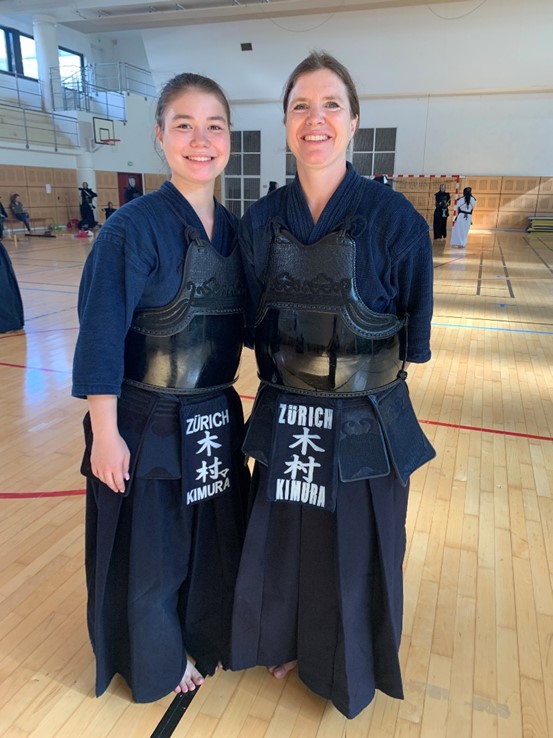
If qualified women are visibly involved as board members, sensei, and shinpan, this will certainly have an influence on the perception of women’s abilities. But a lot can also be achieved on a small scale. If we make no distinction between the genders in our dojo and set an example of equality, this also has an impact.
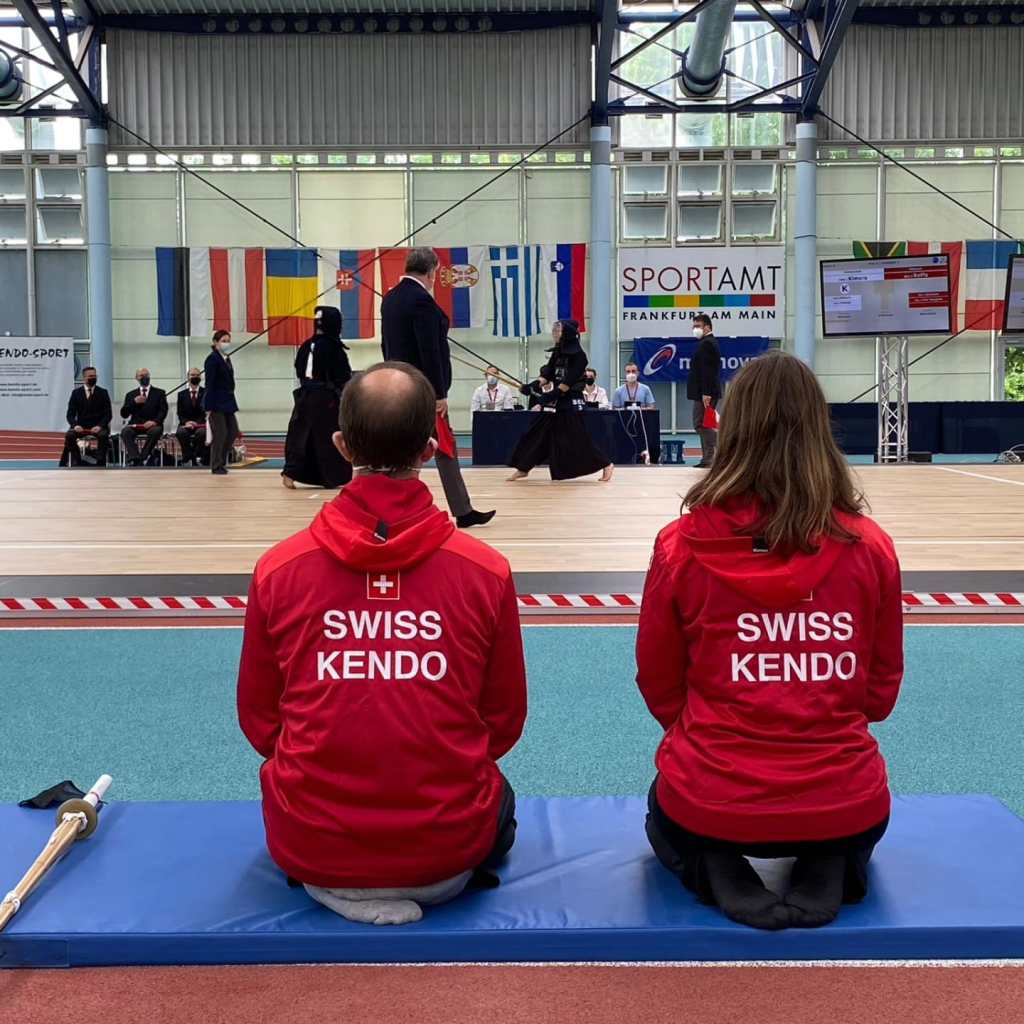
I think it’s important that we raise our voices where we see injustice or in situations where we feel uncomfortable or realise that another person feels uncomfortable. Ideally, kendo is a safe place for everyone. People want to be treated with respect and not be judged based on their appearance, gender or age. So, if we treat each other with respect, everyone is served.
What have you learnt from kendo and applied to your life outside of kendo?
I have learnt that we all reach our limits from time to time, some sooner, others later. If someone claims that they never reach their limits, they have probably stopped before the first limit has been reached. But these limits can be overcome, sometimes relatively quickly, sometimes it takes longer. I know that development and change take time and patience.
Do you have any words of wisdom that may inspire others to keep striving in kendo?
I wish I was wise. Unfortunately, that’s not the case. What I have learnt is that the kendo trail is not always straightforward. In addition to many picturesque sections of the trail, there are always difficult sections to overcome. We reach our limits and perhaps ask ourselves whether giving up would not be better than continuing bumpily. We may look left and right and ask ourselves why others are not finding any stones in their path and begin to despair. If we can concentrate on our path and accept that these low points are part of it, we will benefit a great deal for our kendo, but also for our path in life in general. We should not struggle with the time we think we are losing with low points. If we do not give up, it is not lost time but a stepping stone to a higher level. Fortunately, kendo is a sport/art that we can practice for life. The key is continuity.
Kendo CV (teaching, coaching, training)
Training/Education
1997-1999 International Budo University in Japan
2000-2001 Internship in São Paulo, Brazil, training at the Rudge Ramos Kendo Club and with the national team.
*J&S Kids Trainer in Martial Arts
*J&S (Jeunesse+Sport) is a federal sports promotion programme for children and young people and designs and promotes sports suitable for children and young people, enables children and young people to experience and help shape sport holistically, supports the development and unfolding of young people from an educational, social and health point of view.
Competition Results
1999/2002/2003/2006/2010/2012/2013 1st place Ladies Individual Swiss Championships
1995 3rd place Women’s Team EKC Glasgow, UK
1996 3rd place Women’s Team EKC Miskolc, Hungary
1998 1st place Women’s Team EKC Basel, Switzerland
1999 3rd place Women’s Team EKC Lourdes, France
2002 3rd place Women’s Team EKC Nantes, France
2005 Women’s Team Fighting Spirit EKC Bern, Switzerland
Numerous Swiss championship titles with the team of Budokan Zürich
All photographs in this article were provided by Daniela Kimura.
 Kate Sylvester Perspectives
One response to “04 Women Kendo Luminaries: Daniela Kimura (Switzerland).”
This is a great article about a great Kendoka! Shoutout to Daniela and all her achievements!
I remember meeting Daniela the first time on the Shiaijo of the Swiss Championships in 1999 in my first ever Kendo tournament fight. It was quite an experience! 💪
LikeLike