Foreword by Kate Sylvester.
With the World Kendo Championships (WKC) fast approaching, this new series of articles focuses on women’s perspectives and approaches to competitive kendo leading up to the WKC in Italy (July 4-7, 2024). The articles feature insightful and inspiring reflections from women competitors, coaches and referees.
The Brazilian Women’s National Kendo Team is one of the most successful national teams in the history of the WKC. The women’s team has won a number of WKC team titles (Silver in 2000 and Bronze in 2009, 2012, 2015). In the individual event at the 1997 WKC, 17-year-old Miwa Onaka won silver in the 2 dan and below category. At the WKC in 2009, E. Takashina won bronze in the women’s individual event. Onaka has also been rewarded a record 6 fighting spirit awards at the WKC.

This article features Miwa Onaka sensei, 6 dan renshi, coach of the Brazilian Women’s National Kendo Team. Onaka has impressively participated in 8 WKC, 7 of those as a competitor, and the upcoming WKC in Milan will be her 9th. This will be her 27th year representing Brazil on the WKC stage. This commitment to the national team is incredible, especially considering the great sacrifice and commitment being part of a national team entails.
Onaka is one of the most well-known and competitively successful women in the kendo world. She has won the Brazilian Kendo Championships 15-times, as well as other prestigious titles in Brazil and South America. With tireless dedication, Onaka continues to be a significant contributor to kendo in Brazil and South America.
Onaka previously featured in the article series ‘Women Kendo Luminaries’ on this website in 2023. I approached Onaka to feature in a previous article series as she is a highly respected figure in kendo, not only for her successes and commitment to kendo, but also because she is a powerful, warmhearted, and authentic leader. Onaka is true kendo luminary and an inspirational role model in global kendo. You can read more about Onaka’s competitive achievements, awards, training history, and vast contributions to the global kendo community in 03 Women Kendo Luminaries: Miwa Onaka (Brazil).
In the following passages, Onaka’s words convey what it means to coach and lead in well in kendo. Undoubtedly Onaka’s focus on team collaboration, the nurturing of personal growth, and developing the next generation of Brazilian kenshi will increase the likelihood of success at this WKC and beyond. Onaka’s dedication to kendo, and the way she describes the many enriching benefits of coaching, is an inspiration to other women who may be considering to take up the important role of coaching women or men (or both) after they retire from WKC competitive kendo.
Why did you decide to become the national team coach for the Brazilian National Women’s Kendo Team?
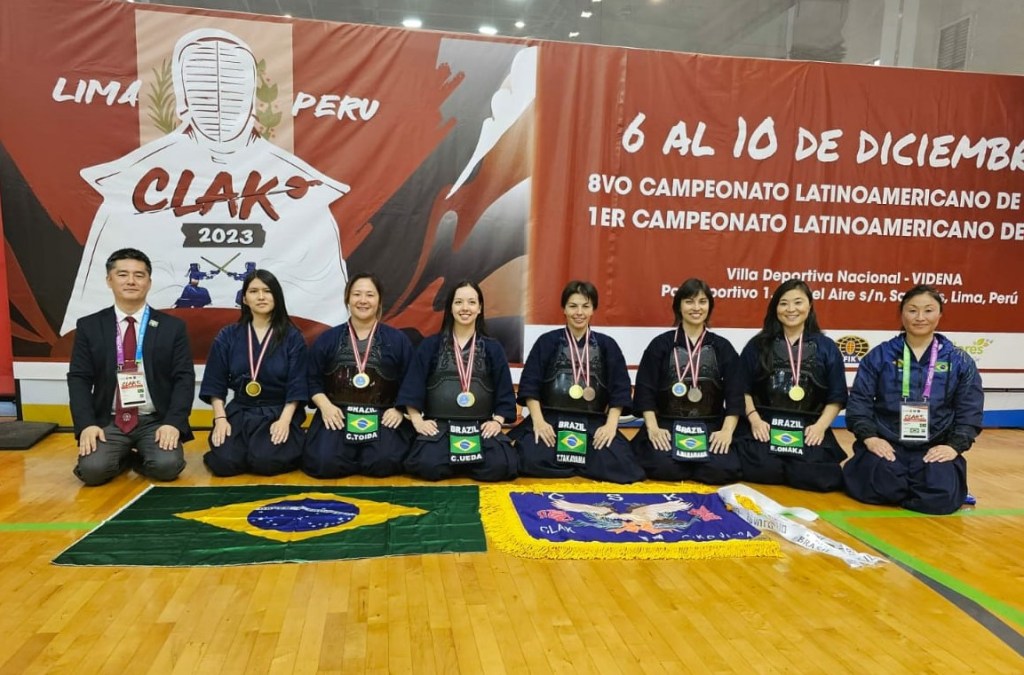
I received an invitation from the Brazilian Kendo Confederation to assist and integrate the Commission at the World Championship in Korea in 2018. During the pandemic, online training began to keep a group of athletes prepared for international competitions. We formed a technical commission composed of three women, Cristiane Lie Toida (6 dan), Tábita M. F. W Saez Takayama (6 dan), and myself. The creation of the female technical commission and online training aimed to ensure that our athletes remained in shape and ready to compete, as well as to align the team with the techniques and values that the commission sought to maintain in the selection. I was officially designated as the head coach of the Women’s Selection, to prepare the team for the Latin American Championship held last December in Peru (Lima 2023).
What is your coaching philosophy? What do you focus on when coaching the national team members?
I aim to create an environment of respect, support, unity, teamwork, and collective effort. I strive to identify the qualities of each athlete, maintaining their fighting style and individual traits while identifying weaknesses that need improvement. In addition to refining technical and strategic skills, I emphasise the importance of building and training a strong mind and balanced spirit. The goal is to transform athletes into a united and strong team, where each individual can develop their potential, contributing to collective success.
What do you enjoy about coaching?
Being a coach for this female kendo team is providing me with a highly rewarding experience full of positive aspects. Having the opportunity to contribute to kendo in Brazil, participating in international competitions, certainly provides valuable experiences with the team and countless kendo practitioners from around the world. The need for continuous development in leadership, communication and decision-making skills is contributing greatly to my personal growth. I like the moments when we have the opportunity to see the sparkle in the athletes’ eyes, as they eagerly await a word of motivation, advice or feedback after a match. It is rewarding to work with a team that strives to do its best and is eager to continually improve. The satisfaction of seeing the athletes evolve and the team’s success is one of the greatest rewards of coaching.
What are the challenging aspects of coaching?
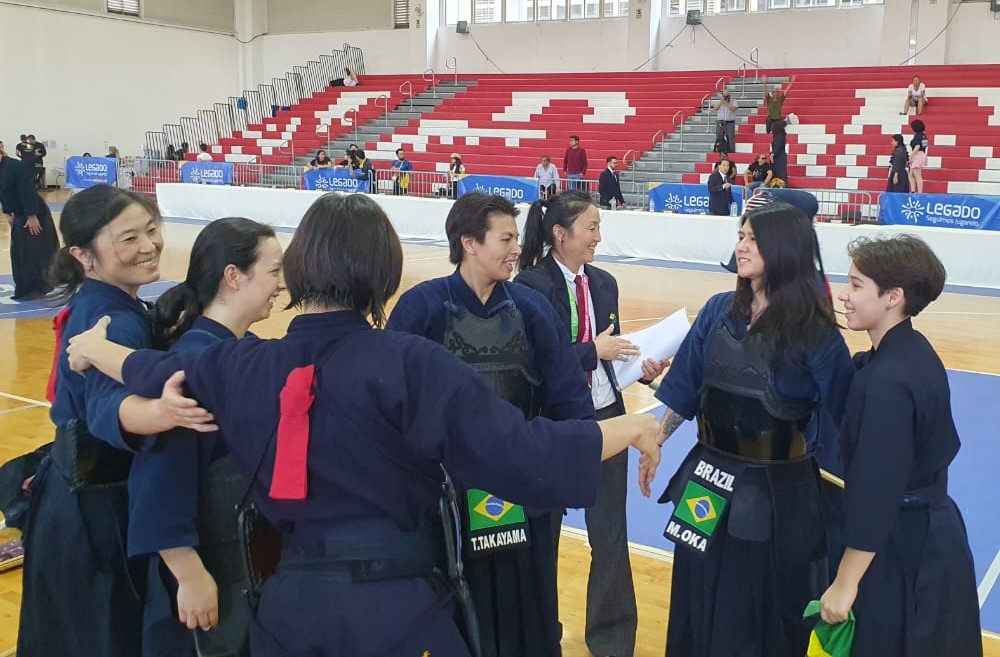
The greatest challenge I feel as the coach of the national team is the distance. I miss being closer to all the athletes. I believe this difficulty is the same for coaches from large countries like Brazil. We have athletes from various regions of Brazil, which makes it difficult to constantly meet with all members of the delegation. Thanks to the support of the Brazilian Kendo Confederation, as well as the entire technical team, including managers, sensei, sempai, kohai, and invaluable cooperation of the athletes themselves, I feel that despite the physical distance, we are connected and united. Technology has become an essential tool for overcoming this barrier, allowing us to maintain communication and connection, helping to maintain cohesion and alignment within the team.
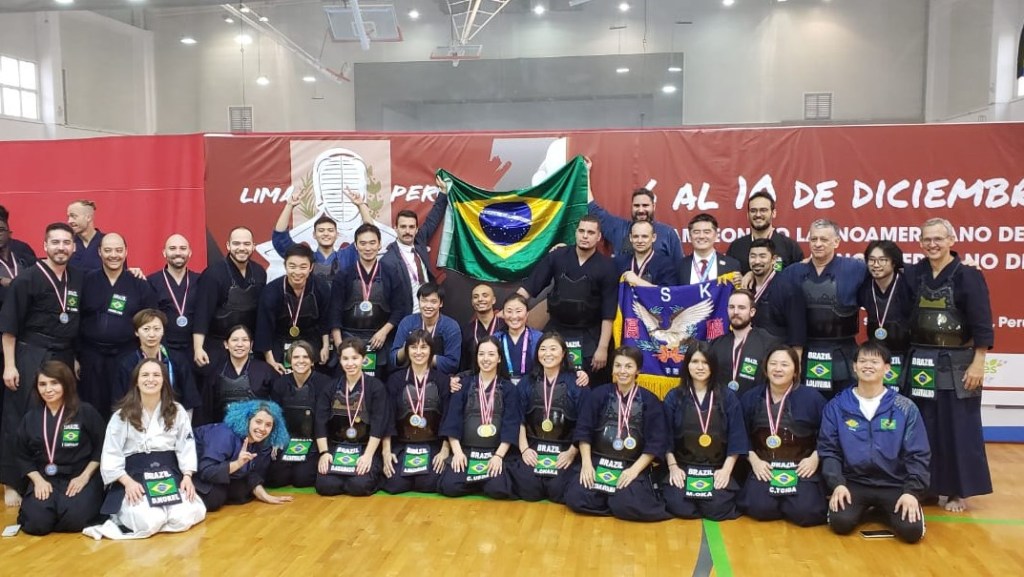
Another challenge is the constant doubt we have regarding our methodology and work as a commission. However, at the same time, it is very important for us to constantly question and evaluate our work to ensure that we are on the right track towards our objectives. It is a journey that requires self-reflection and continuous adaptation. And certainly, the pressure of representing an entire country is a burden that every delegation carries. The expectation and responsibility are weighty, both for coaches and athletes. However, if we approach this responsibility positively, this pressure can transform into a motivational challenge for the entire team.
I hope to orchestrate this current team in the best possible way and continue to receive support from all those involved who support, cheer, and contribute directly and indirectly so that the Brazilian team can represent Brazil well at the WKC in Italy.
How have you personally grown from competitive kendo as a coach?
Working directly with the athletes and participating in international championships with the team provide valuable learning experiences in various aspects, contributing to my constant evolution as a coach. These experiences help me develop and enhance essential skills, such as communication to motivate and instruct the athletes, and building solid relationships with the entire delegation, creating an environment of collaboration and mutual support.
I am constantly learning to respect individual differences and listen to the needs of each athlete, trying to identify what motivates and drives them towards constant improvement. As a coach, I have the opportunity to create and develop various skills and grow as a person, enriching my journey not only in kendo but also in everyday life.
How have you dealt with kendo slumps or a disappointing team performance?
Dealing with losses in kendo can be challenging, but it is an important part of the growth and learning process. It is crucial to try to understand the reasons behind the outcome and accept and acknowledge setbacks as part of the process. I firmly believe that losses make us stronger as long as we see this experience as an opportunity for change, transforming the feeling of frustration as a goal or motivation to avoid repeating the same mistake. I try to understand what we can do differently next time and how we can strengthen ourselves as a team from this experience. I try to focus my energy on moving forward and working towards our goals. Dealing with losses in kendo can be difficult, but I see these moments as opportunities for growth and resilience. With a positive and constructive approach, we can transform these experiences into learning opportunities, becoming even stronger as a team and as individuals.
This WKC will be the first WKC in history to have equal match time for women and men and also female shimpan. How do you feel about this and do you think it will improve the performance of women competitors?
I believe this is a historic achievement for kendo. The growth of female kendo, evidenced by the increase in the number of athletes registered in the individual tournament of this WKC, clearly demonstrates the strengthening of kendo. The presence of a female shimpan also will certainly serve as an encouragement and inspiration for other women to seek excellence in refereeing. I always see the role of the referee as the guardian of the values, principles and essence of kendo.
The role of a referee is crucial in ensuring that the spirit of kendo is preserved in competitions, regardless of the level of competition. I believe it is very important that both female and male sensei to continue to improve and perfect themselves in refereeing, as this role has the power to determine what is right and wrong in the fight, not only for the athletes, but also for all people who watch kendo championships around the world.
Regarding the WKC schedule for women, in previous WKC it was extremely challenging for athletes to compete in the individual tournament in the morning and then prepare for the team competition in the afternoon. This required extreme concentration, as the strategy and mental preparation for an individual match and a collective match are very different. The need to quickly switch between the two contexts certainly affected the performance of many athletes. Furthermore, if an athlete advanced in the individual competition, the physical fatigue was considerable, and maintaining the same level of performance for the team competition in the afternoon was a great challenge.
However, at the upcoming WKC, women athletes will have the opportunity to avoid this physical and mental exhaustion. I would like to express my sincere gratitude to those that advocated for this change. I would also like to congratulate FIK for valuing, respecting, and considering women. Without a doubt, this is an extremely significant moment in the history of international kendo.
There are few women coaching national kendo teams, and even fewer women coaches coaching men. Do you think women can coach men well?
I believe that the ability to be a good coach is not tied to gender, but rather to the skills, qualifications, and dedication of the individual. Women have the potential to effectively coach men, as long as they are well-prepared and possess the necessary skills to lead and guide a team. Of course, there may be a need for some adaptations in how training is conducted between female and male teams, taking into account physical differences, fighting styles, and various motivational factors. However, with a proper understanding of these differences and a flexible approach, a female coach can be just as effective in training women as men.
When selecting a coach, it is essential to consider their qualities, skills, and experience, rather than focusing on gender or their background as an athlete. I believe that a person’s competence and dedication determine their ability and expertise as a coach, regardless of gender.
What would you like to achieve as a coach at this WKC?
At this WKC, my goal as a coach is to witness the best performance of our team and achieve our position as one of the best in the world. However, regardless of the team’s objective, what I want most is for them to feel that they gave everything they could and that they can dedicate themselves wholeheartedly to the matches, feeling proud of their achievements and valuing the experience of competing in this international scenario. Regardless of the result, I hope that our Brazilian national team athletes present kendo that can inspire children and teenagers to continue practicing kendo and motivate and encourage the next generation of athletes in Brazil.

Please share any words of wisdom or motivational words that may inspire other women and men to take up coaching after they have finished with their competitive careers.
Regardless of the role we choose to play – whether as a coach, referee, teacher, or in any other capacity – we must remember that we have the power to impact lives in profound and meaningful ways. May the impact we leave behind be constructive, positive, motivating, significant, and inspiring to all those who cross our paths.
As coaches, we are more than mere instructors; we are guides who help athletes discover their potential and provide support to help them refine their skills and bring out the best in each athlete during training and apply it to their matches. Assisting a person or an athlete in developing the best within them, both physically, technically, emotionally, and mentally, is certainly a very rewarding process.
Every victory or defeat presents precious opportunities for learning and growth. The moments of difficulty and frustration in personal life are true lessons, but when experienced together with a team, the experience becomes even more enriching and gratifying. Facing challenges as a team, we build bonds of trust, solidarity, and mutual support. Each obstacle overcome and each victory celebrated becomes an integral part of the journey we share, strengthening not only our personal growth but also our understanding of the value of collaboration and teamwork. The growth and evolution we achieve collectively are priceless.
About Miwa Onaka
Miwa Onaka started kendo when she was 6-years-old, and is currently a kendo teacher at Bunbunkan Dojo. Onaka is also a Japanese language teacher, councilor for the municipality of Freio Rogério, and works at the Brazil-Japan Cultural Association.
Onaka has a passion for traveling, especially to places where she have friends who practice kendo. She also loves watching movies and enjoying delicious meals with her friends. Although Onaka enjoys to travel, she is a homebody appreciates the moments she spends in her own home.
Onaka loves her community and feels she surrounded by dear people that she knows she can always count on. Furthermore, being around children, especially her kendo students, brings her immense happiness.
 Kate Sylvester Perspectives