Foreword by Kate Sylvester.
With the World Kendo Championships (WKC) fast approaching, this new series of articles focuses on women’s perspectives and approaches to competitive kendo leading up to the WKC in Italy (July 4-7, 2024). The articles feature insightful and inspiring reflections from women competitors, coaches and referees.
The kendo community in Canada is vibrant, technically sound, and culturally rich. I had the opportunity to train at kendo clubs situated in Vancouver, Toronto, and London during my university exchange at the University of Western Ontario in 2008. I was based in London, Ontario and was a temporary member of Forest City Kendo Club that is currently led by WKC level shimpan, David Mori sensei (7 dan kyoshi). I felt the kendo community in Canada to be very welcoming. I was particularly impressed by the skill level, collective spirit, etiquette, and organised structure of Canadian kendo.
During my stay, it was also quite inspiring to practise with and observe national team members training with great rigour and dedication. I was appreciative of the chance to train with past national team member Maya Yue (née Taguchi) as I admired her kendo and the national team’s WKC successes. And there is alot to admire about the Canadian National Kendo Team. Team Canada has won 2 silver and 9 bronze medals in the team events at the WKC over the decades. Demonstrating their commitment and ambition, the current national team led by head coach Dean Ara sensei (7 dan kyoshi), has attended training camps twice in Japan this year.
To date, the Canadian women’s team have won 4 WKC bronze team medals (2000, 2003, 2006, 2018) and in 1997, Wendy Robillard placed 3rd in the individual event (3 dan and above). Of note, one of the first women to compete at the WKC in an “official” category was Canadian team member Kazuko Nakamura. Nakamura was 18-years-old and ranked shodan when she competed in the sempo position with her male team mates at the 1970 WKC.
The Canadian women’s team’s successes have occurred in spite of the global issues that impact of women’s kendo development such as the constant generational change in national teams and low retention of women in kendo. The achievements demonstrate that women’s kendo in Canada is bolstered by the wealth of skill, experience, and commitment within the community. In addition to the high level of skill and diligence of the national team’s female members. More recently, Hanaca Yamada (5 dan) and Man San Ma (4 dan), both at the heart of the team contributed significantly to the team’s 2018 WKC team bronze. There are also active women role models and instructors in Canadian Kendo such as Vice President of the Canadian Kendo Federation Makiko Ara sensei (7 dan), Wendy Robillard (5 dan) and the assistant coach managing the current women’s national team Juneko Kurahashi (5 dan).
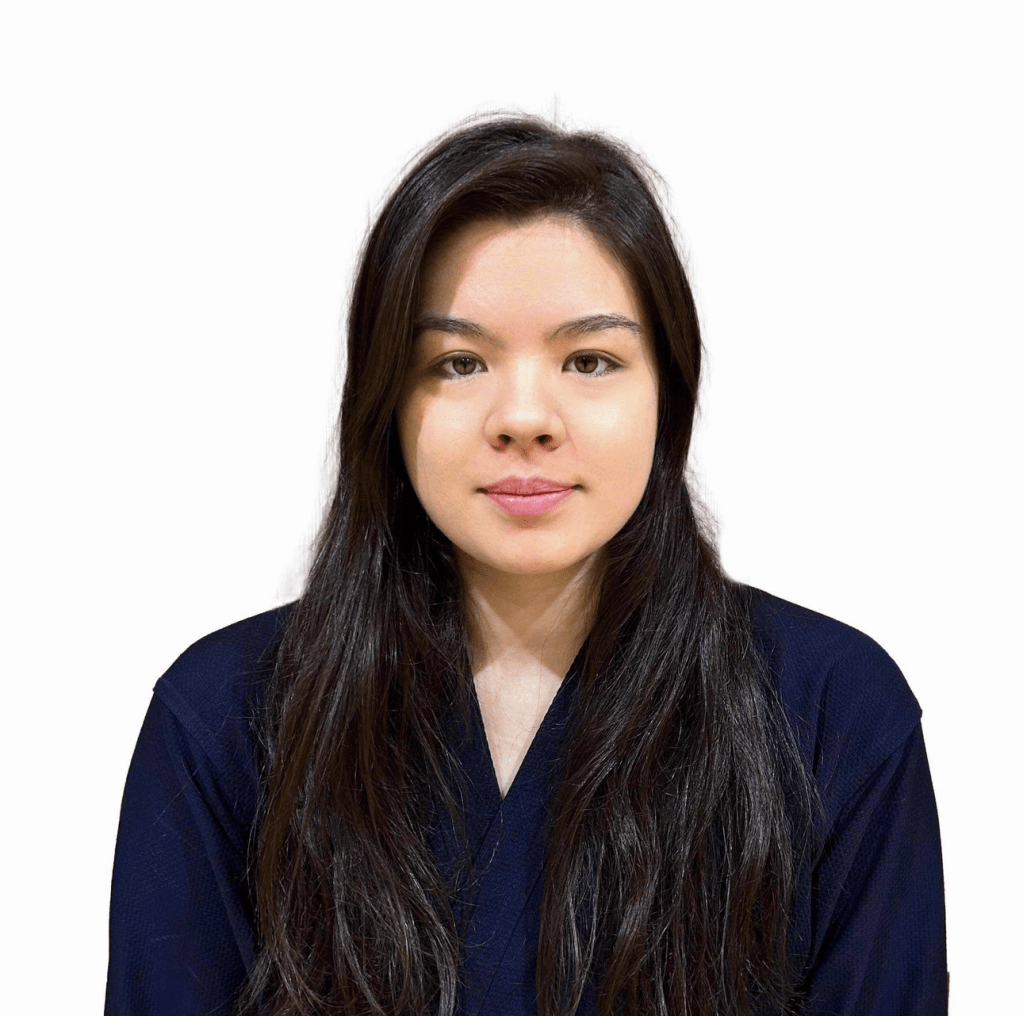
This article features vice-captain of the Canadian National Women’s Kendo Team, Kianna Darbyshire. Kianna (4 dan), started kendo 14-years ago and first participated in the WKC in 2018 when the women’s team won a bronze medal in the team event. Kianna is yet another example of the exceptional and inspirational women in our international competitive kendo sphere. The following passages share Kianna’s perspectives and experiences on shiai kendo and how it crosses over with, and benefits her life. The future of global women’s kendo is bright with brilliant and determined women like Kianna Darbyshire in our community.
How did you start kendo?
I started kendo through a family friend. I grew up playing many different sports and with my mother being from Japan, she wanted me to practise some sort of martial art. I tried karate, aikido, kickboxing and many other sports but kendo was the one that I really enjoyed and stuck with.
What do you appreciate about kendo and find challenging?
I appreciate how there are many different ways you can improve through kendo. Whether it be tournament success, discipline, grading for higher dan, or just keeping active, there are many ways that kendo can improve yourself and help you work towards achieving goals and I love how it can be an activity for any age. A challenge would be that kendo can be very emotional and mentally challenging. Especially when competing at a higher level and having so much at stake, it takes a lot of mental focus and courage to be at the top of your game in high stress situations like the world championships.
What do you love about shiai?
I appreciate how shiai is a time to “test” all the training that you have been doing leading up to the tournament. It is different from keiko where you can have a more relaxed approach and try out new things as now you want to bring positive results. Shiai also brings a more performance and sport side to kendo which as much as I appreciate kendo as a martial art, having a way to measure your performance and skills through shiai is very rewarding and helpful for competitive kendo athletes. I also greatly enjoy team matches where although you are fighting on the court as an individual, you have your whole team behind you supporting you.

Photo Credit: https://www.facebook.com/KendoPhotography/
How do you prepare for a major competition?
I try to be as physically and mentally prepared as I can. For physical training, I would attend practices as much as my work schedule allowed me to increase my reps of training. I especially enjoy increasing my reps of waza practice and reactionary drills as that has helped me to be more confident in shiai. I complement my kendo training with dryland training so that I am active 6 days a week. To keep in good physical shape, I also make sure to have time for recovery and mobility training as high reps of training can increase injury risk.
To be mentally prepared, I try to visualise myself at the competition and scoring points against my opponent. I feel the mental aspect is far more challenging than the physical aspect as there are so many external factors that can waiver you so I would try to lean on past competitions where I was successful, both from visualising and watching videos of those matches to spark a boost in confidence.
How do you deal with the pressure of shiai?
I think the most important part of pressure during shiai is how much pressure you let yourself experience. I try to find that medium where I feel enough pressure to be alert and excited to fight but not so much where I feel I am questioning every move. I have definitely experienced shiai on both extremes as well as where I was able to find that medium.
I think the most important process that helps me handle pressure is more positive self talk and really pumping myself up with confidence and excitement to fight. However, I can’t say I am perfect at handling it at this point. I feel like it’s something you get better at with experience.

How have you personally grown from kendo, particularly competitive kendo? Does it benefit your life outside of kendo?
Competitive kendo has helped me to face harder challenges with more confidence. The nervousness I felt at the worlds resembles how I feel going into university or piloting exams and I was able to get more confident and overcome those nerves with my kendo training experiences. It also gives me confidence that I can achieve my goals, even if they are difficult as I went through alot of rigorous training for the 2018 WKC. I know I am capable of achieving anything I set my mind to as long as I put in the effort. This mindset has helped me move forward in my career especially.

How have you dealt with kendo slumps or a disappointing performance?
Slumps have definitely been one of the most challenging parts of competing in kendo. Especially when you know you can perform better, it can be very mentally challenging to get out of. I found that when I went through a slump, the first time I felt very emotionally down for many practices and it took a while to really recover from. I’ve come to realise that slumps will be a part of training but it’s important to realise it early and not let it spiral down. By that I mean, I would try to change up my routine a bit both in kendo and dryland training. I would also try to practise without putting pressure on myself to perform perfectly as while I was in that slump state, that high amount of pressure was just making things worse and more challenging to come out from. Overall, I think getting out of slumps required a big mental shift and an external confidence boost.
What would you like to achieve at this WKC?
This being my second WKC, I hope I can help bring confidence in my team members and help them to perform their best as it is a lot of their first experience at the worlds. I was very lucky to have a team full of experienced players at the last WKC. With a very different team demographic this time, I hope we can all show our best kendo on the day and have no regrets. Our goal as a team is to keep our place on the podium for the women’s team championships and I believe we can achieve that with all the hard work the team has been putting in. But most importantly, I want all of us to come out of the championships satisfied that we gave it our all regardless of the outcome.

Please share any words of wisdom or motivational words that may inspire other women and men in the lead up to the WKC.
Although I’ve only been to one WKC so far, from that experience, I remember that day going by so fast. It is of course the “big day” that we have all been training for. I want to do the best that I can. However, I think it’s best to not treat the WKC like the “be all and end all” of your kendo journey. I think focusing and enjoying the journey leading up to the worlds is just as important as the competition itself since that’s where you get stronger, face new challenges and grow both individually and as a team.
About Kianna Darbyshire
Kianna is 4 dan and a member of Vancouver Kendo Club and has been practising kendo for 14-years since she was 10-years-old. One of her best memories and achievements out of kendo so far is her first experience at the WKC in 2018 where Team Canada won the bronze medal. She feels it was a great experience to be a part of an experienced team that had four to five WKCs under their belts. Outside of kendo, Kianna works as a flight instructor and has the eventual goal to be working as an airline pilot. Aviation has always been a strong passion of hers and she has held the dream of becoming a pilot since she was 12. Kianna also enjoys being outdoors for camping, cycling and hiking in the summer months.
Kendo Achievements
- 2016 and 2018 Vancouver Kendo Tournament – Gold Senior Team
- 2017 PNKF Tournament – Gold Senior Team
- 2017 National Championships – Gold U18 Female Individual, Bronze Women’s Club Team, Gold Junior Provincial Team
- 2018 UW Tournament – Silver in Women’s Event
- 2018 Steveston Tournament – Silver in Women’s Event
- 2018 UW Tournament – Gold in Team Event
- 2019 UW Tournament – Silver in Women’s Event
- 2019 Vancouver Kendo Tournament – Silver in Team Event
- 2019 Vancouver Kendo Tournament – Bronze in Women’s Event
- 2019 PNKF Tournament – Bronze Individual Event
- 2022 BCKF Tournament – Gold (2-3 Dan) Women’s Event
- 2023 National Championships – 3rd Bronze Club Team Event and Gold Provincial Team Event
 Kate Sylvester Perspectives