Foreword by Kate Sylvester.
With the World Kendo Championships (WKC) fast approaching, this new series of articles focuses on women’s perspectives and approaches to competitive kendo leading up to the WKC in Italy (July 4-7, 2024). The articles feature insightful and inspiring reflections from women competitors, coaches and referees.

The current European Kendo Champion, 4 dan Nikol Eichlerová of Czech Republic is a remarkable kendo athlete. She is a highly dedicated national team member that delicately balances her time between kendo and medical school.
Nikol’s words shared in this article are deeply inspiring as they reveal her high level of commitment to her goals and ability to self-reflect. With this kind of diligence and perspectives on kendo and in life—dreams do come true. And they can actualise sooner than anticipated with the right mindset and a little bit of luck.
Being present at the 2023 European Kendo Championships (EKC) myself, I was a little surprised by Nikol’s EKC success as she toppled seasoned and experienced competitors. I was equally excited that her success proved that anything can happen at major tournaments. However, reading Nikol’s words, it is not so surprising she won as her success shows us that commitment and mindset do matter, and can cultivate success. A few other things come to mind reading Nikol’s responses to the questions posed in this article.
Firstly, the importance of organised junior programmes in kendo, which is evident in Czech Republic and neighbouring countries, such as Poland and Hungary. In addition, providing leadership opportunity for younger, experienced kendo practitioners is empowering as it instills confidence and teaching skills. Undoubtedly, the development of younger practitioners contributes towards cultivating influential, knowledgeable leaders for the future generations of kendo practitioners. This greatly supports both the development of kendo and membership retention.
Lastly, although it was not by chance that Nikol won the EKC (despite that she attributes luck playing some role in her EKC success), she highlights that achievement at the highest level of kendo is possible with focused training, a positive mindset, and good support. Anything is possible, but the ’kendo gods’ are on the sides of those who sacrifice their time and money, train with focus, and mentally prepare well for major competitions. This is an important perspective for athletes and coaches preparing for the upcoming WKC in Milan. As Nikol’s experience reflects, success is possible even against accomplished competitors. This is the beauty of shiai kendo.
The following passages articulate Nikol’s intelligence and conscientiousness in kendo and life in her own words. Her ethos is that of a champion and genuinely inspiring for kendo women, girls, men and boys alike. Competitors drawing on Nikol’s mindset for shiai as shared in the last statement ’words of wisdom’, would surely raise the level of kendo at the upcoming WKC and galvanise ’miracles’ to take place.
How did you start kendo?
I began practising kendo at the age of 7 (in 2008 – almost 16 years ago) at Nozomi Dojo in Hradec Králové, together with my younger sister and dad. It was my dad who introduced us to kendo. He accidentally learned about kendo from a friend. Since he was passionate about martial arts, he believed that my sister and I might like it too.
The beginnings were challenging for us. We travelled weekly to the neighbouring town for training. While kendo seemed boring to us as kids (due to many rules and lack of fun), our perception changed once we started competing in the following years. I survived my ups and downs. Until today I am glad that I didn’t give up. My father still trains with us up till now. He supports us both mentally and financially. I am so grateful for a dad like him.

What do you appreciate about kendo and find challenging?
It is a martial art connected with its own history and etiquette. It contains applicable principles to everyday life. It offers opportunities for overcoming your physical and mental limits and unlimited chances to learn something new. I like how kendo brings people together and forms a new friendship.
The most challenging aspect of kendo is its financial and time-consuming aspect. Almost every weekend, I attend a kendo event. With college, there is not much time left for personal life and other hobbies.
What do you love about shiai?
The atmosphere of team matches is something I enjoy. It’s supportive, friendly, and energising. We are working together as a team at kendo and also beyond it. Having my teammates behind me and supporting me during any fight is an incredible feeling. Watching my teammates fight with strong spirit motivates me even more to do my best.
In those moments, I simply observe my opponent and respond instinctively, without overthinking. However, reaching this state of mind can sometimes be challenging for me.
How do you prepare for a major competition?
The basis of my preparation is training at a home dojo every week. Furthermore, I try to participate in other events such as seminars, tournaments, both domestic and international, and national team practices. Basically, events where I can gain new experiences and meet different people with various kendo styles. Feedback from coaches and more experienced kendoka is important for my improvement. In order to fully focus on preparation, I have to balance school, which is currently my priority. I also try to include individual training in my preparation.
When you won the EKC in 2023, was there something special you did for that preparation? Please describe the feeling or mindset before, during, and after the tournament.
I was calm, focused, and ready to give my best. My mind was clear and tranquil, free from any thoughts or plans. Next, I focused on gathering energy in my chest. I visualised it as a burning fire, fueling my strength. As each match began, I gradually transformed this energy into spirit and kiai.
The first few seconds of the fight were crucial for me. The initial moment set the tone for the rest of the match. I maintained intense concentration, watching my opponent through her eyes. This helped me stay focused and project a strong kiai and seme, boosting my self-confidence. During breaks between matches, my team managers ensured I had everything I needed, allowing me to concentrate solely on the matches. I am glad they were with me.
My approach in each match was simple: focus on the present moment in the shiai. Probably the strongest moment I had was in the final against Alina Yearwood. It might sound silly, but I didn’t care whether I won or lost. I just went out there to enjoy it. Alina Yearwood (Poland) is an experienced and very strong competitor. My prospects weren’t exactly rosy.
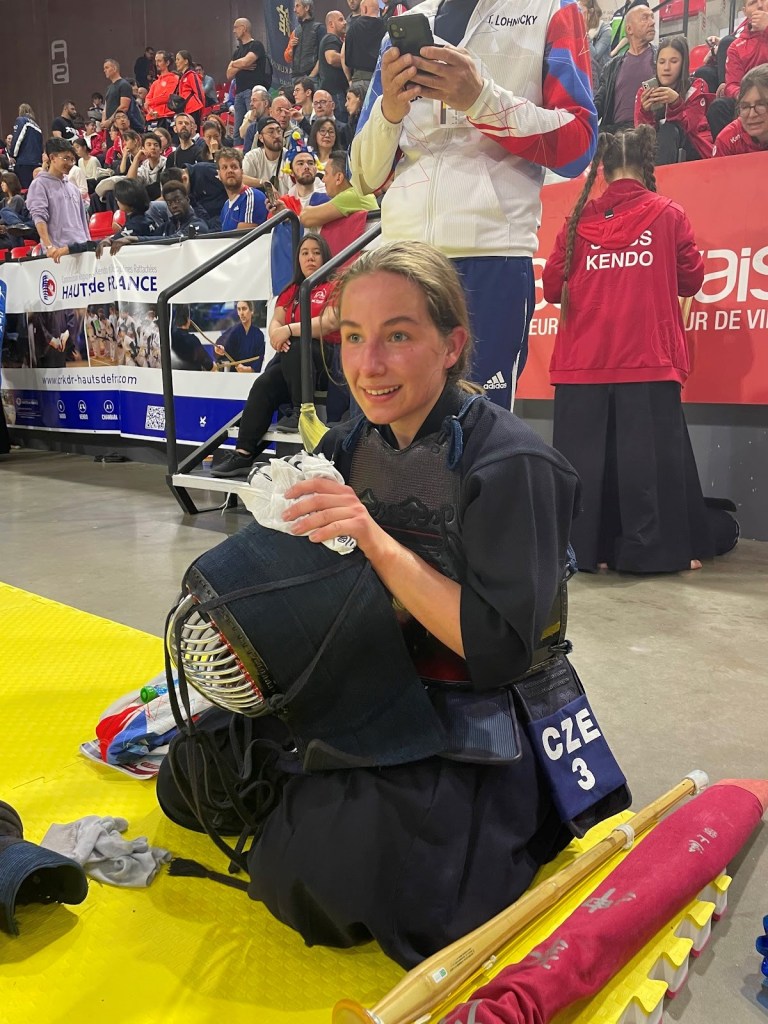
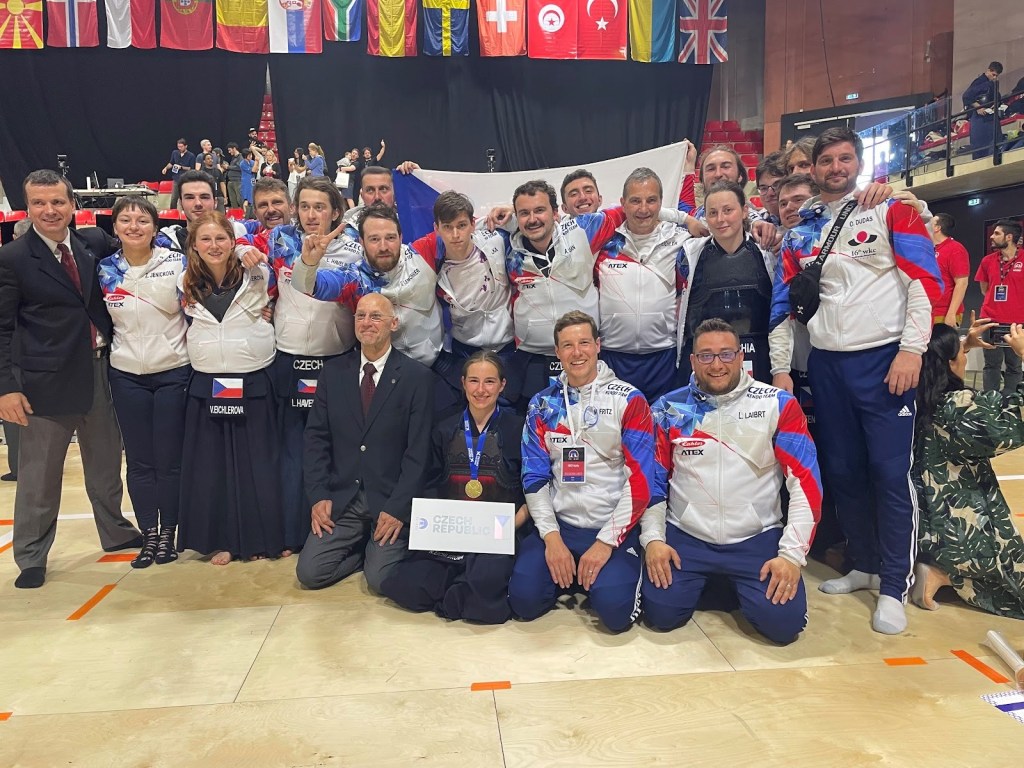
After I won, my brain stopped working. I couldn’t process what had just happened. I was shocked. The most impactful part of the experience was the overwhelming support from my team. Their excitement and tears of joy were truly moving. At the end, we stood together, singing the Czech anthem for the first time in history. I am grateful to have such supportive people around me. Speaking for myself and everyone else, my victory came as a surprise. Luck played a significant role that day. Kendo requires skill and experience, but luck also contributes to success.
How do you deal with the pressure of shiai?
I’m trying to find ways to deal with the pressure of shiai. I get stressed a lot, both in kendo and in life in general. I experienced a lot of pressure after competing in the European Kendo Championship. Now, I’m trying to find ways to handle this pressure better. What helps me is to clear my mind, which I achieve through more challenging exercises like kakarigeiko. It’s important for me to have someone I trust by my side, who supports me and gives me the encouragement I need.
How have you dealt with kendo slumps or a disappointing performance?
I remind myself that any previous success doesn’t define me. In every way, it is hard to deal with any kind of disappointment. Everybody has bad days,and losing means nothing. Just the opposite, it is losing that teaches us the most. It helps identify weak areas, and previous success doesn’t define me. Each loss has something to teach us – an opportunity to discover weaknesses and eliminate them. I am trying not to blame myself.
What was a special shiai experience for you?
It’s a funny story from the EKC in Frankfurt. During the team match, due to rain and an open roof window, a puddle formed in the middle of the shiai-jo. During my shiai, as I was moving back, my left foot stepped into the puddle. My foot slipped, I lost control of my body, and I fell to the ground like a plank. I hit the ground with the grid. I couldn’t help myself and I started laughing. Later that day, I made a meme out of it. It was unforgettable moment of our team match.
The Meme
What would you like to achieve at this WKC?
Not to have any expectation of my performance or myself at all. I want to enjoy every single fight and show my best kendo and my best spirit. This being my first WKC, my primary goal is to experience the atmosphere and enjoy the beauty of kendo both inside and outside Europe.
Please share any words of wisdom or motivational words that may inspire other women and men in the lead up to the WKC.
The mindset we enter the match with can play a crucial role. It’s important to have the right mindset. It’s not worth underestimating or overestimating opponents. Ideas about the opponent can affect our kendo and surprise us, sometimes in unexpected ways. Everyone can be beaten, even the most experienced kendoka. That’s why it’s important not to give up beforehand. Being mentally prepared is often key. Also, our mindset can have a bigger impact on the match than many realise. It’s better to focus on the present and simply react to the opponent’s movements rather than relying on expectations. Not expecting too much from yourself.
About Nikol Eichlerová
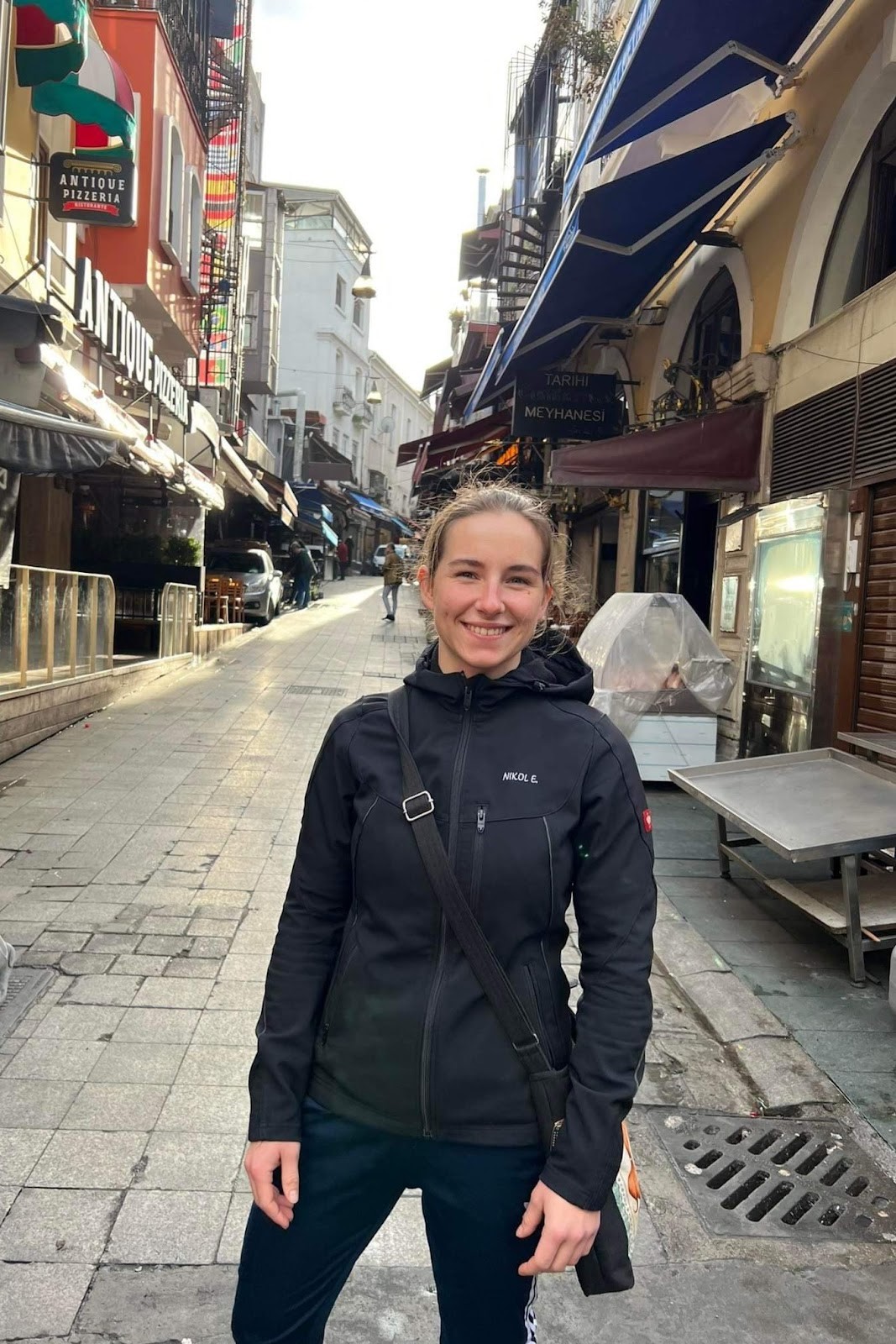
Nikol Eichlerová practices kendo st Nozomi dojo in the city of Hradci Králové under Martin Fritz (vice-champion EKC 2017). Nikol now 23-years-old, started kendo when she was 7-years-old and joined the national team at age 15. She participated in her first EKC in 2016. She trains 2 to 3 times a week at her dojo, and since January has dedicated almost every weekend to practicing kendo. As 4th dan, Nikol actively leads training sessions and mentors the next generation of kendoka. She is appreciative that she has been able to visit many countries because of kendo.
Currently, Nikol is in her third year of medical school. It is a huge challenge for her to coordinate practicing kendo with her studies as both are highly time-consuming activities. Nikol has participated in 5 European Kendo Championships (EKC), 2 times in the junior division and 3 times in the women’s categories.
Achievements in Kendo
• 2016 EKC Junior Team Bronze Medal
• 2016 EKC Junior Individual Fighting Spirit Award
• 2023 EKC Women’s Individual Gold Medal
 Kate Sylvester Perspectives