Foreword by Kate Sylvester.
With the World Kendo Championships (WKC) fast approaching, this new series of articles focuses on women’s perspectives and approaches to competitive kendo leading up to the WKC in Italy (July 4-7, 2024). The articles feature insightful and inspiring reflections from women competitors, coaches and referees.

Coach of the Czech Republic women’s national kendo team, Jana Ziegelheimová sensei (7 dan renshi) is an extraordinary leader in kendo. Until I met Jana in person, she was a kind of enigmatic figure to me. I first heard of Jana through Hiroshi Ozawa sensei some years ago when we were discussing women’s kendo. He spoke of Jana with high regard and the more I hear about Jana’s kendo and influence, it seems that she is a leading light and incredible support to kenshi in Czech Republic and neighbouring countries. I first saw Jana at the 2023 European Kendo Championships (EKC) and respected that she was competing as a national team representative. Having such role models (you can be what you can see) encourages people to decide for themselves what goals to pursue and what is possible, rather than allowing social norms and responsibilities to dissuade and dampen personal ambitions and opportunities.
I finally met Jana in person at the Aki Taikai in France last year, when she finished 2nd place in the first 7 dan tournament in Europe for women. Through watching how she held herself, performed kendo, and interacted with others, her warmth, intelligence, and strength was palpable. She has a calm and powerful demeanour in a way that draws immediate respect and motivation to connect with her and learn kendo from her. I approached Jana for keiko in Hungary earlier this year with the hope of absorbing some of her kendo wisdom and comportment as I am preparing for my 7 dan exam in 2025. Our keiko was very short, but the presence and pressure that Jana demonstrated made it clear what I need to strengthen in my kendo. I was left feeling that I want to practise with her again soon.
Jana continues to appear in my social media attending various international seminars, trainings and competitions both for her own kendo development and in support of others. This is admirable considering the energy and time it consumes supporting the kendo development of others at the same time as raising a family and working. Jana is an exceptional role model for women and men in kendo. A luminary that shows by physical example, it is possible to develop your own kendo and teaching skill whilst supporting and inspiring the growth of others. Impressed by her commitment, I asked Jana what motivates her to pursue kendo as she does. She simply answered that she has a love for kendo.
In the following passages, Jana’s words convey what it means to lead by example and that coaching kendo effectively requires more than simply teaching shiai techniques. As a national team coach myself, I find her insights and experience extremely valuable for my development. Her demeanour and teaching/coaching philosophy is that of a true leader and one that inspires self-confidence, success in its various forms, and long-term engagement in kendo for all ages and genders.
How and when did you start kendo?
I started kendo when I was a freshman at university and came across an advertisement for a kendo club that was run at the university. I asked my PE teacher if he knew the club and he (himself a karate man) recommended that I go and try it. I persuaded two of my classmates and dormitory friends to come with me and I have stayed ever since. Both of my classmates continued to practise for between 3 to 5 years and then their life took them elsewhere.
You are still active in competitive kendo having competed at the 2023 EKC and recently winning the Czech national championships. What motivates you to continue competing?
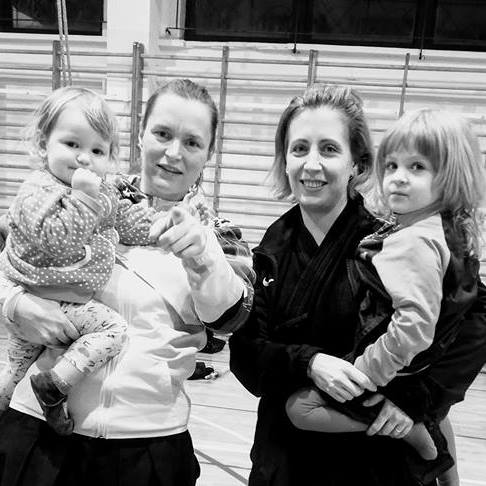
I believe competition along with shinsa, and regular keiko are integral parts of the three legged stool one’s kendo sits on. If you neglect one leg you will fall down. Also as we do not have a large community of kendo women in the Czech Kendo Federation, I take it as a motivation to my fellow kendo ladies to compete. I take part mostly in Czech tournaments, approximately 3 times a year, so that they can compete against a higher grade. If they win against me it’s definitely a good self confidence boost for them. Moreover, I am a leader of kids and juniors kendo club and I try to lead by example. As I keep telling my students that kendo is a lifetime pursuit, it’s also good for the kids to see their teacher being sometimes successful. Also my 3 own kids practise kendo. I believe it can be a good example for them too, that their mother is doing something that is meaningful to her other than house chores and work.
How do you manage competing and coaching at the same time? Is it challenging?
I do not concentrate on competing, coaching is my main goal for now. Competitions are fun for me and I enjoy the atmosphere of kendo shiai. However, I give it no other thought. Coaching is more challenging now for me as you also affect other person(s). It is harder as I need to understand my students, their capabilities and limitations. I learn a lot about them and myself at the same time through our relationship.
Is it difficult to compete against the team members that you coach?
I do not think about them as my team members when doing shiai with them. Shiai is shiai and it is different from my feelings for them. It’s rewarding if any of my team members or any of my students can win against me. I honestly feel happy when that happens and as they are becoming stronger and me, older, it is happening more and more often.
You have had a long career in the national team, what has motivated you to continue for this long-period?
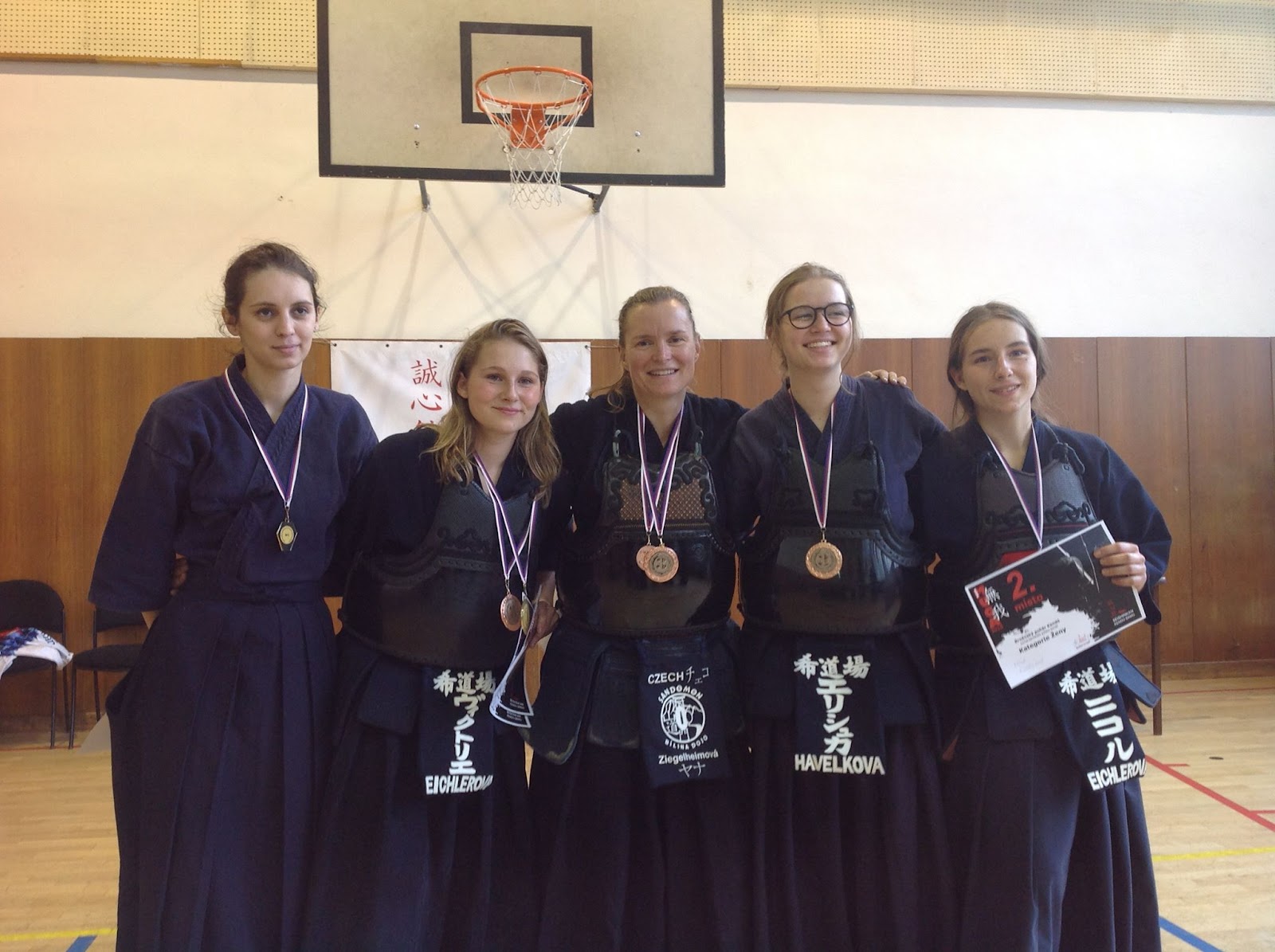
My first appearance in the national team was when I had 4 kyu and I think there were 3 other women in the Czech Republic willing to represent our country. Then around my 3-4 dan I felt on top of European competitors so I kept trying to compete as best as I could. We had a really nice women’s team in 2010-2014, when we reached the quarterfinals at EKC repeatedly and I thought it’s a matter of luck to reach medal position but then the women left kendo for various reasons (pregnancy, work, life in general) and sadly I stayed alone with men again and not so advanced ladies.
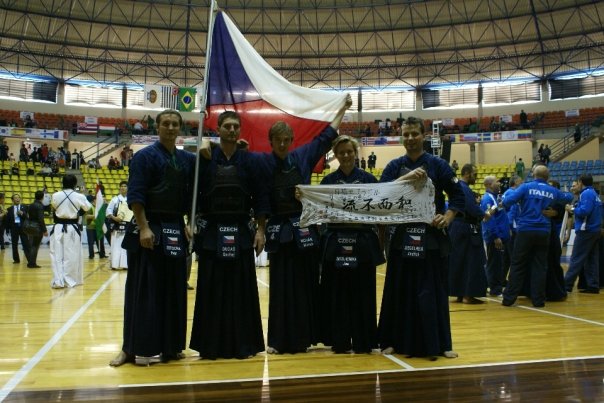
However, thereafter the girls who started kendo as kids grew up and I sensed their potential and they agreed to build up a young team of Czech women. We worked together before the 2019 EKC in Serbia, when Nikol Eichlerova (2023 EKC Champion) debuted in senior category and her sister Viktoria competed in the junior category for the last time winning bronze with the team. We stayed in touch with other possibly strong women and trained together, competed together, went on weekends together until we had a reasonably strong team that only needed experience.
My last appearance at EKC in 2023 was caused by a series of accidents, where 3 of our team members got injured just before the EKC deadline so we agreed with our Team Manager to put me on a team as a back-up. I think the women liked me behind their backs even though it felt strange for me to be an EKC competitor again.
What is your coaching philosophy?
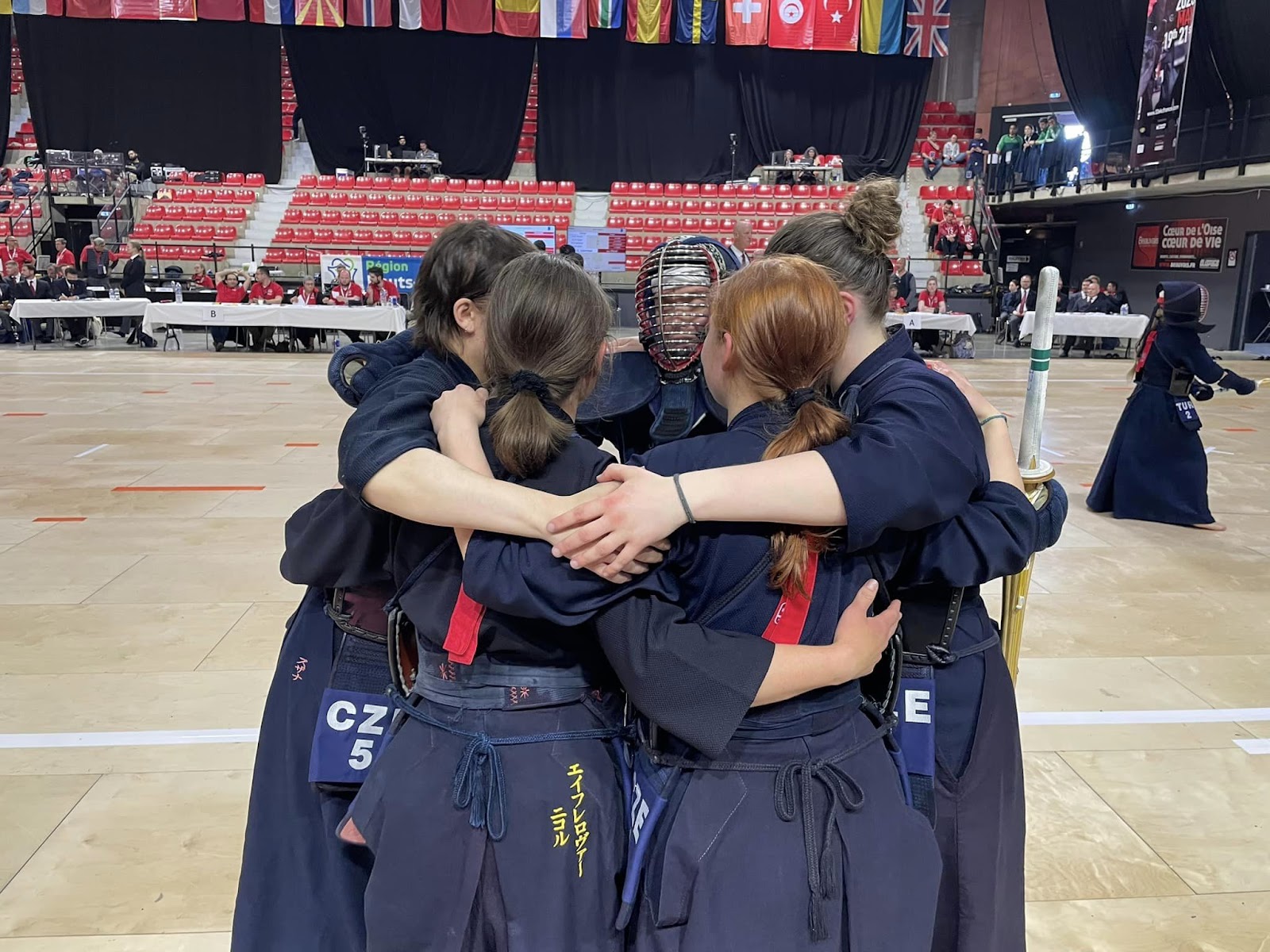
Until now it was “lead by example”. I am reconsidering if that is the correct approach but can not tell how or if I am going to change it. I like the women to feel safe to tell me what is bothering them, where they feel most comfortable in a team, I also like to consider their opinion on training, warm-ups, and everything, when preparing keiko. Basically I am trying to develop a trusting atmosphere within the team where ideally they all are friends and can rely on each other.
How do you measure success for your team members?
Success is when the team works together towards their mutual goals, when the team mates care about each other, when they support each other, and generally when the chemistry is right, then the team gives the best performance no matter the result.
How do you prepare your team for a major competition?
We try to attend major European competitions to gain experience. Unfortunately we are facing money issues all the time as all team members carry their expenses for the EKC and World Kendo Championships (WKC) with just a little bit of support from the federation. Some of my female members struggle a lot financially. We have a fixed schedule of training twice a month sandwiched between events abroad. We cooperate with Poland and Germany and try to have national team training together from time to time.
Please share a memorable coaching experience.
I have so many different coaching experiences. When kids from my club went for the first time to international taikai and some were successful, then when the same kids grew into juniors and managed to place 3rd at the EKC when I was coach. Next I remember being proud of my pupil when my friend and great kendo sensei Christian Filipi praised one of my students not only for his kendo or winning but also for his humble attitude. Of course when Nikol Eichlerova won EKC last year I think the whole Czech team and myself were proud and it felt as though everyone had participated in her success. I am proud of her achievement even though it’s now in the past.
What do you love about competitive kendo?
I like the challenge of understanding the other person’s kendo and the communication that happens between the two people through their shinai and energy. In the last decade, for me it was not about winning shiai, but rather about getting to know the other person and enjoying the match. Ironically, I have won more shiai than ever with this approach. I also like its unpredictability. Who was the winner yesterday, literally, can be defeated today.
How have you personally grown from competitive kendo as a coach?
I always imagine how I would have liked my coach, the one that I never had, to behave. Also, what advice a competitor could use, so I guess my career as a competitor has helped me as a coach.
How have you dealt with kendo slumps or a disappointing team performance?
There is not always sunshine; there are good days and bad days both in kendo and in life. I keep telling myself and the team that a little bit of luck also plays an important role in competitions. Of course I give them feedback, but I try to do it positively, reminding them that you can not change the past but you could learn from it.
There are few women coaching national kendo teams, and even fewer women coaching men. Do you think women are capable of coaching male national teams?
I am in touch with Yunsook Ma sensei, who coaches the Italian women’s national kendo team under the head coach, her husband Livio Lancini sensei. I like the chemistry between her and the women and the whole team in general. We are trying a similar approach, where the national team leader has the right to veto and select the male and women national team coaches. We closely cooperate with the Italian team. I think women are capable of anything they put their mind on, but do not know any women national team coaches that coach men also.
What would you like to achieve as a coach at this WKC?
We set the team goals together with the women members, which are to be best prepared as possible, to have a working team where teammates can rely on each other, and everybody knows their role in the team, even the coach. It would be too unrealistic I think to set any other goal for this WKC.
Please share any words of wisdom or motivational words that may inspire other women and men to take up coaching after they have finished with their competitive careers.
Not sure if I am the right person to share wisdoms but I think it is important to keep certain continuity of the team and the kendo level. It is crucial that the people, who previously were good competitors, support the future competitors by helping to coach or manage. It is frustrating to start over and over from scratch and who else understands the system more than people who were in the centre of action?
About Jana Ziegelheimová
Jana Ziegelheimová sensei is an instructor at Sandomon kendo club in Prague. She has been the womens’ and juniors’ national team coach since 2016 and was previously a national team member for almost 20-years with breaks. She has won the Czech nationals championship 11 times, the last 6 consecutively. She has also won medals from the international tournaments in Europe, mostly from tournaments closer to the Czech Republic. Frankly speaking she does feel overwhelmed quite often and feels the need to take good care of her ageing body and mind, for example, by means of a few days’ retreat. This is not happening as often as she would like, but she is working on it.
Dr Jana Ziegelheimová is a PhD graduate from Czech Technical University (Faculty of Mechanical engineering, Department of Materials Engineering). After graduation, she spent 4-years in Japan as a Postdoc researcher at Tokyo University of Agriculture and Technology. Shortly before giving birth to her first child, she returned to the Czech Republic, where she established a children’s kendo club in 2008 in Sandomon Bílina.
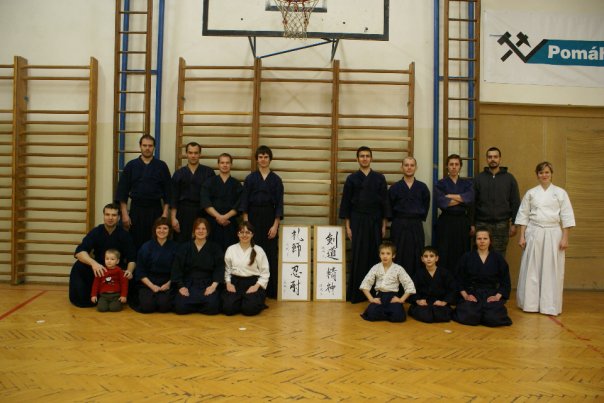
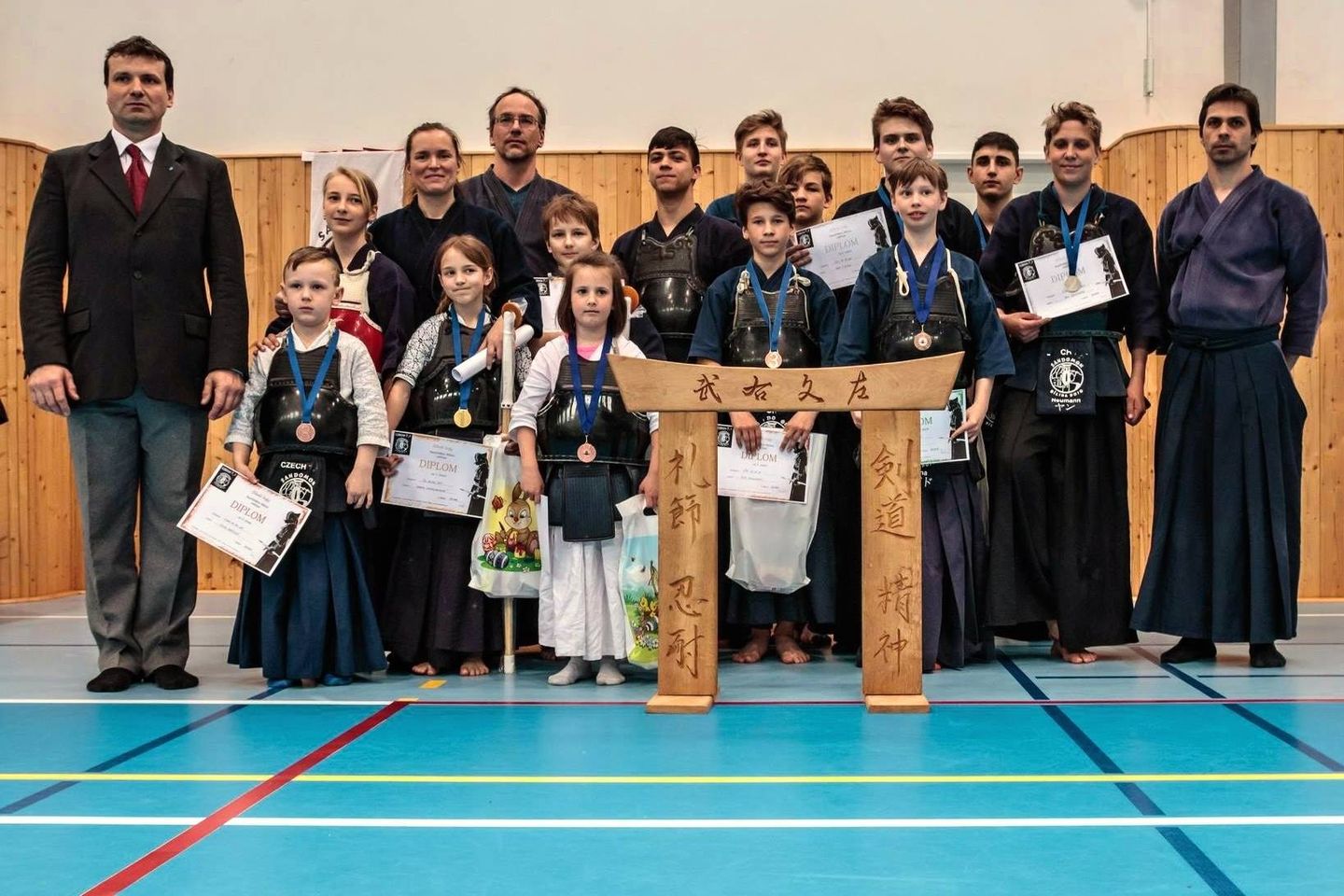
Currently Jana works at the National Library of Technology in Prague where she is in charge of Makerspace and partly at her alma mater at the Department of Nuclear Engineering. Jana has 3 children who have their own hobbies. All of them practise kendo on different levels of interest. Her other passions are music, books, skiing and alternative medicine. However, most of her free time, besides work, is eaten by kendo and child-related activities.
 Kate Sylvester Perspectives