Foreword by Kate Sylvester.
With the World Kendo Championships (WKC) fast approaching, this new series of articles focuses on women’s perspectives and approaches to competitive kendo leading up to the WKC in Italy (July 4-7, 2024). The articles feature insightful and inspiring reflections from women competitors, coaches and referees.
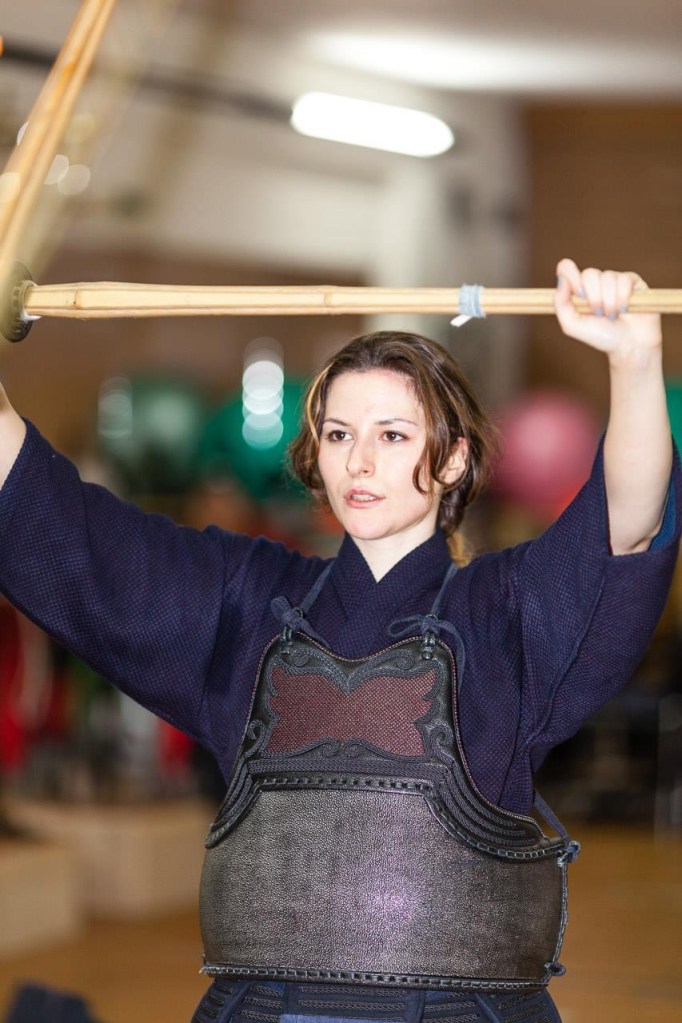
Photo credit: Vangelis Paravas
My first impression of Asteria’s kendo is still in my mind. I recall feeling admiration for her kendo and wondering where and how long she had trained in Japan. Her sound kendo basics, variety of waza, and a fluidity in her kendo, reminded of how high-level Japanese players embody kendo sense and movement. I was pleasantly surprised to learn that her kendo foundations were cultivated in her homeland Greece, and that her mother and coach, Antigone Tsintza, has been a significant influence on her kendo development. Backed by athletic talent, a love for kendo, determination, and coaching competence, Asteria’s kendo is a motivating example of how credible kendo basics and successful competitive skill can be merged and developed outside of Japan.
Although a superstar within Europe, Asteria is very approachable and demonstrates a genuineness both in her kendo and the way that she interacts with people. As such, it was unsurprising that when she was knocked out of the 2023 European Kendo Championships (EKC) unexpectedly in the quarter-finals, the stands paid homage to her performance.
“A moving moment, which I have never seen in a major tournament, was the applause and cheers for a competitor from a stand full of supporters from other national teams. A clearly disappointed Akila braved her tears and blew a kiss of gratitude to her wave of supporters in the stands.”
This unforgettable scene featured in my article, Women’s Perspectives on Female Kendo at the 32nd European Kendo Championships.
Understandably, Asteria was disappointed as she was in top form during the competition having scored awe-striking ippon against her opponents throughout the tournament. For top-ranked competitors in good form, which is a result of experience and good preparation, being knocked out of major competitions before the finals is a heart-wrenching component of competitive kendo. Nevertheless, as Asteria shares in her responses to a series of questions in the following passages, losing can also provide development opportunity and motivation to rise to the next challenge. Asteria’s inspiring and personable words express the possibility to connect competitive kendo to personal development. A pairing that elevates others and engages with the “bigger picture” of kendo.
Your shiai kendo is technically quite beautiful. Are you able to explain how you developed your kendo and who inspires you?
A.A: I have the privilege to have my mother (Antigone Tsintza) as my teacher and coach so as you can imagine I get honest feedback and guidance every day. Almost each training we focus on technique and there is always something I need to work on and polish whether that’s my footwork, the way I’m holding kamae, if I use my torso enough, or the way I do a technique. I constantly have something to fix and I get the help and support I need along the way to never quit on trying to better my technical level. My biggest inspiration is my mother, it has always been since my childhood because she was the athlete of the family. I also get massively inspired when I sit and watch kendo shiai, not only the big wonderful champions but every level. Shiai works for me like this, it is something so difficult yet so honest, I love watching people fighting and finding a way to get ippon.
What motivates you to continue competition kendo, what do you love about shiai?
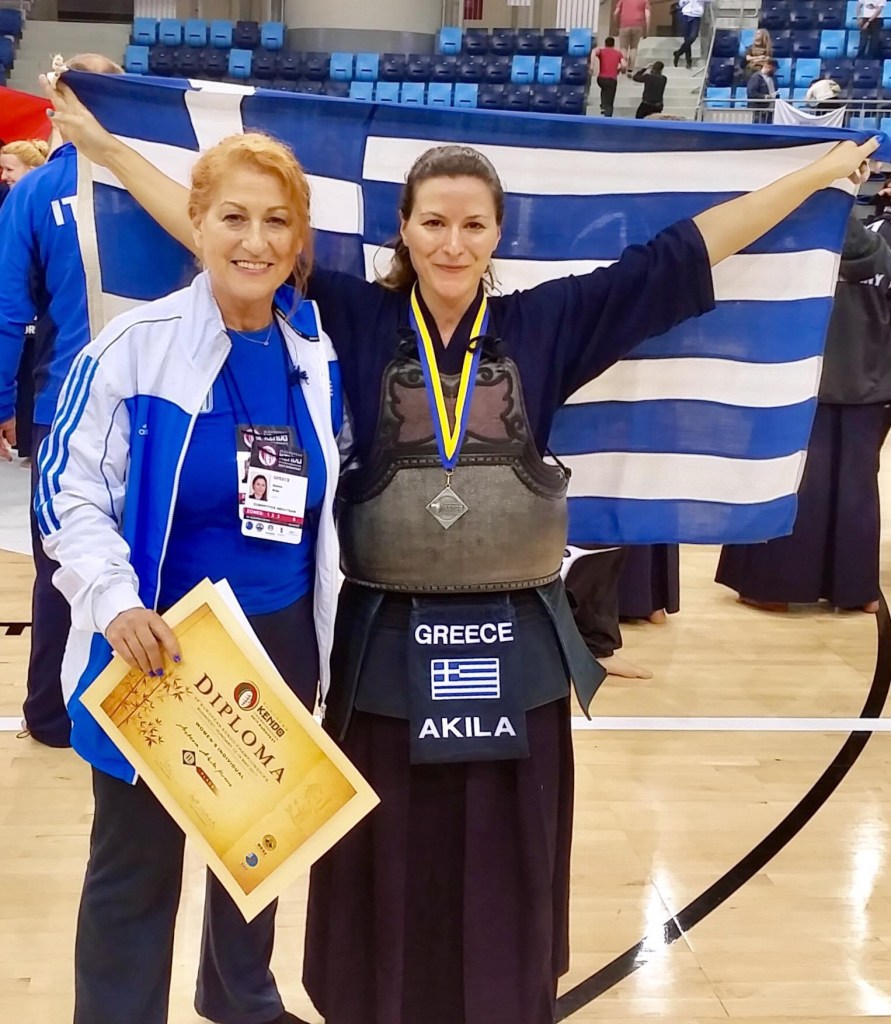
A.A: Ever since I started competing I was setting goals for myself. I had my role models and I wanted to fight against them and eventually one day win. Losing to the strongest women in Europe again and again kept me motivated and eventually I got to the level required for my role models to acknowledge me and that was my biggest prize. Winning gives me pressure but losing keeps me motivated. What I love about shiai is that it makes you put yourself out there, when you step in the shiajo you are no longer in the protected environment of your dojo, isn’t that a great thrill? You show yourself to the world and you get judged for it, this keeps you on your toes in your kendo development. Many times you will lose and in order to go back and win you must be brave and admit to yourself your mistakes and your flaws and go back and fix it. I love that.
How do you prepare for a major competition?
A.A: I do most of my training at my dojo and throughout the year when possible I try to go to competitions around Europe. Trainings at the dojo and with the national team are hard and demanding both physically and emotionally, so I try remind myself that rest is also important and part of the preparation so I don’t skip rest and I try to recharge by doing things that have nothing to do with kendo.
How do you deal with the pressure of competition?
A.A: I deal with the pressure terribly! Trying to deal with it is a never-ending task, more than any technical or physical work that I do, this is the hardest part of shiai. The constant doubt, the penetrative thoughts of failure, so much sometimes that it affects my whole body. At first I thought the more I would work the less anxious I would be, but that actually resulted in more pressure. Luckily I am a person that doesn’t keep it inside, I talk about my feelings all the time and I have someone listening to me, I get tremendous support from my parents and my friends. What I do is whenever I feel the pressure is to recognize my feelings, I let them go, I take a deep breath and I get into fight mode. The secret is to think of the fight, not of yourself, I try to remind myself that I love fighting, I love just giving my best, it’s not about the result, it’s about the passion of the fight.
How have you personally grown from kendo, particularly competitive kendo?
A.A: Shiai has definitely shaped me and helped me grow as a person. I am able to manage my emotions and thoughts, I am able to look directly into my flaws and try to change them and I have learnt to accept judgement and face the consequences of my actions. I strongly believe that shiai does that for you if you approach it honestly and see it as a way that helps your mental state and not only just to win trophies or say you had achievements. At the end of the day it isn’t about how many trophies you have on the shelf but whether you’re one step closer to being the person you want to be and be happy within yourself.
How have you dealt with kendo slumps or a disappointing performance?
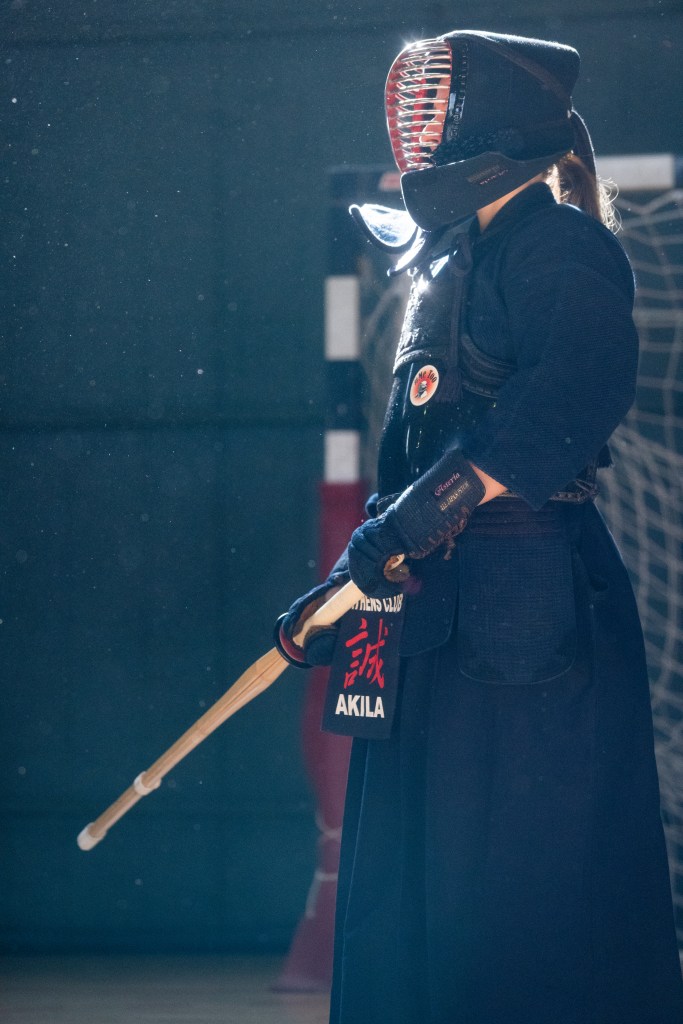
A.A: There is a period of regret after a big disappointment. I vividly remember two times I have let myself down terribly, at first you get the confusion and the anger, you blame everything else but I will never forget the day after, as soon as I woke up my eyes flooded in tears, silent tears and a weight over my chest, both times I had my mother next to me telling me, cry it out, rest, then if that’s what you want we start over again. And that’s what I do, I believe it is inevitable for all of us, that we feel like this at times but what I’d say to someone that would need to hear it is dive in those dark waters, swim around but don’t stay too long, come out and clean yourself, become new.
Please share a special shiai experience.
A.A: The EKC 2023, during the women’s individuals. I will never, ever in my life forget the support I got from the stadium. People cheered for me, got sad for me and eventually tried to glue back my sore pieces by so kindly seeing me out of the shiaijo with an applause. I was devastated but that incident assured me that I showed my kendo and people saw it. I felt like a child and a sister to lots of people that shared this moment with me, talked to me and hugged me. It will stay with me forever and I will try to always repay that kindness and love I received in any way I can.
What do you aim to achieve at this upcoming WKC in Italy?
I want to be able to show the best version of my kendo this year. This is my goal regardless of what stage of the competition it will lead me to. I want to end the tournament knowing I did it as right as I could.
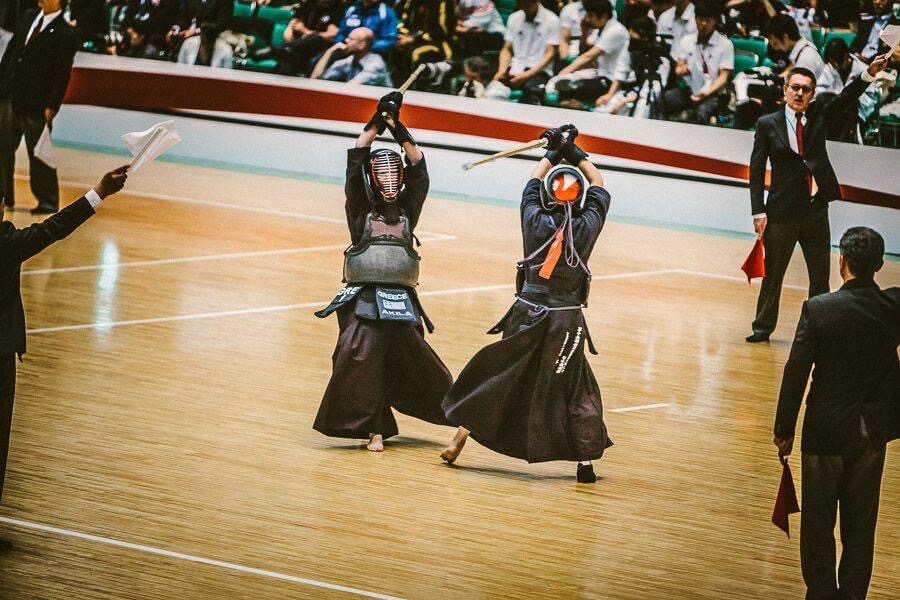
Photo credit: Vangelis Paravas
Please share any words of wisdom or motivational words that may inspire other women and men in the lead up to the WKC.
I would like to address this to anyone that is currently working on participating in competitions: never stop competing, even if it is three times a year or once in three years. No matter your level, no matter your age, if you like doing shiai keep on doing it. A result can be a feeling you will get, not strictly a win. It is fundamental that we put ourselves out there, for us. Lose and you feel sad but go back and try again. It is more about what you will tell yourself and how you will perceive yourself than about how others perceive you. Don’t be afraid and just never quit, it is never over.
About Asteria Akila
Asteria lives in Athens, Greece. She has a university degree in sports science and physical education. Asteria currently works at her family company that produces vinegar and other condiments.
Asteria is ranked 5 dan and is a member of Athens Kendo Club. She started kendo when she was 15 and has been a representative of the Greek National Kendo Team for 13-years. She has represented Greece at 3 WKC (2012-2018), with the upcoming tournament being her fourth.
Achievements in Kendo
- Eighteen times Greek individual champion
- Seven times national champion in teams
- Two times Balkan individual champion and 3 times with the ladies team
- Second and 3rd place at the EKC individuals
- Top 8 at the WKC individuals in 2018 (Korea)
- Three fighting spirit awards at the EKC and one at the 2018 WKC
Asteria has also achieved first place in various international tournaments around Europe such as the French Open, Iijima Cup, London cup, Hungary Cup, Belgrade Trophy, Alessandria Cup, and Athens Taikai.
 Kate Sylvester Perspectives