Foreword by Kate Sylvester.
The Polish Women’s National Kendo Team’s depth of experience, competitive skill, and tenacity is widely admired. The team has a solid history of competitive success and recently won silver in the team event, and both bronze and silver in the individual event at the European Kendo Championships in 2023. The memory of the team’s outstanding performance that toppled Brazil at the last World Kendo Championships (WKC) in 2018 remains. I have much respect for the Polish women’s team and have been inquisitive about the methods behind their serious approach, success, and dynamic development. The team has been coached under the supportive guidance of Wieslaw Biel (6 dan renshi) for over 10-years since 2013. The team’s performance continues to improve and I have figured that this, among other reasons, is also somewhat due to the team’s appreciation of sport psychology. The team worked with sport psychologist Monika Małachowska between 2019-2023.
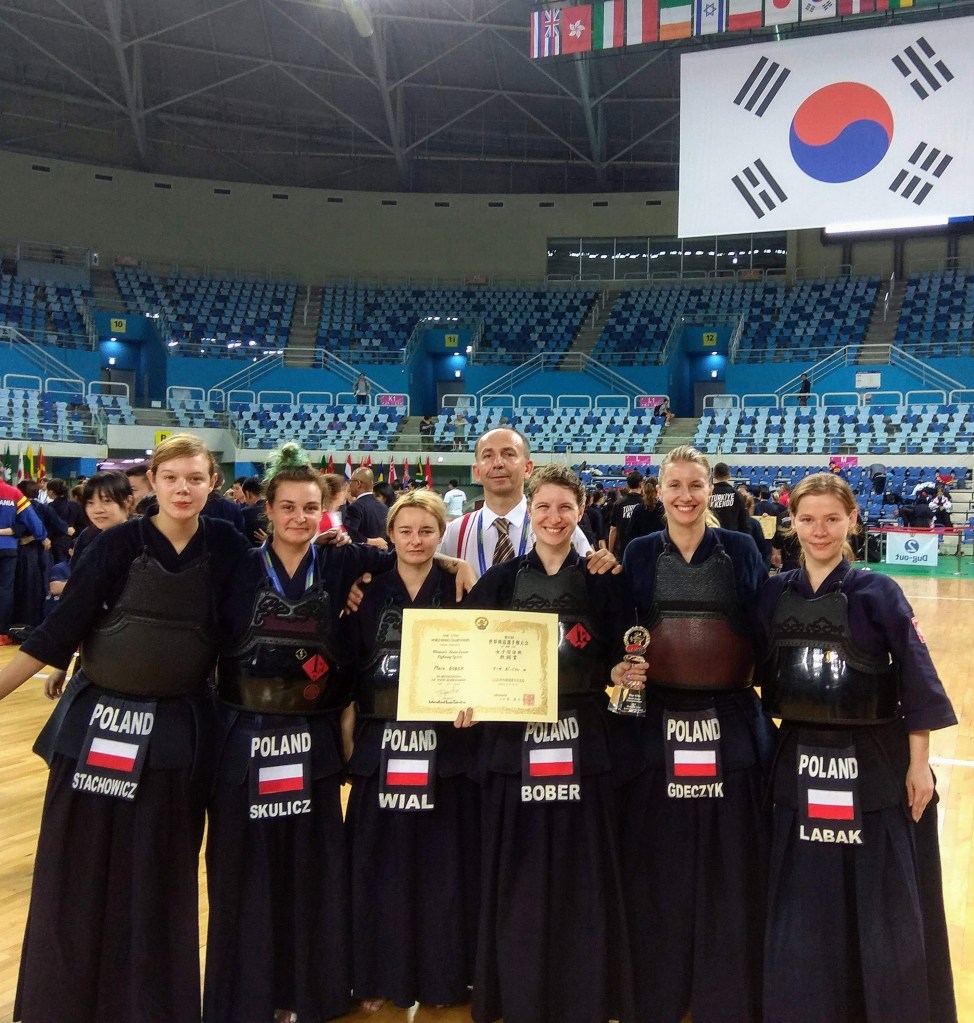
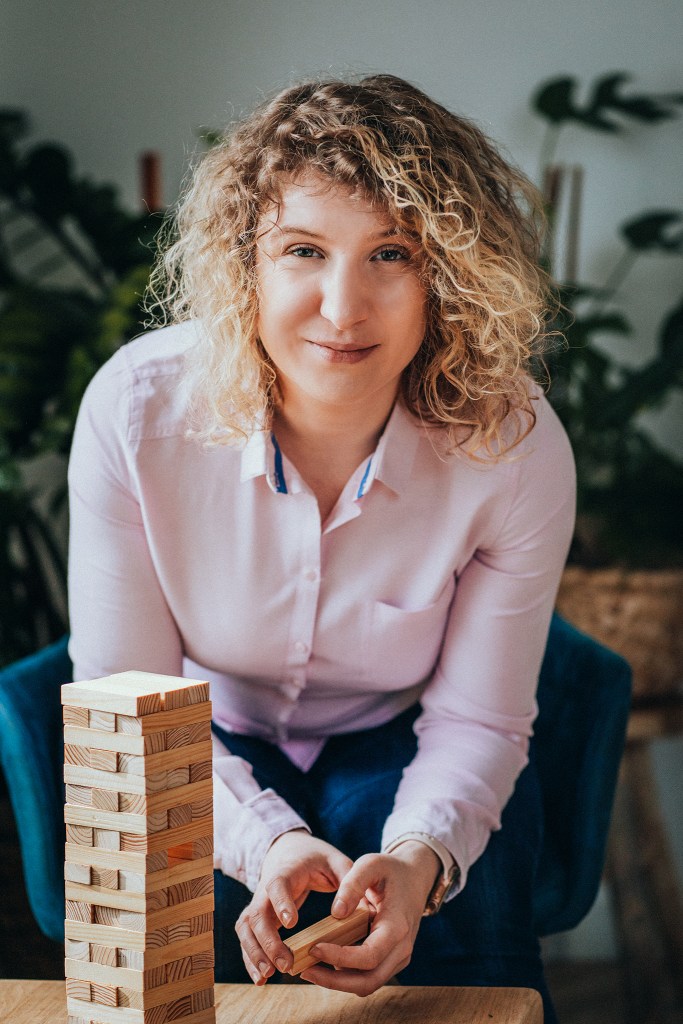
With the WKC fast approaching, upcoming articles on this blog site will focus on women’s perspectives and approaches to competitive kendo leading up to the tournament in Italy (July 4-7, 2024). This article features sport psychologist and Polish national team member Maria Bober and discusses her views on the application of sport psychology in kendo. I approached Maria for this article as I am interested in sport psychology and respected her outlook on kendo. I have particularly appreciated how she intersects competitive and fundamental kendo, whilst valuing the profound potential of sport psychology in kendo.
Personally, I have valued sport psychology and utilised it in preparation for the WKC as an athlete. I found it particularly beneficial to manage performance anxiety and to deep dive into the root cause of it. Owing to sport psychology (and a very good sport psychologist), I was able to achieve my personal goal at the last World Kendo Championships I competed in as an athlete. The goal was not explicitly result based, but rather, I desired to feel free in body and hold self-belief in my kendo under pressure. I trusted that if my goal manifested, I would execute my true kendo ability. I had decided that this would be the measure of my success, not the match result. That process has since benefitted my kendo challenges and other areas of my life. Thus, proving that competitive kendo is benefitted by sport psychology as it can also cultivate personal development.
The following passages share Maria’s expertise in both sport psychology and kendo. Her words are inspirational and her responses to a series of questions highlight some of the benefits of applied sport psychology in kendo.
What is sport psychology?
Let’s start with what psychology is and what a psychologist’s work involves. According to the British Psychological Society (BPS), “Psychology is the scientific study of people, the mind and behaviour. It is both a thriving academic discipline and a vital professional practice.” Psychologists have studied multiple aspects of human life, which caused the emergence of different fields within psychology (sport, social, clinical, business, positive, neuroscience, etc.).
So, who is a psychologist and what does their job involve? As psychology is a broad field, the term “psychologist” can refer to various roles. For instance, a psychologist could refer to a person who works as a scientist conducting research, or a professional who applies scientific discoveries and psychological knowledge to support other people in everyday functioning. In the case of a sports psychologist, their job is to work as a consultant for athletes or athletic teams. They assist their clients in 1) discovering areas for mental skills development and 2) to help them build a personalised set of mental skills to assist them in their sport.
I find the quote from Blecharz (2005) sums up sports psychology very well:
“Sports psychology uses theories, principles and techniques taken from psychology not only to address complications, but also the personal development of people practising sports.” (Translated from Polish)
How can sport psychology benefit kendo practitioners?
The main aim of martial arts is to maintain a clear mind and a brave heart during a fight, which results in a higher chance of victory. This might sound surprising, but this is also the main goal of sport psychology; to help athletes perform at the top of their skill level. To help them attain this, sport psychologists work with athletes on their mental state, which has the power to impact their body during competitions. This helps athletes deal with changes in their body, for instance reactions to stress, pressure or emotions, which might impact their mind. The most important thing for a sport psychologist is to know the person they are working with, in order to build “tailor made” mental skills that will assist them in achieving their goals. To explain how sport psychology can help martial arts competitors, I like to use an example of Japanese Shikai (4 “sicknesses” of the mind):
a) Kyo: surprise
b) Ku: fear
c) Gi: doubt
d) Waku: confusion
Sport psychology proposes the following to deal with those “difficulties”. The first step is to explain what changes occur in our mind, body and behaviour while we experience surprise, fear, doubt and confusion. Understanding what happens to us is the first step to accepting those changes in our body and mind and finding a way to deal with them. The second step is to build the skills necessary to cope with those changes, and choose to use them when such challenges arise.
Let’s focus on surprise and fear, common experiences in martial arts. The “cure” for Kyo is “preparing for the unexpected”. This is an exercise which aims to prepare us for anything that may happen to us during the fight (in athletic terms, it means to describe all situations which surprise us, are uncomfortable, strange, make us angry, or situations perceived as unfair), no matter how absurd an event may seem. Once we have compiled a list of such situations, we can take the next step: determining how we can react to those situations and realising that we have real influence on those aspects. The third step is to build those things into our training with something called situation training.
Let’s move on to Ku, or “fear”. Ku is not only about fear caused by confrontation with stronger people but also includes various fears that can overtake us. If fear controls us, it will impact both our body and mind. For instance, when faced with fear, our muscles will be tense, our breathing will quicken, we will get tired faster, and as a result, we will stop believing in ourselves, giving the opponent an advantage over us. To tame Ku, sport psychology proposes various tools. For instance, we can use our strengths and skills to set task-oriented goals for the fight in order to reach our Individual Zone of Optimal Functioning (through effective regulation of body arousal). This can be achieved through the use of breathing, relaxation, and visualisation techniques. These strategies are presented as general propositions.
Does sport psychology benefit and be applied to areas outside of kendo (work, relationships etc)?
The amazing thing about sport psychology, and what I personally find the most rewarding, is that the main aim is to help individuals with their personal development, which has effects beyond sport. In fact, every sport psychologist is a psychologist (someone who applies scientific discoveries and psychological knowledge to support other people in everyday functioning), who works in the field of sport. Athletes often find positive effects on their personal lives as a result of working on various skills such as dealing with stress, emotional regulation, communication skills, team building and problem solving. Mindfulness in particular can improve how athletes deal with stress, as attention shifting aids in problem-solving and working under pressure. Additionally, understanding their emotions and learning how to react effectively can help them cope with their emotions more effectively. As many athletes have already experienced, improvements in private life often lead to enhanced satisfaction and performance in their sport.
As a national team member, how has sport psychology benefitted your kendo performance?
I could talk for hours about the positive impact of working with psychologists in my personal life and the positive influence on my performance in kendo. Unfortunately, as is the case of a coach, athletes cannot train themselves, and this is also true of sport psychology. Therefore, I use the help of other psychologists both in my private life and in sport. I think a lot of people who are going to read this article will think “of course she mentions the positive benefits of her own work”. To counter this perception, I want to propose a question for kendo competitors and other martial art fighters who have experience with sport psychology: Did working with a sports psychologist benefit you? In which areas of your martial arts or private life did it help and how?
For me personally, sport psychology helps with setting task goals, which helps me deal with pressure and develop my kendo skills. I believe sport psychology has directly impacted my kendo results. I use sport psychology to build my personal pre-start routine which helps to regulate my muscle tension and focus on shifting my attention to the here and now. This preparation helps me to step into competitions feeling fully prepared.
As a sport psychologist, what is rewarding about working with athletes?
I love my job. For me personally, the biggest reward is when an athlete I am working with starts to find ways of dealing with difficulties for themselves (for example dealing with stress, fear of loss, and failure) and they find satisfaction from mental and physical skill development (listening and trusting their own body and experience). Of course, medals and results make everyone proud and happy, but if an athlete is successful, let’s call it “inner peace” in their sporting life, then I find myself the happiest and satisfied. Every client is different and brings a new perspective to my work. In the end, the most important thing is that they come out of their sessions with me with a feeling of achieving what they are aiming for (dealing with stress, coping with emotions, performing under pressure etc.).
I would like to thank everyone who read this article for their time and curiosity in topics of mental development in sport.
About Maria Bober
Maria has worked as a sport psychologist for 9-years in her private practice (Website: sportbober.com; Instagram: @mb_sport_psychologist). She completed her master’s degree in psychology at SWPS University of Social Sciences and Humanities (Wrocław, Poland) and a postgraduate degree in Positive Sports Psychology. She is constantly expanding competencies by participating in various training courses and conferences.
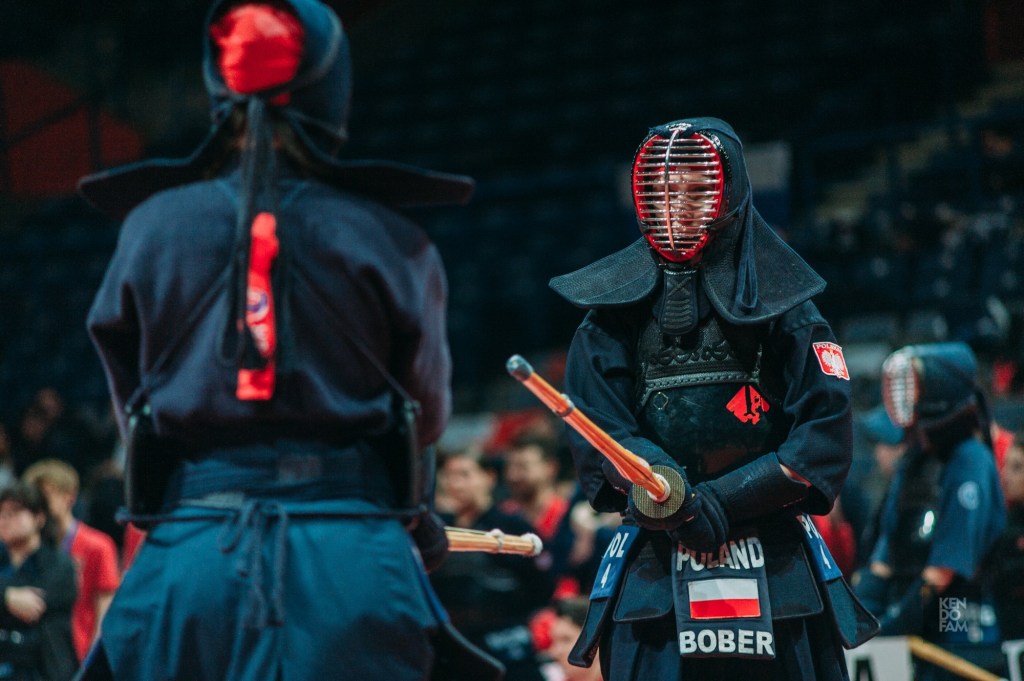
Maria is ranked 5 dan and has practised kendo for more than 18-years. She has been a member of Wrocławskie Stowarzysznie Kendo since 2009, and also a member of Budapest Főnix Kendo és Iaido Klub (Hungary) from 2022. Maria has been a member of the Polish National Team since 2012. Her father is a professional master-class equestrian trainer, which fostered her passion for sports.
Achievements in Kendo
- Polish Championships multi-medalist
- European Championships team multi-medalist
- Fighting Spirit Award (kantosho) at European Kendo Championships (Serbia, 2019) and World Kendo Championships (Korea, 2018)
Photo Credits
Profile pictures
Patrycja Martyniak
Instagram: @patka_martyniak_fotografia
Kendo pictures
Alex Konstantinov
Instagram: @kendofam
References
Blecharz, J. (2005). Wsparcie psychologiczne w drodze do mistrzostwa sportowego. Referat wygłoszony na XXXII Zjeździe Polskiego Towarzystwa Psychologicznego, Kraków, 22-25 września.
 Kate Sylvester Perspectives