The 32nd European Kendo Championships (EKC) was held in Beauvais, France May 19-21, 2023. It was well organised by France Kendo (CNKDR) and ran smoothly considering that Italy handed over the EKC at short notice to take on hosting the World Kendo Championships in 2024. It appears that the European kendo community is steadily returning to pre-COVID normalcy, but now a palpable insecurity and sorrow lingers as the Russian war on Ukraine continues. Showing the solidarity within Europe and the European Kendo Federation’s (EKF) democratic values, the Ukrainian National Kendo Team were applauded with genuine support and compassion at the opening ceremony.
The article reflects on women’s participation in the event. I also share my perspectives on the competitions from the viewpoint of a national team coach (Sweden) and as an academic. The article features the views on female performance or personal experiences of the EKC from 16 past and present women national team representatives who were either competitors, shinpan, officials, commentators, event assistants, managers or coaches at the event. The following passages limelight the competitions that females participated in. The purpose of this female-centred focus is to forefront women’s kendo. This article aims to enhance the status of women’s kendo in the region and provide a reflection on positive developments and how federations can take a more proactive approach to bettering women’s kendo at a less hesitative pace.
I attended my first European Kendo Championships (EKC) in Germany in 2022. I had previously watched the EKC on livestreaming and was of course familiar with women’s kendo in the region due to my previous participation at 7 World Kendo Championships (WKC). My main role at the EKC was women’s national kendo team head coach of Sweden. I am also an avid researcher of women’s kendo and sport so I therefore also observed the championships from a critical feminist perspective.
On social media last year, I shared my wonderment on why the men’s kendo level had appeared to have improved significantly compared to women at the 2022 EKC. I also mentioned issues with timetabling and that the spectators were much more enthusiastic watching the men’s events. These aspects are not unique to kendo. For example, women’s sporting events are still often the “curtain raisers” for men’s events and this timetabling is evident at the EKC as women’s events always precede men’s events. I received criticism for my comments but my point was not to degrade women’s kendo or the event organisers, but rather raise concerns as to why men’s kendo, particularly the “new” younger generation of men had such solid fundamentals and a superb execution of waza. That is not say all men displayed technically good or “correct” kendo at the competition.
Although “Wowed” by the men at the EKC in 2022, I also felt quite disheartened and confused as to why female competitors in general did not demonstrate the same level of development. To be clear—I am not speaking of all female competitors as we know there have been, and are many, skilful and formidable superstar women who can outplay many men with “good” or correct kendo. As I mentioned in my social media post in 2022, a male sensei had commented that the lower level of women’s kendo was due to women having children and getting married, which in my mind is an over-simplistic, anachronistic, and erroneous logic.
The reality is also that many kendo women are not married and do not have children. At the championships there were a number of competitors who were mothers (some of the best competitors) and one mother was even breastfeeding between her competitions. There are a higher number of women competing at the highest level in Japan and elsewhere, that return to competitive kendo soon after childbirth and continue kendo through raising their children. I noticed at this EKC there were even more mothers competing and women senior in age and dan rank. Needless to say, I was awestruck by the diverse range of women competing despite the apparent “age range norm” for women competitors.
At this year’s EKC, however the level of women’s kendo had noticeably improved. I also observed that there were many more spectators watching the women’s events. I reflected on the marked improvement from last year and considered that maybe COVID had affected the progress of women’s kendo. Moreover, in the period between the 2022-2023 EKCs, there have been abundance of competitions and seminars that women around Europe have attended. Perhaps these opportunities have given national teams more time together fostering motivation to upskill and stregthen team bonds.
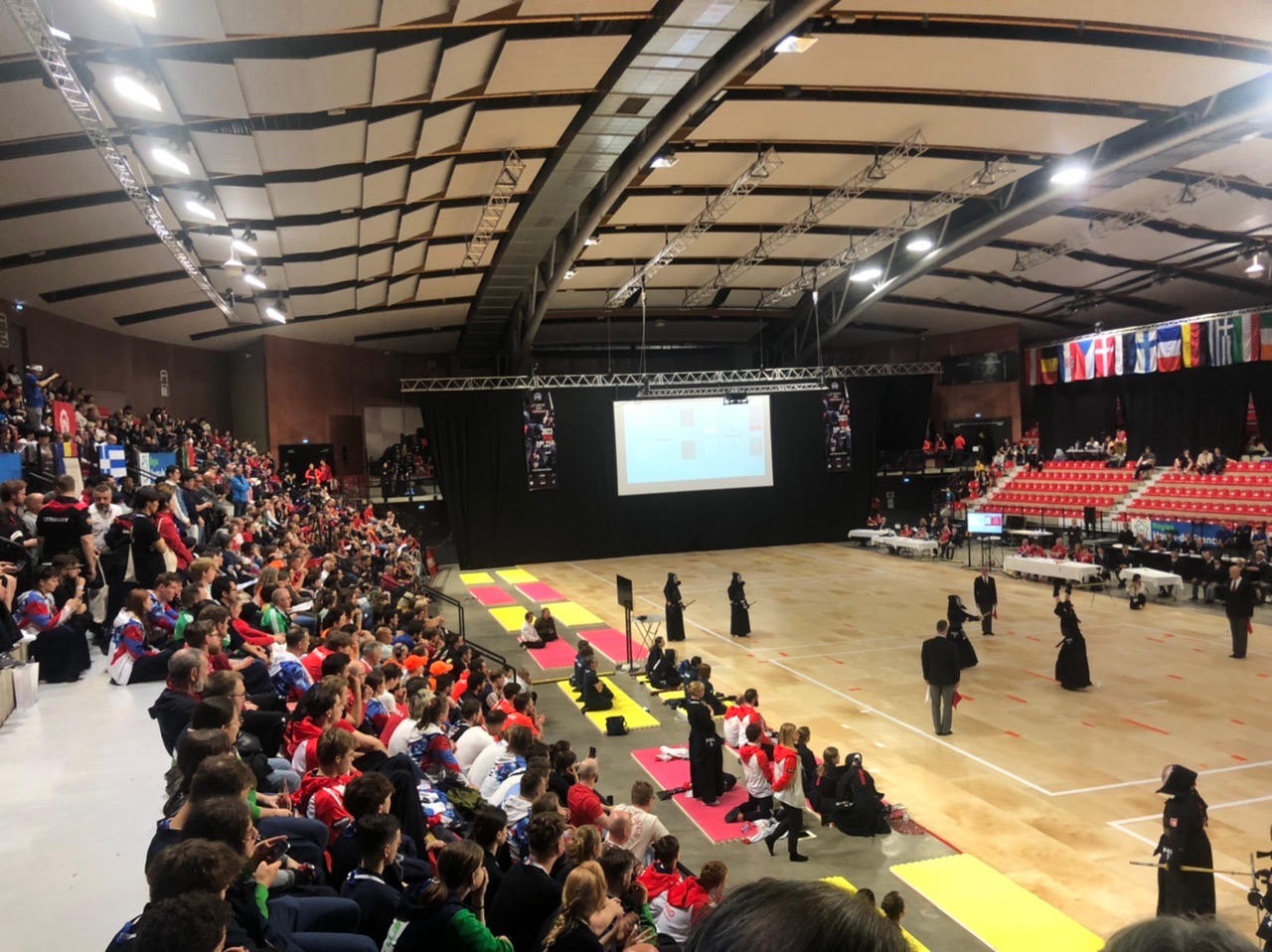
Photo: “Full-house” watching Women’s Team Final
There were also more female competitors (women and juniors), and women coaches and managers—but less female shinpan at this EKC compared to last year. This year only 15% or 6 out of 38 shinpan were women, two fewer than last year.
I will now provide a summary of the 3 days of competition focusing on the female events and thereafter present reflections from past and present female national team members who were officials, shinpan, competitors, managers, coaches, tournament assistants, and commentators at the EKC.
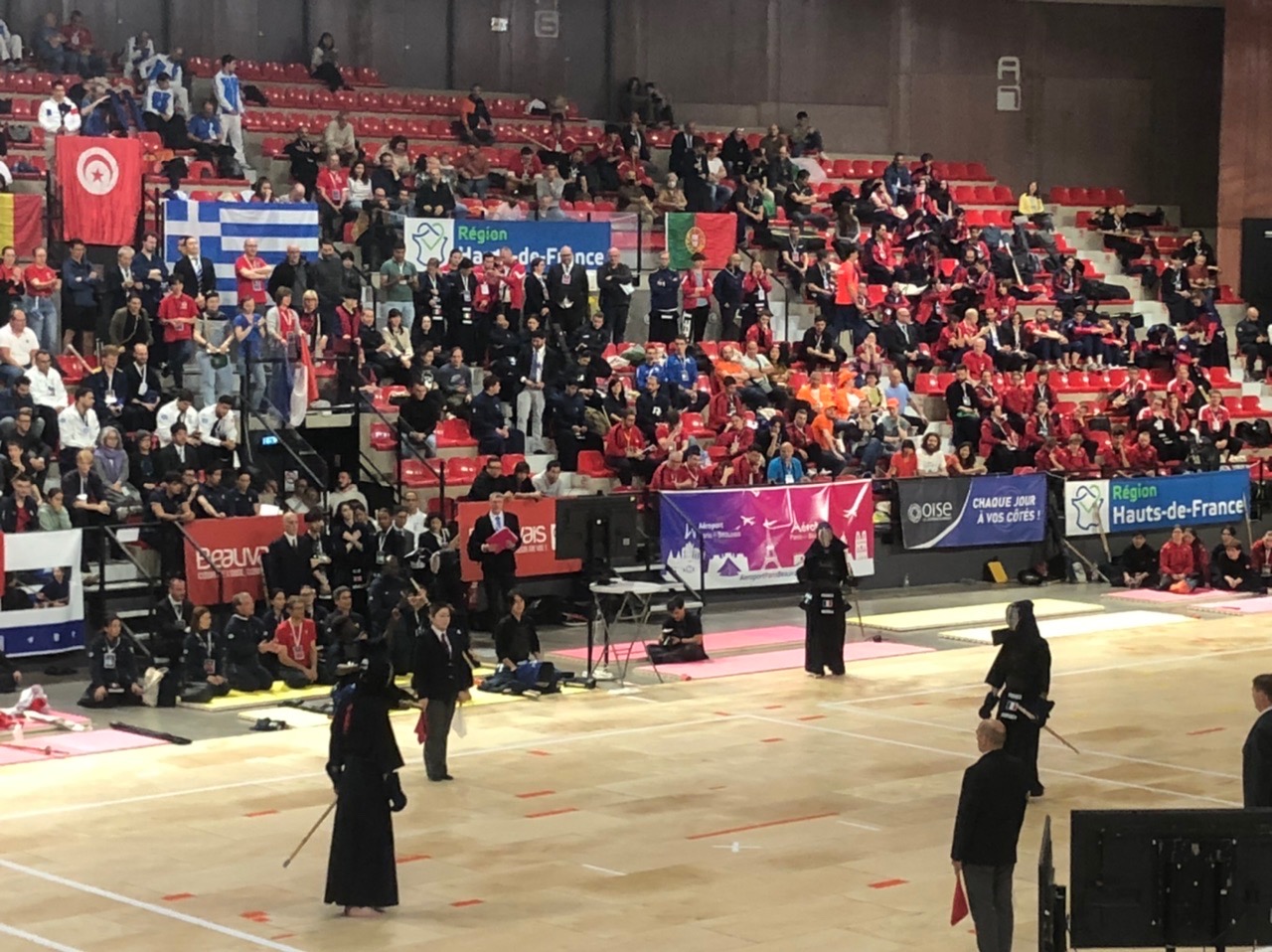
Photo: Kumi Sato (Sweden) as head judge of Junior Team Final
Day 1 (Junior Team and Women Team)
I have attended a number of WKC and I still not yet accustomed to the EKC timetabling of having the individual events first. One positive aspect of the EKC is that there is no time difference in shiai time based on gender. The practice of shorter shiai time and both the women’s individual and team competitions occurring on the same day seems to be a practice peculiar to the WKC. The junior categories are not segregated by gender and there were a greater number of female juniors at this year’s EKC with an increase from 10 to 15 junior females, or an increase of 50%. Seventeen junior teams competed in the category. Catherine Roth of Austria won a fighting spirit award in the team event and 4 out of 5 junior members of Austrian team were female. Other nations that had more than 1 female junior in their teams were Belgium, Portugal and Switzerland.
This year Sweden could not field a team for the women’s team event due to pregnancies, injuries, a low number of active females, and a need for strategies that ensure consistent development within the women’s national team. This is not an uncommon problem as only 24 countries fielded teams and some teams had less than a full-team. Although at this EKC there were 3 more women’s teams than last year, 32 nations were able to submit men’s teams this year. Admittedly I felt a little low-spirited not having a team to coach on the day, but I really enjoyed being able to observe the women’s team event as a spectator. The event was very well organised and it was easy to follow the team matches taking place on 4 shiaijo. This was benefitted by a large screen that presented live results and court information. I was able to observe how the teams prepared for their shiai and the atmosphere in the arena. I was moved by the enthusiasm and team spirit within the teams and also the passionate support coming the stands, coaches, managers and junior and male team members. These coaching observations provided some good ideas on how to strengthen team cohesion and team performance.
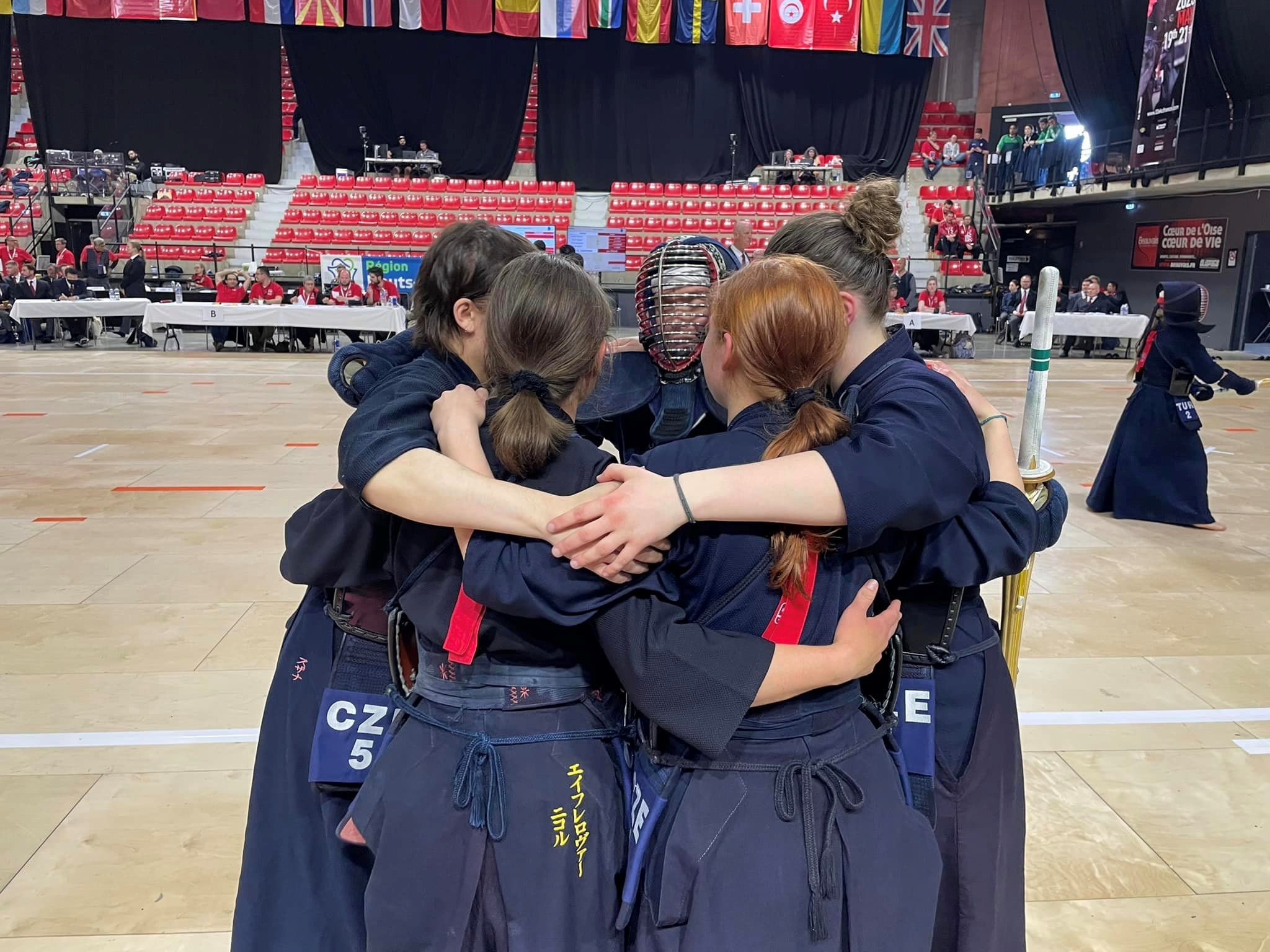
Photo: Team Czech Republic
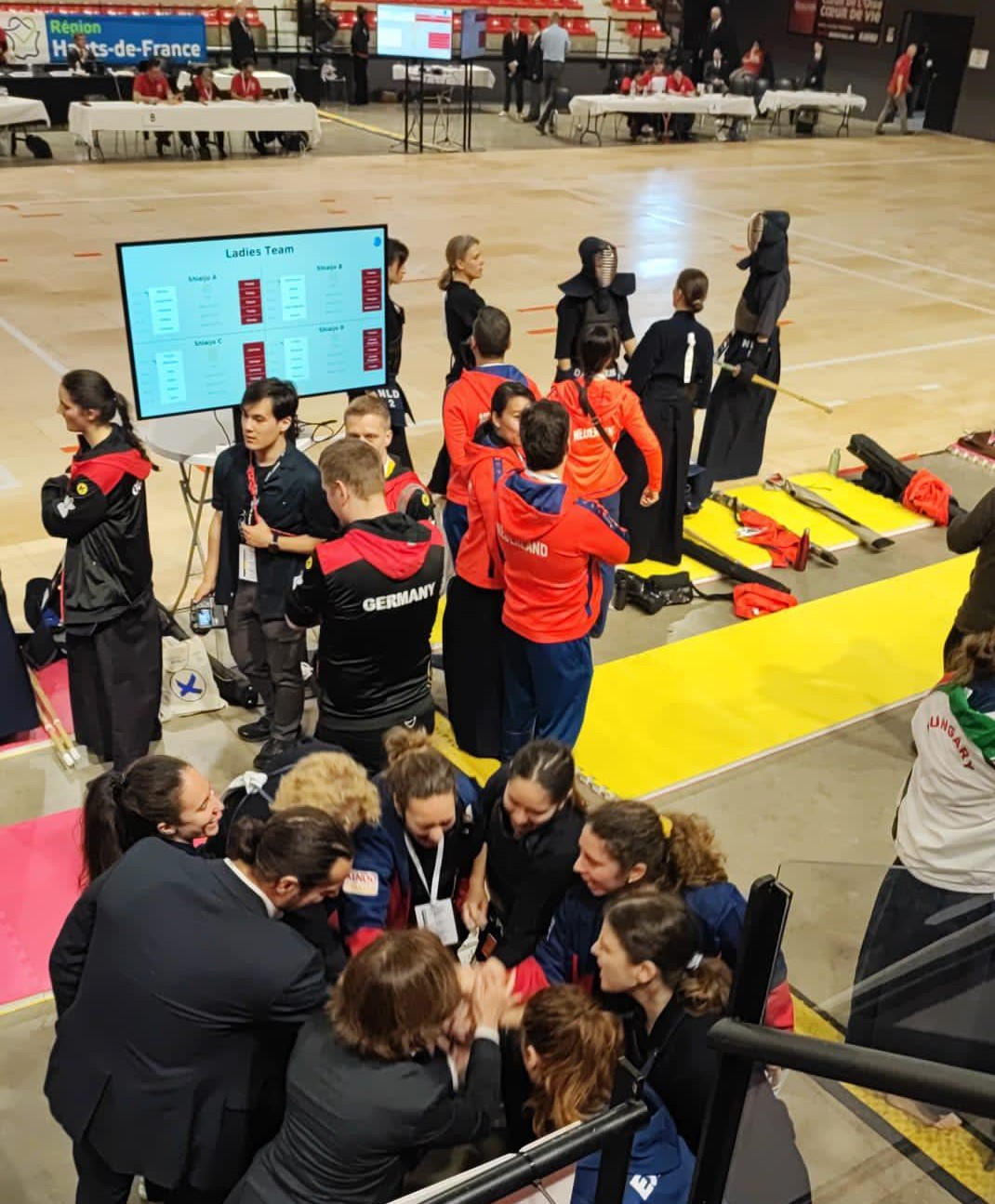
Photo: Team Spain
I predicted a France v Poland final and followed these teams through the event. Neither team had an easy path to the final with very close matches and noteworthy performances from Belgium, Netherlands, Spain and Portugal. Many of the team matches came down to single points or daihyosen playoff. Germany won by 1 point against Spain in the pools and Netherlands defeated France in the first pool match. Turkey and Czech Republic also fought well coming out of the pools ranked first. Serbia had a tough pool with Czech Republic and Hungary, and despite a good performance, they were unable to advance to the tournament rounds. As two teams exit the pool many good teams still had a chance to reach the finals. Ukraine were narrowly defeated by Croatia and were unable to make it through to the tournament rounds. Portugal defeated Turkey and were ousted by a narrow margin of 2 games to 3 against Poland.
Great Britain edged their way past Czech Republic winning by 1 point. Italy displayed a marked improvement. However, Greece proved to be tough opponents defeating Italy with an advantage of a name order submission error which resulted in disqualification and 2 points being awarded to Greece. Greece had a good performance to finish Top 8, benefitted by player-coach Antigoni Tsintza competing in the event. Finland was unable to defeat France to advance in the tournament and equal their 2022 3rd place standing but the team had also shown noticeable improvement in technical ability.
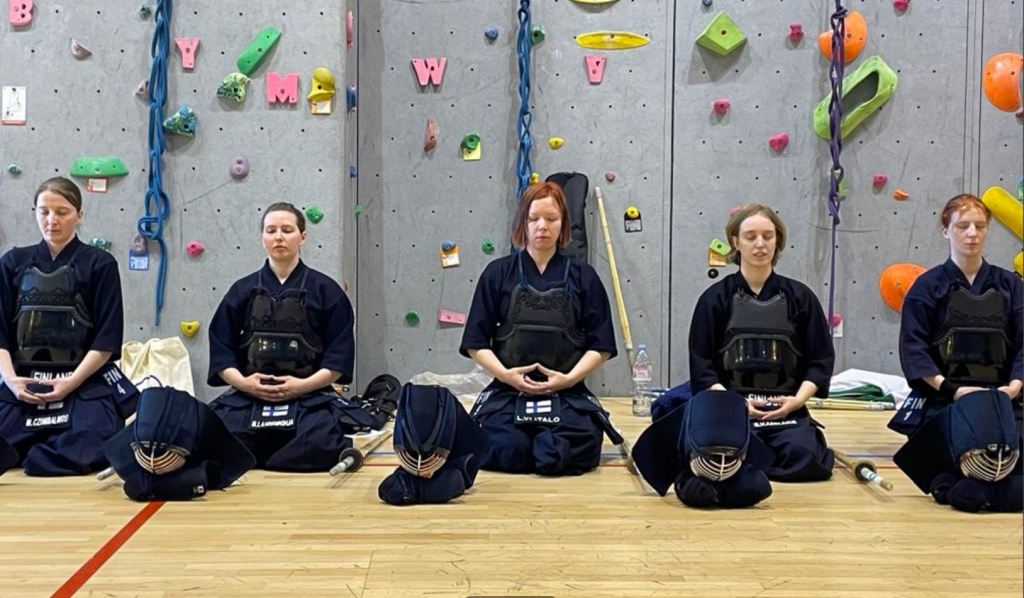
Photo: Team Finland
One memorable match was the France v Belgium quarterfinal that came down to daihyosen. A highlight was observing Team Belgium decide on the daihyosen representative and it was evident that the women had an effervescent, collaborative and strong team spirit. France won but had struggled to make it through the rounds at the front, but the solid performances of Kiyoko Moutarde as fukusho and veteran Inès Loidi as taisho secured team wins through to the final. Moutarde was undefeatble on that day and her mindset and unrelenting boldness trounced her opponents. I did anticipate Poland would win gold that day. I have observed the tenacious determination of the team and have followed their development.
In the first semi-final, Poland beat the Netherlands by a 1 point margin to advance to the finals. France won decisively against Germany in the second semi-final. France conquered Poland in the final and their gold was hard fought for throughout the tournament. Arguably Poland was the better team on the day in terms of consistency, fighting with an unwavering resolve and the intent was shown in Poland’s Natalia Maj final match. As chuken, Maj scored a decisive point and played wisely to hold the point lead to the end of her match. Holding point leads is a high-level skill as the knife-edge tension can push players to take uncalculated risks. France was not unbeatable on the day, and there is now a narrower gap between the nations. Medals can be won by being strategic with mindset, team positioning, and tactics that hold point leads.
Fighting Spirt Award
Biran Yücel (Turkey)
Mao Mikami (United Kingdom)
Maria Paleologou (Greece)
Kaori Panzani (Belgium)
Medal Results
Ist France
2nd Poland
3rd Germany and Netherlands
Day 2 (Junior Individuals and Men Team)
A total of 66 juniors competed in the junior category. Competitors are required to be aged between 16 years and younger than 18 years old at the date of the EKC. Fourteen female juniors competed in the event. The female juniors made an impression in the mixed-gender junior category. One female junior that caught my eye was Divana Aura Naidoo (South Africa) as she led the warmup with strong kiai and confidence. Ana-Catrinel Popescu (Romania) Beatrice Sutaite (Lithuania) Mia Murakami (Austria), Maria Iris Asenio Pico (Spain) all advanced through their pools. Murakami scored 2 men against Sutaite and advanced to the quarter finals to finish 3rd place. Sutaite achieved a commendable Top 8. Mia Murakami also received a fighting spirit award for her stellar showing on the day.
Day 3 (Women Individuals and Men Individuals)
One-hundred and three women competed in the individual event. The number of competitors increased by 11 from the previous EKC in 2022. I predicted Asteria Akila (Greece) and Alina Yearwood (Poland) to be in final having watched their performances in the team matches and observing their determination and investment in preparation to win gold. I had noticed an impressive improvement in Yearwood’s commanding posture from last year which showed her training and mindset in preparation for the tournament.
Last year’s champion Freija D’hont (Belgium) had a tough pool with Kiyoko Moutarde (France) who had annihilated her opponents in the team event. After time extension D’hont scored a crisp debana kote to advance through to the tournament rounds. D’hont was eventually defeated by Saadet Kök (Turkey) who finished Top 8. Akila was in good form and her impressive performance filled spectators with excitement and admiration, particularly her tsuki waza. Akila was unexpectedly defeated by Saya Guadarrama (France) and finished Top 8. A moving moment, which I have never seen in a major tournament, was the applause and cheers for a competitor from a stand full of supporters from other national teams. A clearly disappointed Akila braved her tears and blew a kiss of gratitude to her wave of supporters in the stands.
Nikol Eichlerová (Czech Republic) blazed through the tournament and quashed Guadarrama with a kote to reach the finals. Yearwood had a challenging semi-final with her club mate Katarzyna Babinska (Poland) but decisively triumphed over her with 2 points. Eichlerová carried her momentum into the final with Yearwood. Yearwood had the upperhand in terms of skill and experience to topple Eichlerová, but perhaps the alluring glimmer of victory and her fearless underdog opponent unsettled the indomitable kendo she had presented throughout the tournament.
The wonderful and equally frustrating thing about kendo competitions is that a well-prepared, less experienced player with good flow on the day can win prestigious tournaments. In some ways it becomes more difficult for experienced players who invest more for each tournament to win a championship. The journey is gruelling and filled with disappointment and doubt, but the day will come for those that stay the course and present a stone-cold resolve on their day.
Fighting Spirit Award
Alexandra Burinaru (Romania)
Saadet Kök (Turkey)
Inés Loidi (France)
Sara Van Laecken (Belgium)
Medal Results
1st Nikol Eichlerová (Czech Republic)
2nd Alina Yearwood (Poland)
3rd Katarzyna Babinska (Poland) and Saya Guadarrama (France)
Reflections
I had hoped to conduct interviews with women participants at the EKC but I was unable to due to my coaching responsibilities. After the tournament, I contacted women competitors, shinpan, managers, coaches, tournament assistants and commentators and invited that they share their personal experience or reflections on women’s kendo at the 32nd EKC for this article. The responses were varied and cover a broad overview of the tournament from women’s perspectives. The views demonstrate the positive developments of kendo in Europe and also the strong sense of purpose and community that kendo and this tournament in particular delivers.
Donatella Castelli (Italy) EKF Board Member
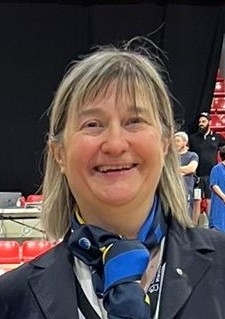
As part of the EKF Board, I can only be satisfied about the way the EKC turned out this year. It was a pleasure seeing so many volunteers helping with the organisation, the competitions ran very smoothly and the dan examination sessions, too. As a personal observation, I could see numerous girls taking part in the Junior Individual Championship. The time has come to have a separate competition for them, with the knowledge that this will help increase their numbers. This is rather easy to do for the individual competition, but for the team event we would like to think of a good formula to include girls in mixed teams, instead of creating a separate category.
The challenges are the limited number of girls and the need to keep the duration of the EKC within the current and rather comfortable limit of three days. The technical level and the correct behaviour shown by the juniors (both boys and girls) did not leave any room for concern about having a mixed competition – and this is a very good start. The EKF Board will reach out to all federations soon to gauge their interest and commitment in taking another step toward a fair kendo community.
Angela Papaccio (Italy) Shinpan
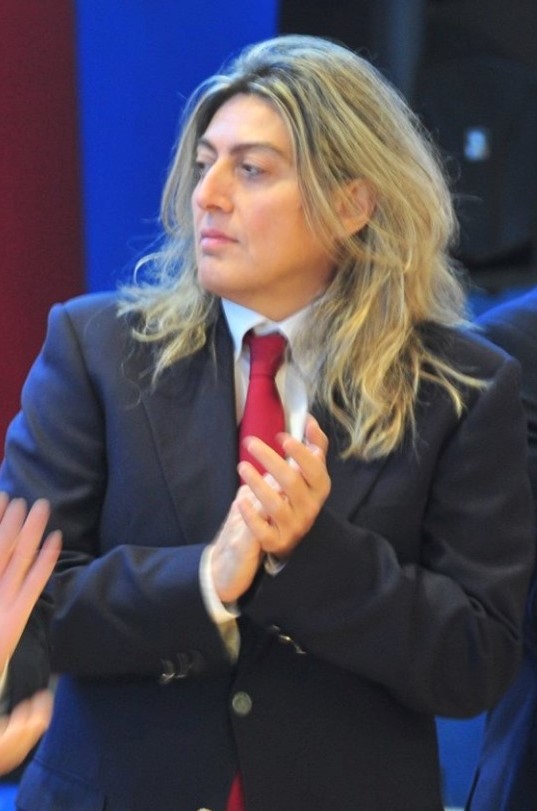
It was not long ago when everyone was waiting the best 16 players to get to the juicy part of the EKC. Nowadays since the first match of the morning you can easily find some impressive competitor that makes your day. As a referee there is no better feeling than awarding some amazing ippon born out of seme, tactic and willpower. We must address this incredible step forward for ladies’ kendo mostly because it involves every singular country regardless of its general level and history. This continuous progress is an asset we all should feel responsible of spreading around.
Pauline Stolarz (France) EKC Assistant
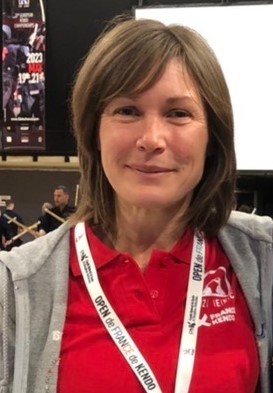
I’ve always felt unhappy with the idea that ladies’ kendo is less impressive and less technical than males’ in Europe. But this year EKC surprised me very positively on that point. To me, the level was much higher than the previous years, with famous athletes who did great technical performances. I’m very proud of them going forward that way. But I also discovered young ladies who showed beautiful, clean and technical fights and a sense of the shiai that impressed me. They are pushing up the level and I hope they will continue to reinforce and raise to go to beat the best teams at the WKC. As retired and veteran athletes, I think we have a responsibility to take part in this common goal and bring our experience to contribute to their learning but also to make a strong shiai opposition so that they can progress faster and get higher.
Agnieszka Nakabayashi (Poland) Commentator
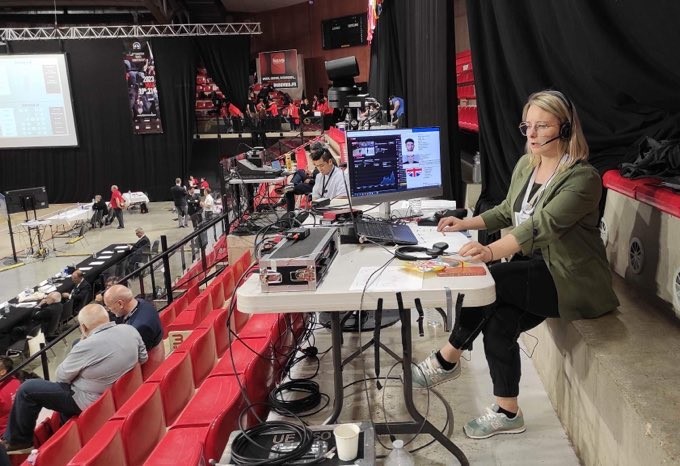
During this EKC, I worked as a commentator and for the first time I could watch the EKC from a wide perspective. When it comes to women’s tournaments, what moved me the most was the really high level of the fights. I could see that women were determined; they want to win and they knew how to do it. The details decide about victory and it was visible during team matches. I was impressed to see how the whole of Europe is developing and how countries that have not won the podium in recent years really have a chance to do so in the next EKC.
Of course, I was impressed by the final and semi-final fights, but for me the attitude of the teams of Belgium, Portugal, Turkey and the Czech Republic also deserves attention. I am waiting for the next EKC to admire the development of these teams.
As for the individual tournament, I had the pleasure of watching all the fights of the current European champion Nikol Eichlerová, from the very beginning of the tournament it was clear that this was her day, her determination was impressive. she is a very young competitor and I am amazed how beautifully she handled the fights but also with the pressure and weight of the final. I will be happy to watch her further career. Two Polish women on the podium is an absolute great success for Polish kendo, which makes me personally happy and proud.
Asun Gozalez (Spain) Manager / Coach
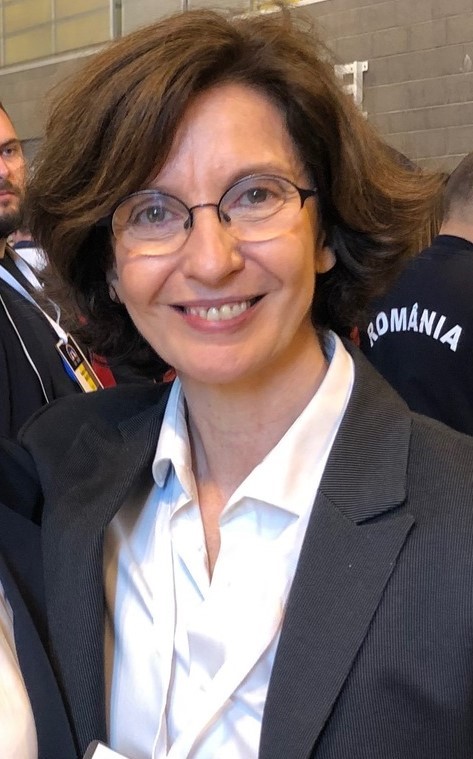
The Spanish Women’s Team of warriors gave their best not only at the EKC but along all year preparing for the competition. The women’s team represented Spain well and had an outstanding performance. We enjoyed beautiful matches and a great final with the beautiful kendo of Alina Yearwood (Poland) and Nikol Eichlerová (Czech Republic). Also, it was very good to see the increasing number of high level shinpan women what enriched the competition and kendo world giving normality and common sense from all points of view to a kendo international event. The EKC brings us together face to face and online, and this provides much motivation for all kenshi women in the world.
Divana Aura Naidoo (South Africa) Competitor
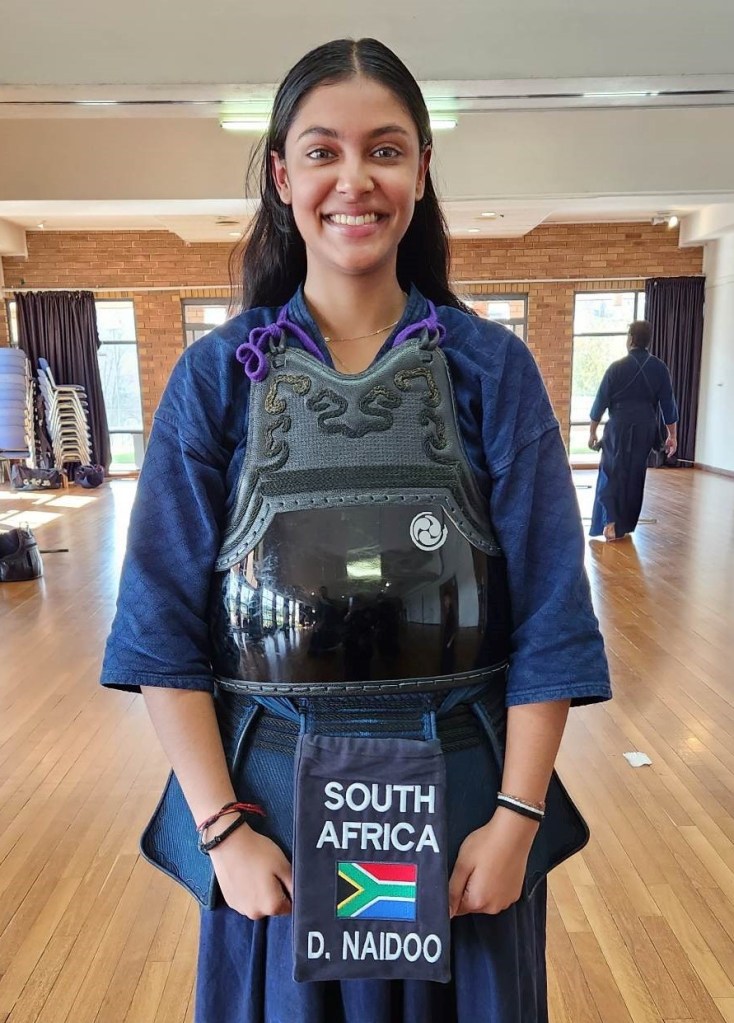
I am currently on the SA junior team. It was truly an honour to be able to participate in the 32nd EKC. The woman’s teams are and were very strong, together and individually. They showed great strength and determination and this has inspired me to help uplift women’s kendo in South Africa.
Jana Ziegelheimova (Czech Republic) Competitor / Manager
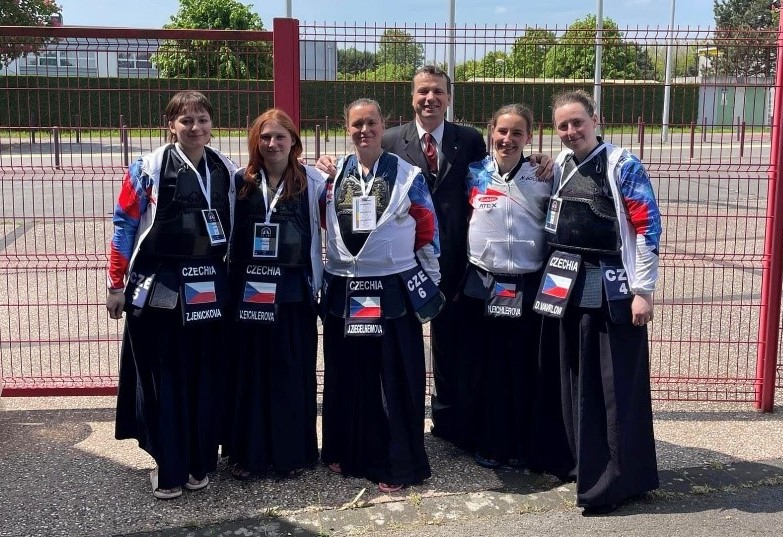
(Jana Ziegelheimova third from left)
The EKC from my point of view as an event that brings together talented kendoka from various countries, promoting the spirit of competition, camaraderie and personal growth. It also fosters a sense of belonging within the kendo community. I have participated in the EKCs thirteen (13) times starting in 1999 in Lourdes ending 2023 in Beauvais. Despite never having claimed victory I consistently made my mark, reaching the quarterfinals (both teams and individuals) on numerous occasions and earning Fighting Spirit awards several times over the years. For me, the EKC represents far more than mere competition, it’s a cherished opportunity to experience the profound joy of kendo, reconnection with an old friend and witnessing the evolution of different nationalities.
To me competition is an integral part of kendo development together with daily practice and shinsa (examination). Without these three pillars the kendo of each person kind of “limps.” So, I love EKC challenge and am devoting countless hours/years, energy and money to refine my kendo technique and deepen my understanding of kendo. I always try to approach each match with the same determination, focusing on the growth rather that the outcome. This is the philosophy I try to teach my teammates/pupils.
Until this year’s EKC the women team of Czech Republic has been ever changing composition – the girls got pregnant, married, moved, got tired of kendo etc. But the new team is composed of women who started kendo as children or teenagers, in many cases been previously at EKC as juniors. I have been their coach since they were kids and we started to make a team since their junior’s age. I believe they have bright kendo future awaiting them and the team will be stable for some years. Nikol Eichlerová’s gold medal this EKC made me very very proud of her and our team.
To conclude, I take a great joy in observing the progress made by my team and my fellow kendoka and their nations, celebrating their achievements as a testament to the perseverance and dedication inherent in the practice of kendo. The true essence of kendo: the pursuit of self-improvement and the bonds forged through shared passion are the greatest triumphs one can achieve.
Mia Raitanen (Finland) Coach
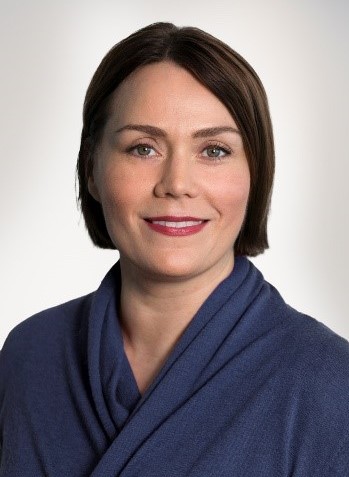
It was great to see so many girls playing in the junior teams and individuals. Nine countries had junior female competitors. Especially Belgium, Switzerland, Austria and Spain had super strong girls in the shiai. Very impressive kendo from all the young ladies, the future looks bright.
In women’s championship we’ve seen many new players enter the EKC after the COVID break and it’s interesting to see how that affects women’s teams results in the long run. For example, Portugal, Czech Rep. and UK teams fought really well this year. Belgium always wins my heart with their strong and beautiful kendo. Teams Poland, Netherlands and France each have 5 very strong players and, in my opinion, it could have been anyone’s game to take the gold. All respect to the French team for playing consistently and winning the championships again. Team Germany has had many changes in their team in past years and still they manage to fight for medals pretty much every year. I’m wondering if it’s a result of their rigorous training program.
In women’s individuals we definitely learned that hiki-do and gyaku-do are not safe strikes no matter how well executed. The past years’ medallists played in their own level with refreshing Nikol Eichlerová winning the gold in very exciting final. Love seeing the ladies’ kendo getting more and more versatile every year with many tsuki ippons and different waza.
It’s going to be interesting to see who’s going to win the next EKC but before that I wish a good training season and the best of luck to all European ladies in the WKC 2024.
Natalia Kalinichenko (Ukraine) Competitor / Manager
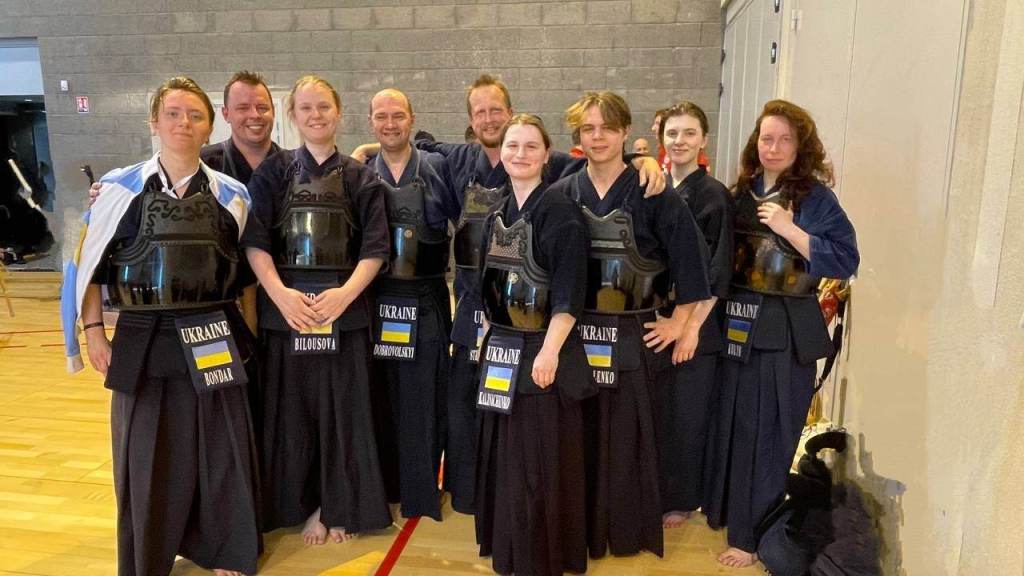
(Natalia Kalinichenko fourth from right)
The Ukrainian Women’s National Kendo Team delights in representing their country at the European Championships, considering it a great honour. Their goal is to show not only strong kendo but also the elegance and beauty of kendo. However, in recent years, assembling the entire team has posed significant challenges due to Russia’s invasion of Ukraine. Some team members have been called to serve in the Ukrainian Armed Forces, while others bear physical and emotional scars from the ongoing conflict. This war has claimed the lives of the best among them, leaving thousands injured and uncertain about the future. Despite these hardships, the team cherishes every moment they spend together, knowing that each day comes at a heavy price paid by their defenders. It is through the sacrifice of these brave individuals that Ukraine perseveres, enabling the team to proudly represent their nation on the international stage.
Saadet Kök (Turkey) Competitor
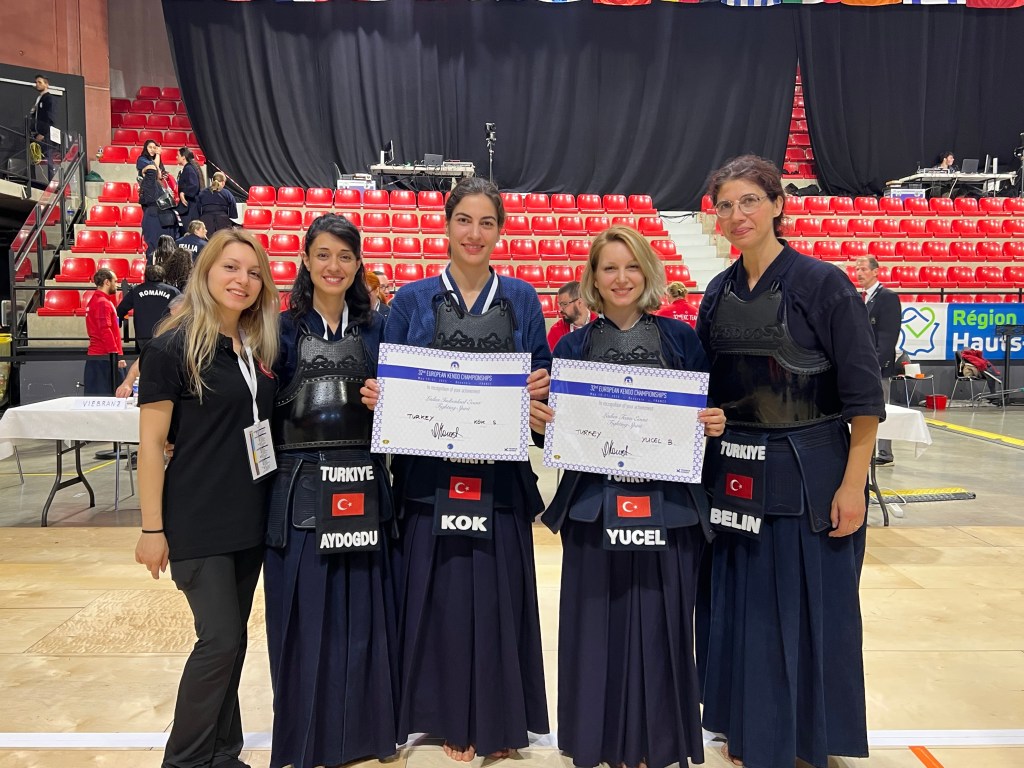
(Saadet Kök third from left)
The 32nd EKC, which I had the chance to attend as a member of the Turkish women’s national team, ended with very valuable experiences, my personal best individual ranking, bigger goals and new friendships. The most special part of this tournament for me was to be on the same team with strong and beautiful women who I have known since the day I started kendo, with whom I have teamed up many times and who support each other sincerely, and to see how much we have developed together. Throughout the tournament, it was exciting to watch the increase in the variety of waza and physical strength I witnessed in the matches compared to previous years. Seeing all the European women, firstly as i know from my own teammates, developing their careers outside of kendo, raising their children and supporting their families at the same time, makes their endeavours even more meaningful, respected and inspiring.
Natalia Maj (Poland) Competitor
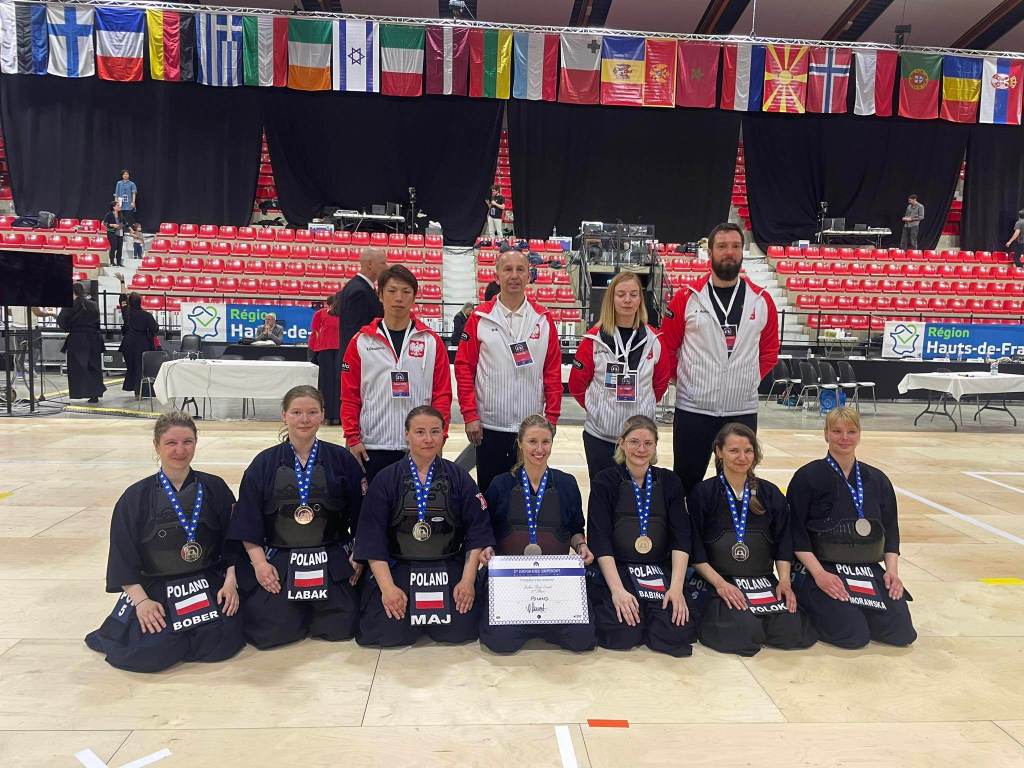
(Natalia Maj third from left)
The 32nd EKC is now behind us. For me, as a player, it was the last European Championship and I have to admit it was special. When I started my adventure with the Polish National Team, the competition at the Championships was clearly different. Four elite countries (Germany, Italy, France, Hungary) and the rest. Currently, the level of players is very even.
The fights in which I participated were the greatest pleasure, I felt a similar pleasure watching the struggles of other countries. I was surprised that the women’s finals were not judged by female judges. Especially that women with 7th dan were in the team of judges of the EKC and they are very good judges. I believe that it would be a nod to both tradition and modernity.
During the individual tournament I was delighted many timesof course, Polish women Alina Yearwood and Katarzyna Babińska had great performances, but there are also several players whose kendo captures my heart very much such as Asteria Akila from Greece who gave a great kendo show. The application of tsuki in her performance is something amazing. On the one hand, it is made so lightly, without any problems, straight, and on the other hand, accurately and firmly enough. Masterpiece!
In the end, Asteria did not reach the semi-finals, which is a lesson for her and I keep my fingers crossed for her success. Asteria previously fought Lisa van Laecken from Belgium, who is another fighter who fights smartly and elegantly. Every time I have the opportunity to fight Lisa or watched her fights, I have felt inspired. Last year we met at the EKC individual tournament in Frankfurt. At that time my head could not take the pressure.
Nikol Eichlerová from the Czech Republic was great. Even though she won against my friend, it is impossible not to congratulate this young competitor on a job well done. I’m incredibly happy because the team from the Czech Republic has been our friends for many years and they work hard to show great kendo during such competitions.
To sum up, as a competitor who has participated in the EKC since 2004, I leave it in the good hands of many very talented competitors and teams. Not only from these “elites.” I hope that I will be able to watch (and maybe referee) the fights of these young kendo girls many times.
Rute André (Portugal) Competitor
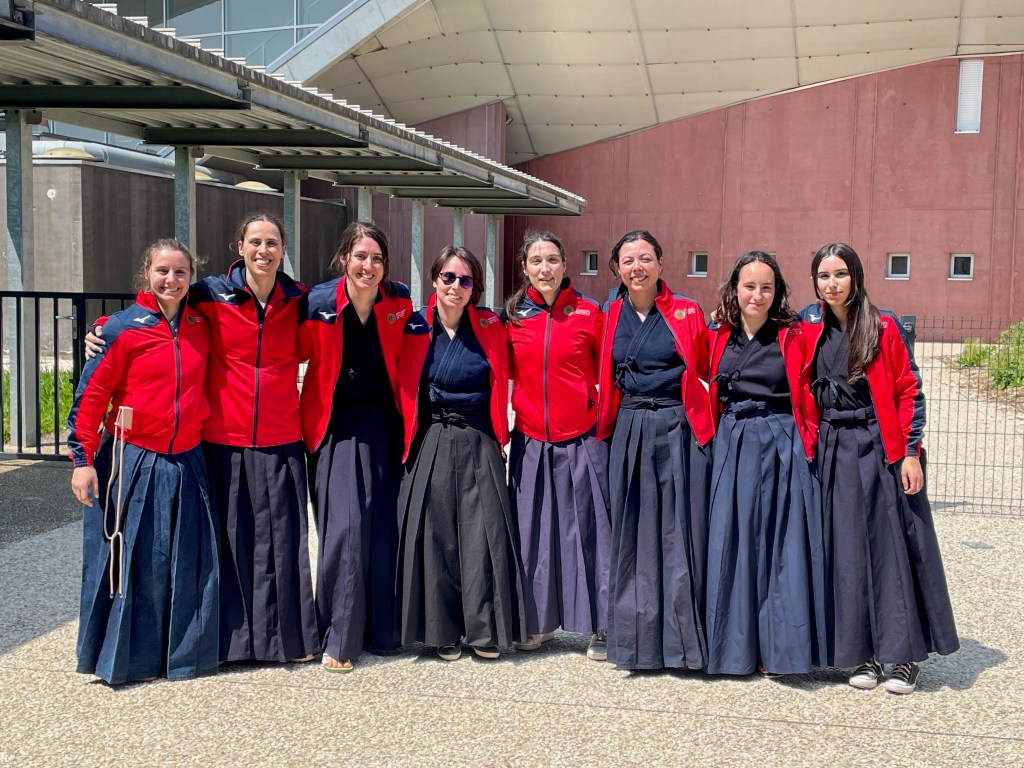
(Rute André third from right)
The last time I fought for the Portuguese national team was in the 17th WKC in South Korea, 2018. Since 2018 a lot has happened. I became a mother, then there was a pandemic. I could say 2022 was finally the year I was fully back in kendo, managed to find a routine with a lot of support from my partner (which also does kendo, maybe that helps). I wasn´t looking for getting back in the team, since I will turn 40 this year, I live in another country, and that I have a 3-year-old daughter and a full-time demanding job. But my sensei and my partner really encouraged me to try out again. It was a real stretch to manage to train properly with the team and on my dojo. The mother guilt was always there, I felt a bit overwhelmed at times trying to do it all. But my family and kendo friends are very supportive and helped me along the way. There are not many active women kendoka in Portugal, so for me being able to support the Portuguese kendo is a great honor, and is something I will do gladly as long as my contribution is valuable.
Lisa Van Laecken (Belgium) Competitor
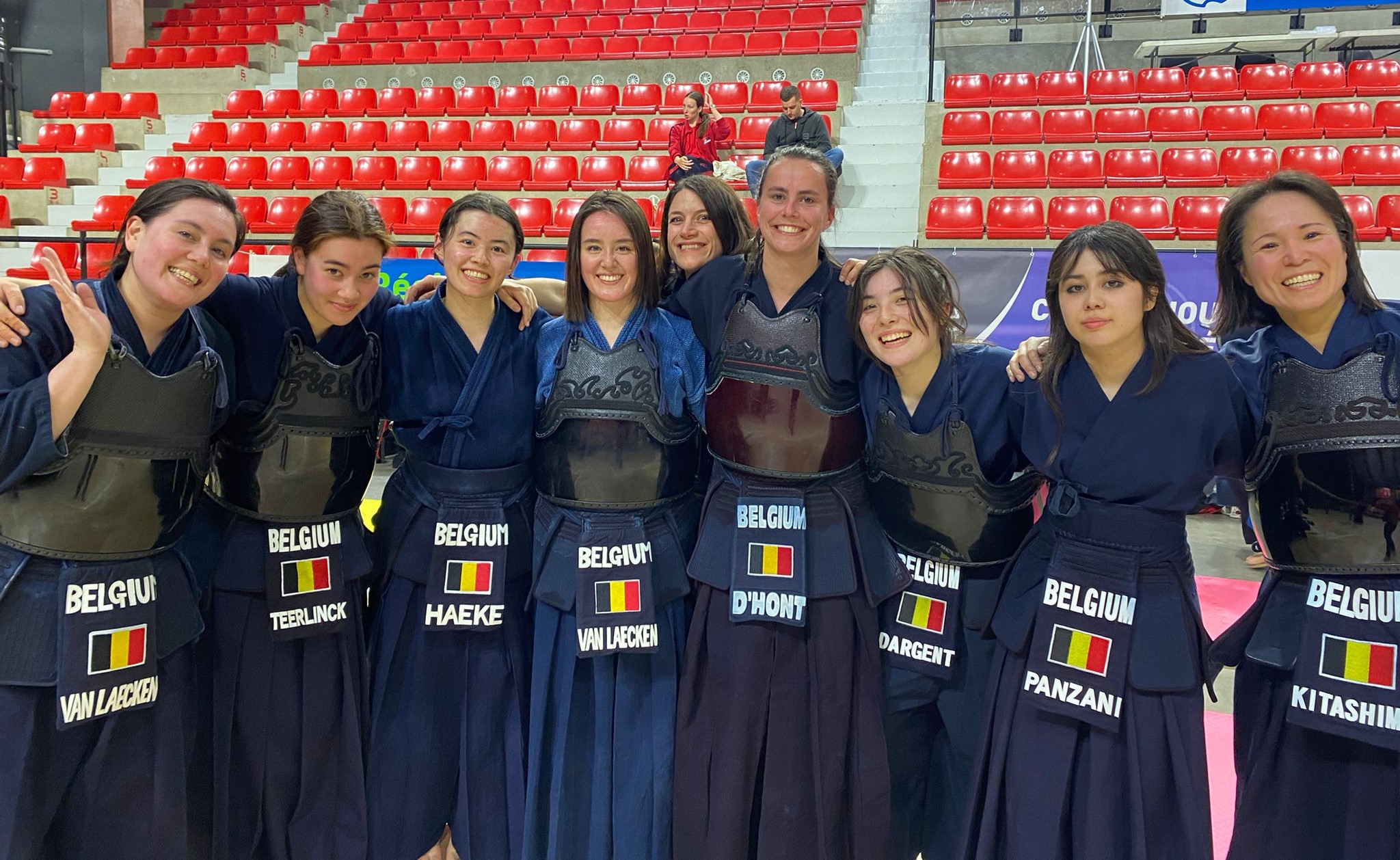
(Lisa Van Laecken first on left)
This season the Belgian ladies’ team have worked very hard to prepare ourselves physically and mentally towards the EKC. We mostly worked on open communication, where our captain Freija D’hont allowed us to share our thoughts and feelings into our ladies’ team and the girls from our junior team whenever we were all together.
In my opinion, we as women and girls, although we do mostly the same training as the men’s and junior boys’ team, we have a different way of approach towards the EKC. We like to talk and share our thoughts with each other. We also have the privilege of having two very strong 7 dan sensei, Chieko Yano sensei and Naoko Hamada sensei, who are always there to support us and also help us in our training. Our head coach, Peter D’hont was very transparent and open towards us and he lets us, ladies and girls do whatever we need to prepare ourselves to have a strong fighting spirit.
We practiced hard and fought hard to get to where we are now. It has been a long way, but we finally have a group of ladies and girls who are eager to fight hard on that shiaijo and get the best results we aim for. This is what we have shown this year at the EKC.
This was also very visible from the ladies and girls of other European countries. I think nowadays all ladies and girls are willing to fight strong to get to the top and have the results where they set their goals. It is great to see that every EKC it is a big surprise of which female kenshi will get the European title. That is the most exciting moment and we all support each other. I always encourage my fellow European ladies to give everything they have got, and I also do the same. That is what kendo is about for me: Kou Ken Chi Ai.
We fight each other like real enemies on the shiaijo, but off the shiaijo we are happy for each other with the outcome whether the other one won or lost. I feel that we, as women, stick together. In my opinion, this is what men look up to and respect us for. With this strong fighting spirit and friendship, we give the energy through towards the men. I hope towards next year’s WKC we can all improve together and let the world see how fierce the European female kenshi are. I was also very happy to see many of my friends that are active and retired fighters pass their 6 dan exam at the EKC.
Cristina Ghineţ (Romania) Competitor
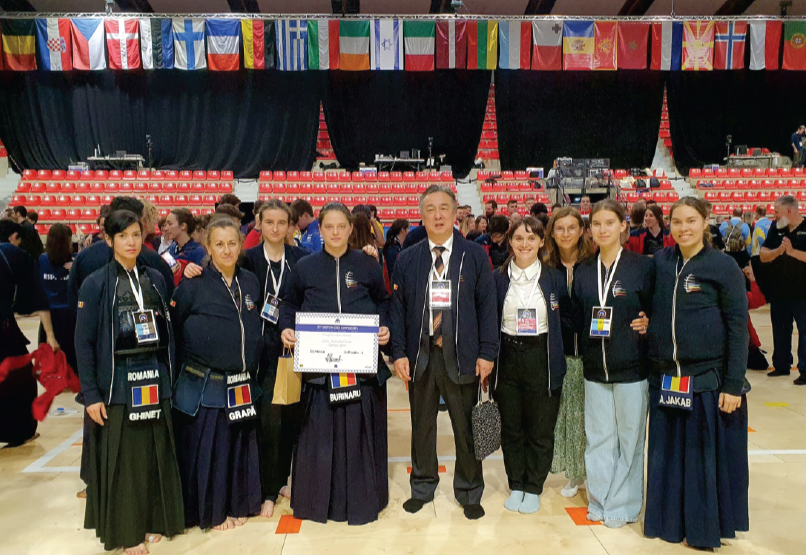
(Cristina Ghineţ first on left)
I had a memorable experience as a member of the Romanian lady’s team at this EKC. It was wonderful that I had the opportunity to reconnect with old friends from different countries and enjoy the exciting and inspiring matches. Being a part of such a prestigious event can indeed be both physically and mentally demanding, with the need for intense concentration and exhilarating determination. Participating in the EKC allowed me to contribute to the sport that I love and represent my country alongside with my teammates. It’s these kinds of experiences that make the journey fulfilling and rewarding, despite the challenges that come with it. The chance to showcase my skills and dedication on an international stage make events like this truly unique and memorable and will continue to inspire me in my kendo journey. I hope everybody had rewarding experiences at the EKC regardless of the specific results or outcomes of the matches.
Asteria Akila (Greece) Competitor
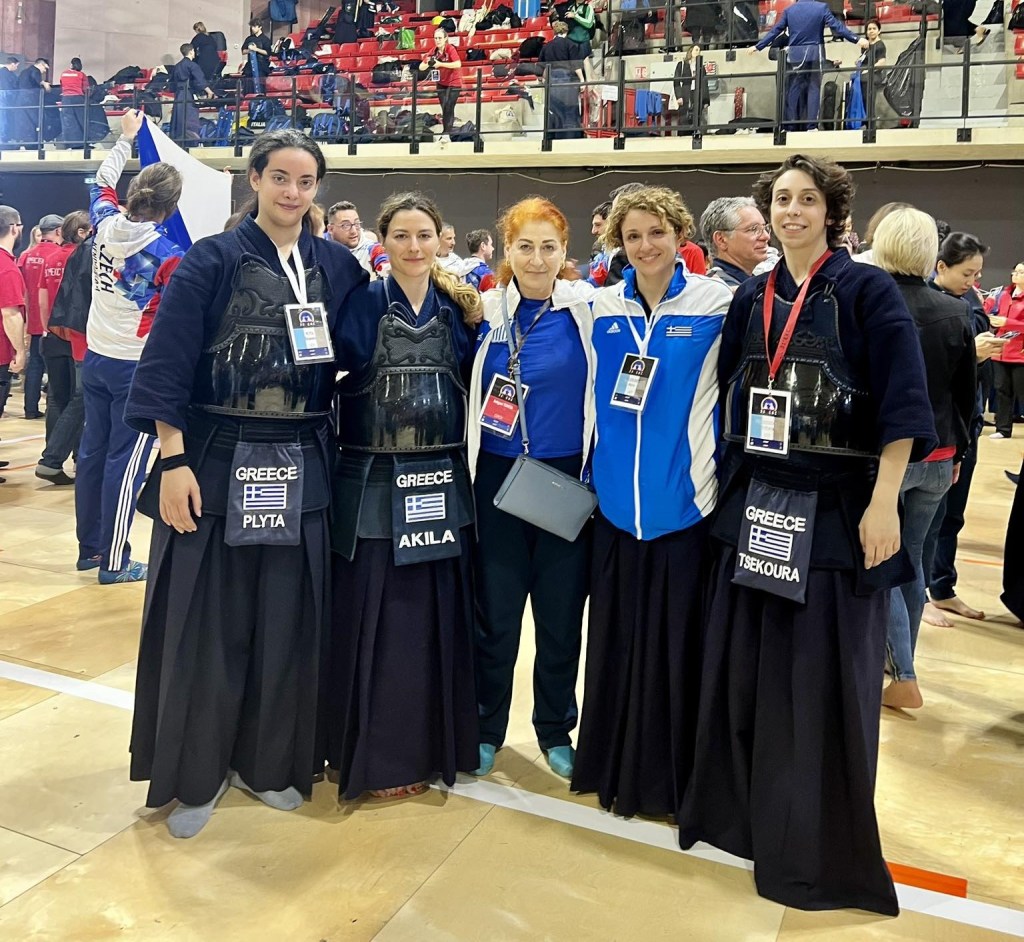
(Asteria Akila second from left)
From my perspective the 2023 EKC was yet another milestone for Greek kendo. For the first time ever the Greek ladies’ team made it to the quarterfinals of the team tournament and came so close to achieving a medal! I couldn’t be prouder to be in a country where women are the leading force of the kendo community in so many aspects. From the fact that we have a strong female role model as our coach, who was assigned the task of creating a women’s team from scratch, to this year in which all her dedication and all our efforts as the women’s representatives started to pay off in such a high-level event. I hope that we are an inspiration to the men of our country to follow our example of the faith we have in one another and our sense of teamwork.
Afterword
Many of these reflections shared that a noticeable improvement in the level of women’s kendo was observed and that the event was a rewarding experience. Personally, I was very impressed with the level of women’s kendo at the EKC and also the level of support from national teams and the spectators. Small factors do interactively work together and can influence performance and motivation to prepare better. The stronger belief and support in women’s preparation and performance from coaches, managers, shinpan and federations, as well as a stronger presence of female coaches, managers and shinpan can raise the quality and status of women’s kendo.
These aspects are critically important considering that women’s kendo still lags behind men’s kendo globally and women’s kendo in Japan. The lower status appropriated to women’s kendo and lack of systems that support women’s kendo development and women through major life changes (such as child birth and national team retirement) are key issues that can affect women’s motivation to continue kendo, improve their skill-level, and fulfil leadership positions. Retired and veteran female national team representatives can contribute to women’s kendo for it to progress faster and reach higher. Hence, the presence of female role models is vitally important for a more rapid growth of women’s kendo.
Although I have a number of competing demands—two small children, a full-time job, a research career, and the 7 dan exam approaching in a few years, I make time to continue coaching. I personally benefit from coaching and feel a responsibility to support building a national team of self-motivated women who feel that kendo is empowering and that their effort and commitment contributes to Swedish kendo. This is no easy task but I feel I still have something to gain and contribute by being involved in the national team. I have utilised the WKC and EKC as a way to personally develop as a competitor and as a coach. What I have learnt from preparing for competition and competing or coaching, has been transferrable to other areas in my life. Particularly self-confidence, and for me this is my path to “freedom.”
There has been an exponential growth in women’s sport around the world. As an example, the skill level of women’s football and the record-breaking in-house crowd of 87,192 that watched the UEFA Women’s Euro final at Wembley in 2022 is phenomenal. The growth spike in women’s sport is not by coincidence, but rather it is a consequence of calculated and tenacious efforts to improve women’s sport through strategy and increased funding. This has led to an increase in women’s status in sport that reciprocates back into women’s leadership presence and sporting prowess. Although it is obvious that a concentrated energy has been invested in developing women’s sports, kendo is yet to show such intent. To date, there appears to be very little interest and investment in programmes and approaches to cultivate women’s kendo at a faster pace. It is therefore no wonder that the gap between the Japanese women’s national kendo team and other national teams (including Korea) remains significant.
There are a number of things federations and leaders in kendo can do to improve the development of their female practitioners and every small action can have a domino effect that leads to momentous change. One strategy may be coaching female athletes on an individual basis, in a way that emancipates rather than oppresses or impresses a set of conservative ideals that were originally constructed for men. Kendo, like some sports, asks men to be more-than-male and women to being other than female (see Kelly, 2017). As masculinity is institutionally codified within sport, femininity is typically not embraced. Femininity, in terms of emotional expression and empathy, are often suppressed in athletes, particularly male athletes as these human qualities often symbolise weakness in sporting contexts. In turn, emotional concealment and egocentricity can weaken team cohesion and performance, especially in kendo when we consider that “aiki” (connection) and team work are crucial to competition performance and these aspects demand emotional awareness and spiritual connection with opponents and team mates.
Events also need to be re-organised through timetabling to prioritise women’s events, as still “the climax” of kendo tournaments are often men’s events. Programmes that support women through major life changes and developing women as leaders are also critical. Refereeing at major tournaments remains a contentious issue. The more athletes prepare for and invest in competitions, the higher they expect shinpan to referee accurately and fairly. It is evident that shinpan continue to referee women’s kendo at a lower level. This does not aid the development of women’s kendo. Also, male shinpan are prioritised over women shinpan, and this is sometimes not based on ability. The level of women’s shinpan at the EKC was at least at the level of men, and in some cases better.
Democracy and inclusivity are emblematic values of the EKF and this is evidenced through the EKF’s suspension of Russian Kendo Federation and aversion to participating in the World Combat Games in Saudi Arabia in an official capacity. European kendo can make an impression and showcase the ability of our women shinpan and give Japan-based female shinpan, who are arguably more experienced than some of the 7 dan men who shinpan at the WKC, the courage to stand forward with the resolve that their umpiring will raise the level of shiai and give competitors a better chance of being refereed fairly and accurately, and importantly, also provide a goal for younger generations of women to aspire towards.
It is important to acknowledge that women are not solely responsible for the development of women’s kendo. How can we, both women and men, as kendo leaders, spark inspiration in women kenshi to leverage the benefits of kendo. It is possible for women’s kendo to narrow the gap between Japan and the rest of the world but it requires a greater effort than what is currently invested.
Although very few kendo women have demonstrated a high-level of athletic prowess outside of Japan, it is possible to fight on par with Japan as shown in this match from the 2018 WKC in Korea. Pauline Stolarz of France made history in her taisho match against Mariko Suenaga (née Yamamoto) of Japan by winning her match against the Japanese team captain.
This level of competitive kendo is achievable but it requires a deep sense of self-motivation and commitment. The pressing question is—How can leaders and federations inspire and support our women kenshi to strive higher, and in a way that is personally meaningful to them?
Timestamp 13:55 – Pauline Stolarz (France) v Mariko Suenaga (Japan)
The photographs that appear in this article are the author’s own or the article’s contributors.
References
Kelly, W. W. (2017). From gender binary to sport androgyny? Female athletes in Japan’s modern sports world. In P. Horton (Ed.), Manufacturing masculinity: The Mangan oeuvre-global reflections on JA Mangan’s studies of masculinity, imperialism and militarism (pp. 115–132). Logos Verlag.
Disclosure statement
The articles published on this website present the owner of this blog website’s perspective, based on personal experiences, unless stated otherwise. They do not represent those of people, institutions or organisations that the owner may or may not be affiliated with in a personal or professional capacity unless explicitly stated. All content in these articles are for informational purposes only. People’s perspectives that may appear as information in these articles does not reflect the perspective of the owner or other people’s perspectives. Any views or opinions are not intended to malign any religion, ethnic group, club, organisation, company or individual. The owner of this blog makes no representations as to the accuracy or completeness on this site or found by following a link on this site. The owner will not be liable for any errors or omissions in this information nor for the availability of this information. The owner will not be liable for any loses, injuries or damages from the display or use of this website.
 Kate Sylvester Perspectives