Team Sweden’s Solveig Malmkvist’s fighting spirt drew local media attention and cheers from the stands at the 1970 World Kendo Championships (WKC) in Japan. Malmkvist was 28-years-old and 3rd kyu when she fought alongside men against the Japanese team who were all men graded between 5th to 8th dan. Malmkvist was not the only woman to compete alongside men at this WKC. Kazuko Nakamura of Team Canada also fought in the team event with her male teammates.
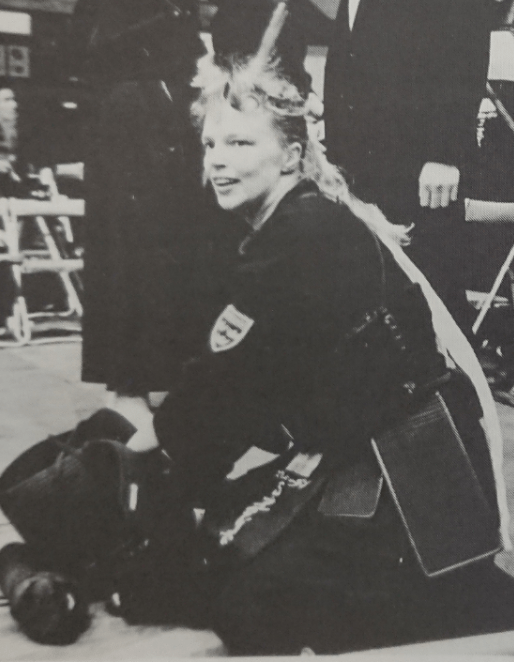
Solveig Malmkvist at the 1970 WKC Japan
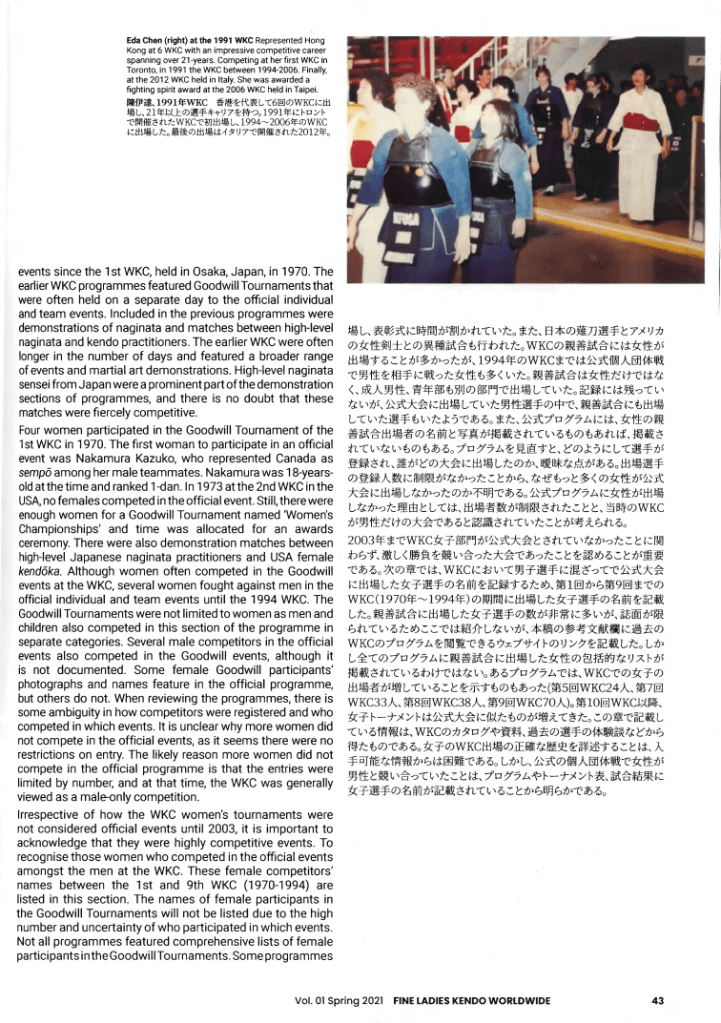
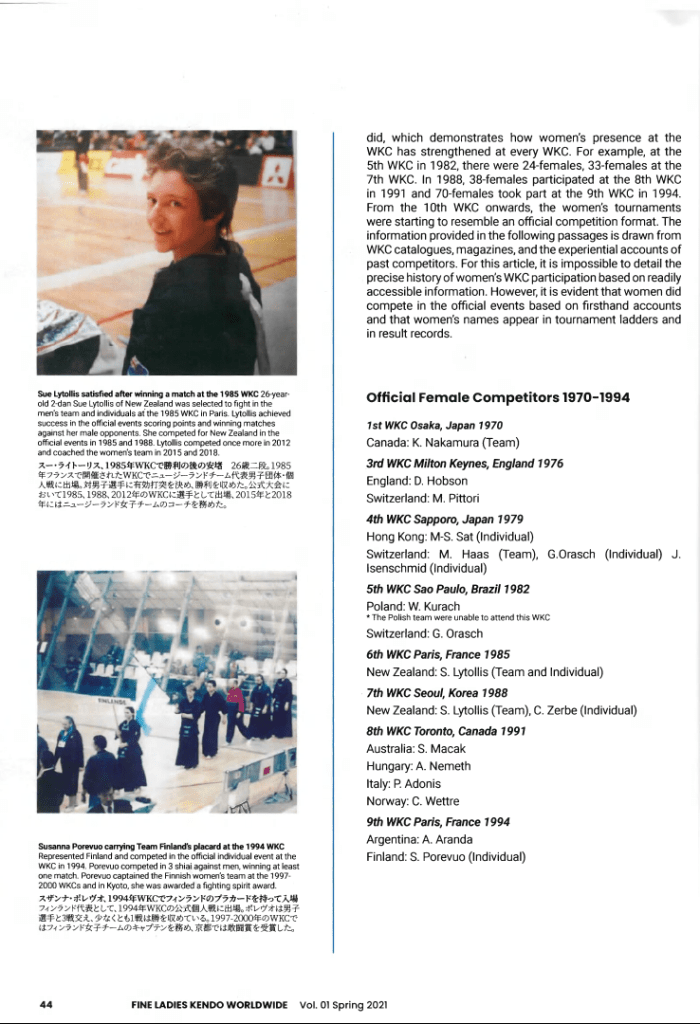
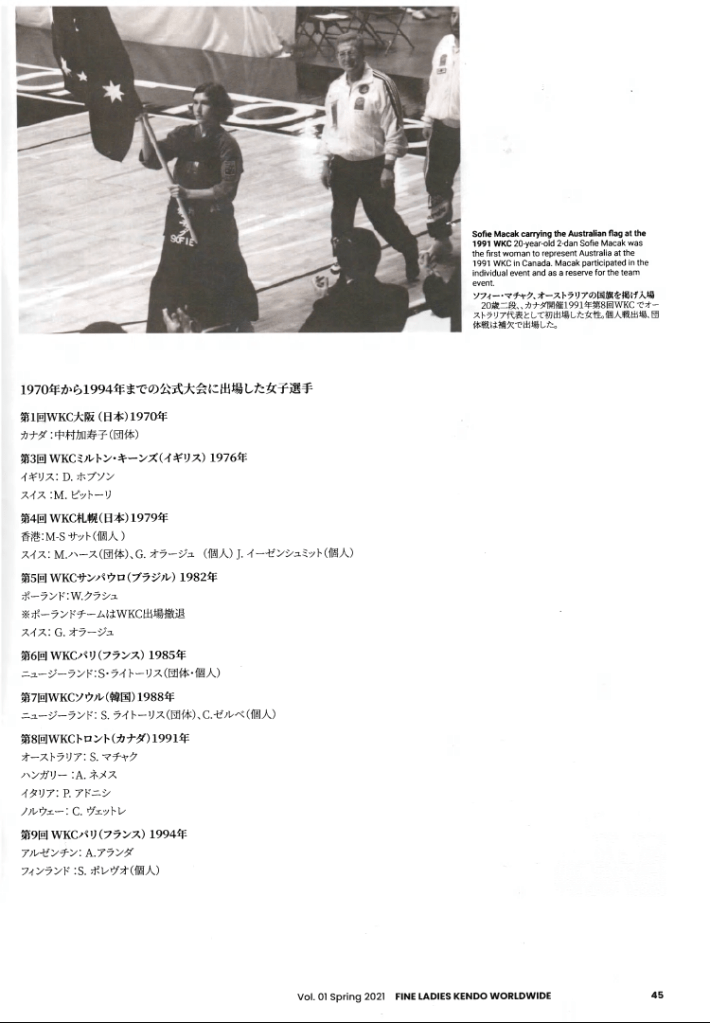
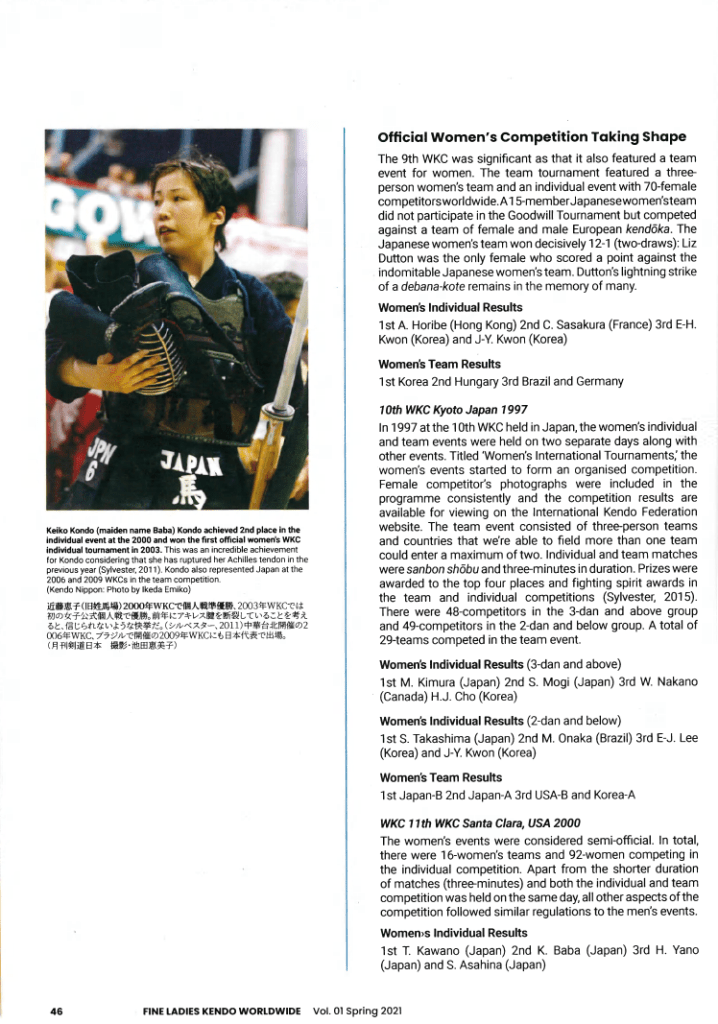
It is generally assumed that the beginning of women’s WKC participation started at the 1997 WKC in Japan. However, a number of women competed in the official events with men and in goodwill events up until the 1994 WKC in France. From the 1997 WKC in Japan, the women’s events started to take shape and all women’s competition categories became “official” from the 2003 WKC in Scotland.
This article, The History of Women’s Participation at the World Kendo Championships Part 1, is the first instalment of a two-part series that outlines the development and achievements of women’s participation at the WKC between 1970-2003. It also discusses gender inequity issues relating to the tournament. Part two summarises the WKC between 2006-2018 and will be published here next week. These articles feature women kendo luminaries from around the world that are still very active in kendo.
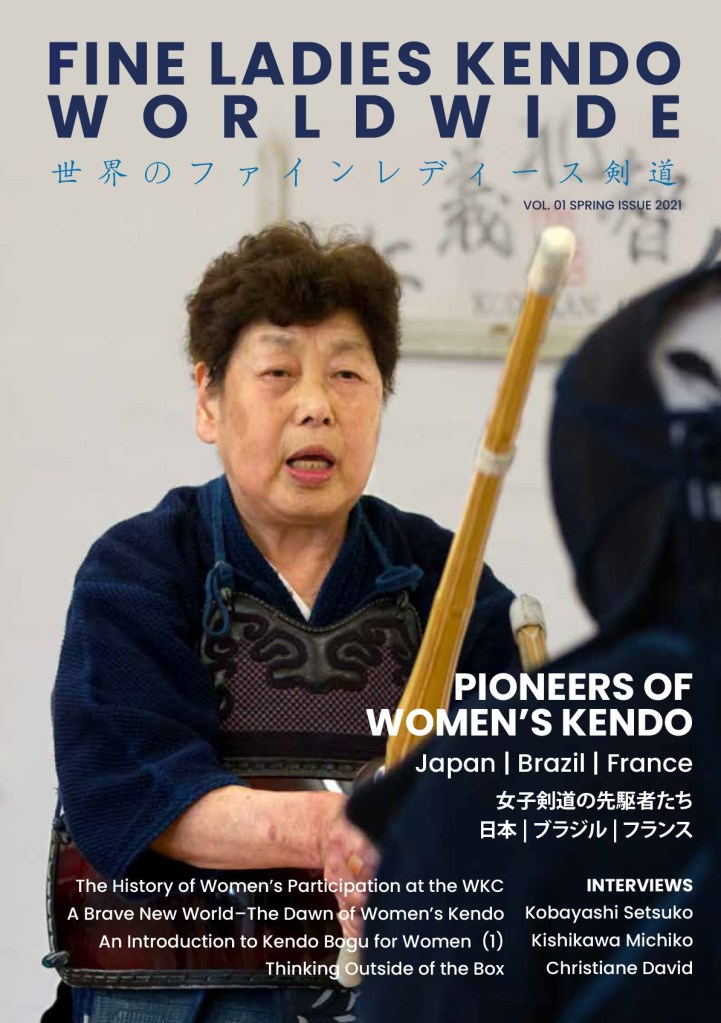
This article is published here with permission from Fine Ladies Kendo Worldwide Magazine (FLKWW). It was first published in Fine Ladies Kendo Worldwide Magazine Vol. 01 /2021 (read more about the magazine at the bottom of this article).
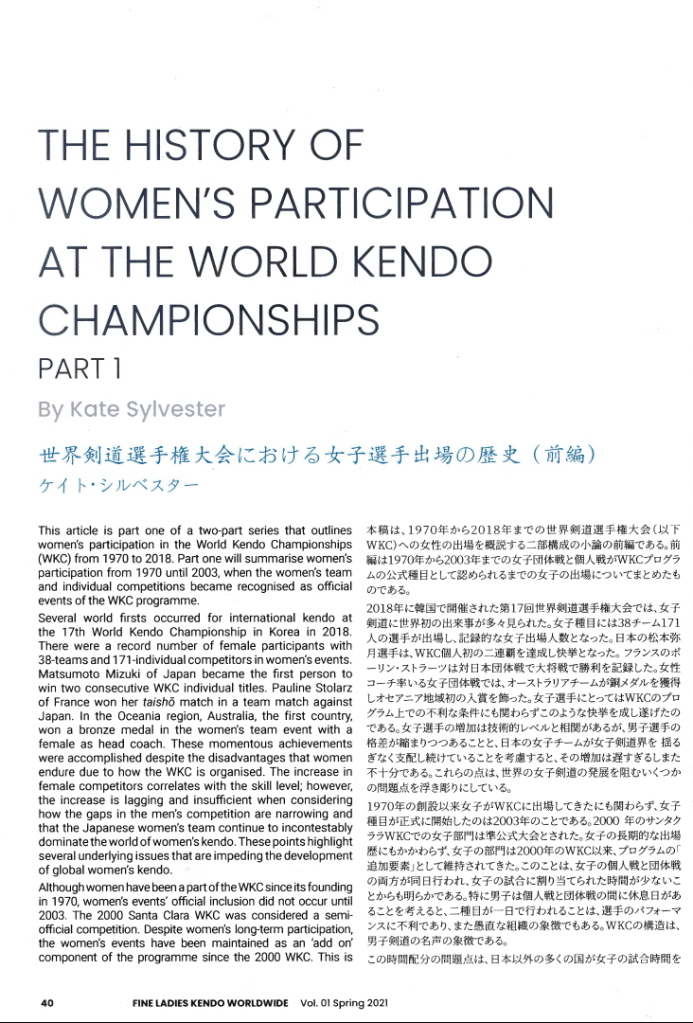
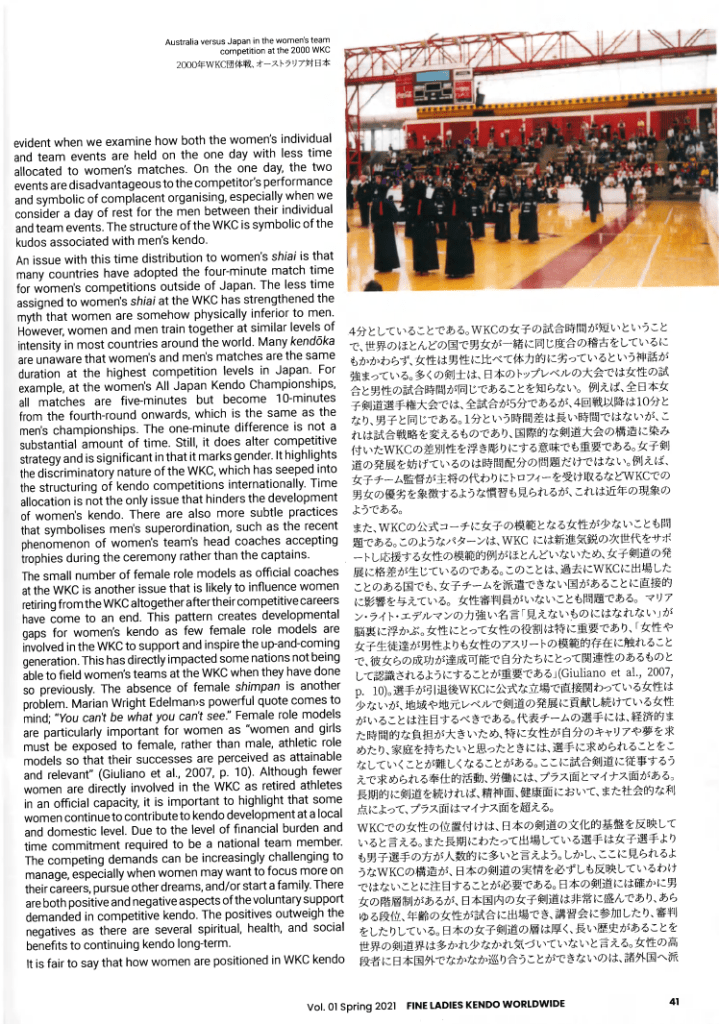
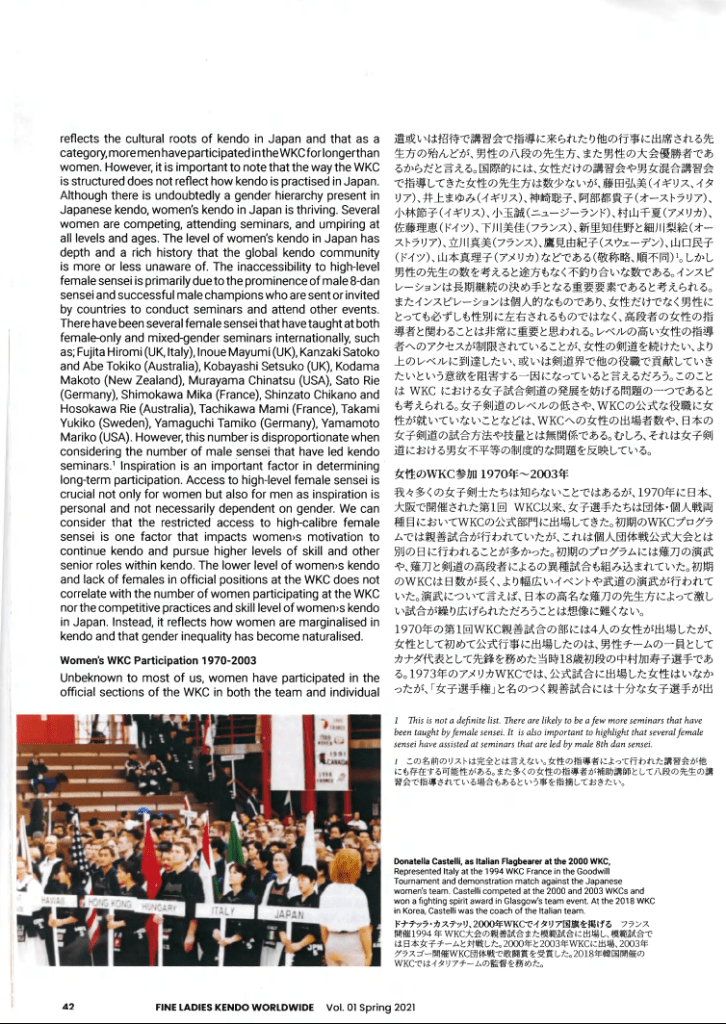
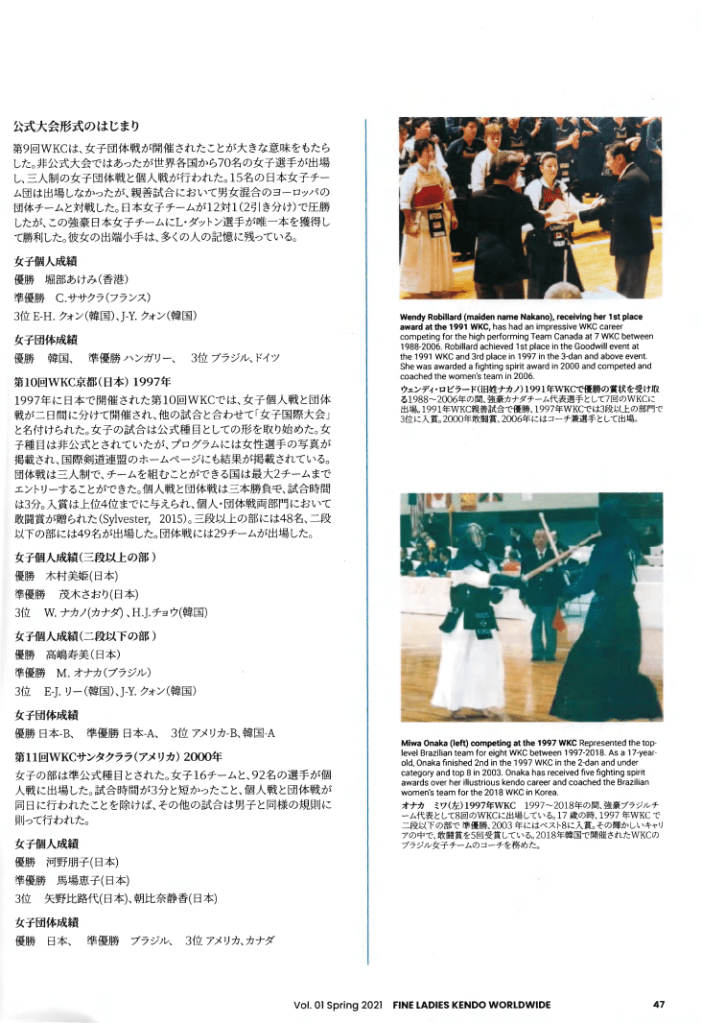
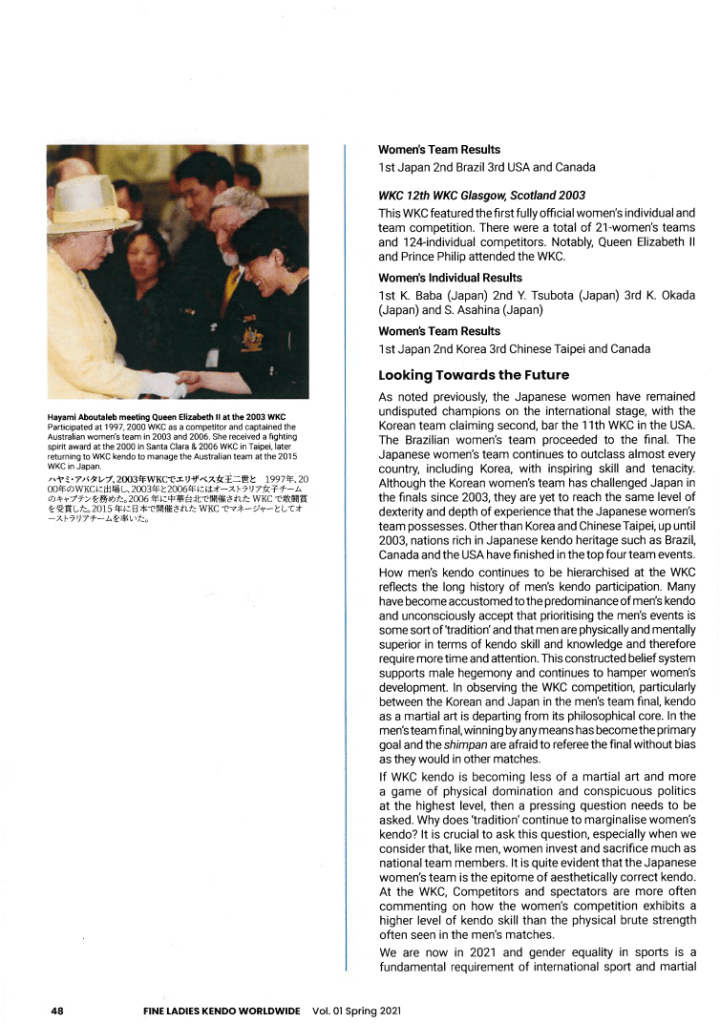
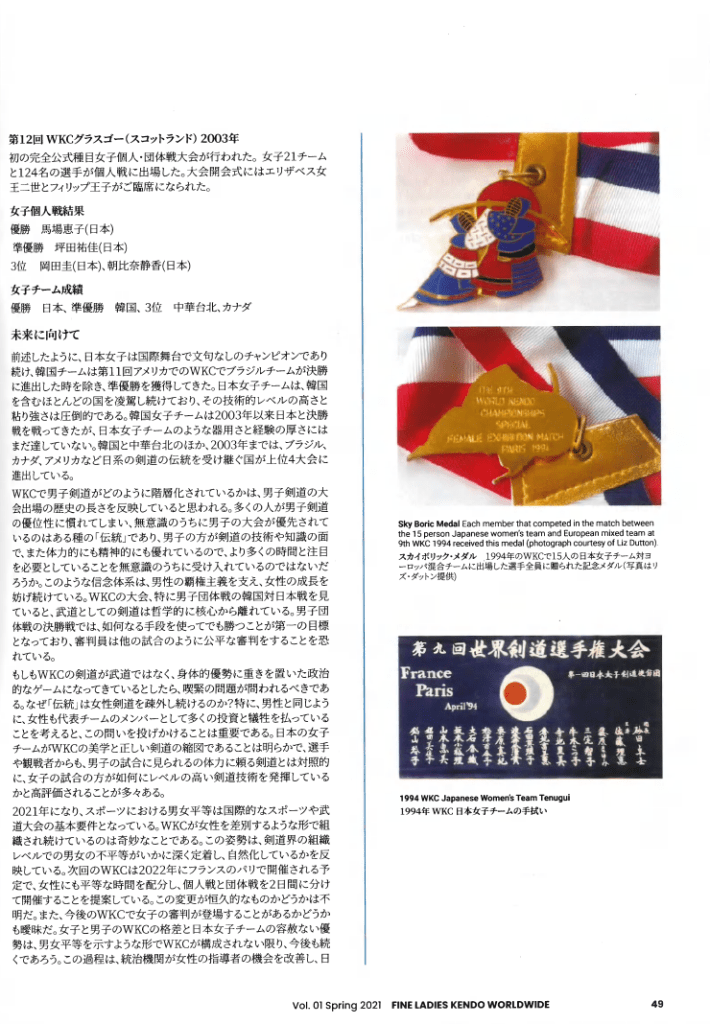
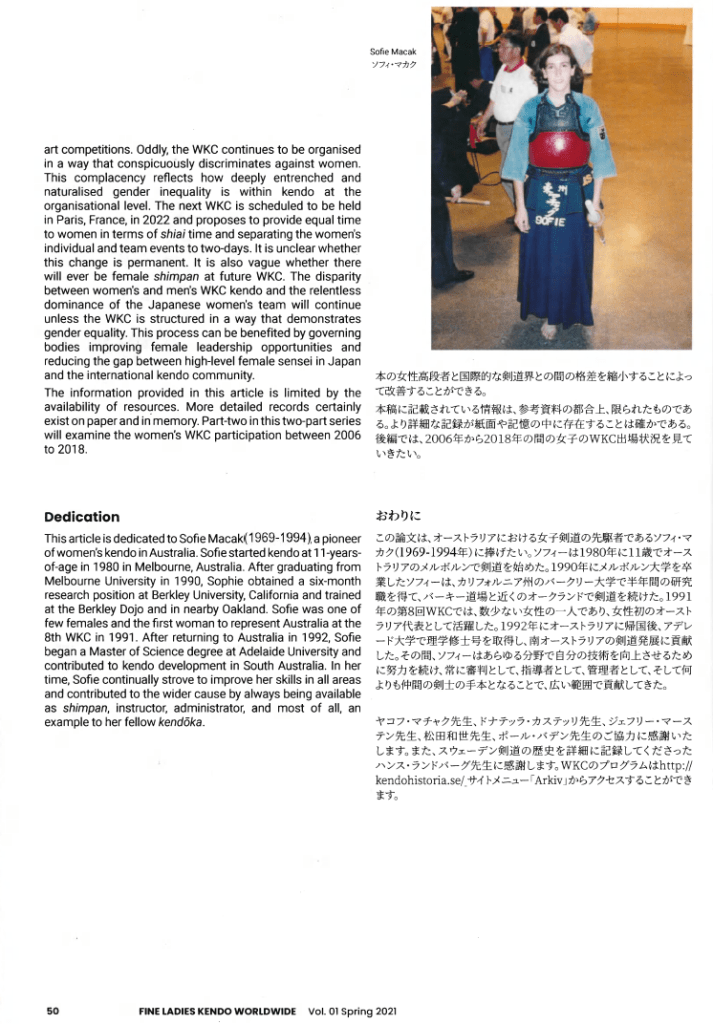
*Please note that Part 2 of this article series corrected information regarding women’s participation in official events to include Sweden’s Solveig Malmkvist (1970 WKC) and Switzerland Florence Morel (1985 WKC).
Fine Ladies Kendo Worldwide Magazine is the first (and only) women’s kendo magazine. It was launched in 2020 by CEO/Editor Matsuda Kazuyo and her team in response to the growing population of women practising kendo worldwide and a need for for a better medium that provides information promoting kendo for women practitioners worldwide.
This magazine is significant as women are under-represented in the kendo media. Notably women’s kendo perspectives and achievements are minimised and high graded Japanese female sensei are generally absent from mainstream kendo media platforms.
This magazine is an inspirational resource as it acknowledges women’s kendo histories and accomplishments, women specific topics, and importantly it bridges a gap between Japan and the global kendo community as articles are published in both Japanese and English. Click on the link below to find out more and to subscribe.
 Kate Sylvester Perspectives