This post reflects on the deeper issues surrounding the recent dialogue on social media that problematised the exclusion of 7 dan women in the 7 dan (male) category and refusal to introduce a women’s 7 dan division at a prominent international kendo competition taking place in Western Europe next month.
At this particular competition, the individual category that 7 dan women can compete in is currently the 4 to 7 dan class. The reason why it is important for 7 dan women to participate exclusively in a 7 dan category is because it represents high level skill and status. The organisers of the event, or their advisers, have allegedly explained that there are not enough 7 dan women to have their own distinguished division and women should be excluded from the men’s event based on the difference in flow of chi (ki) between female and male kendo practitioners. This pairing of “opposites” in competition would apparently create an awkward incompatibility. I am intrigued. What would this circus of chi (ki) look like in the competitive arena?
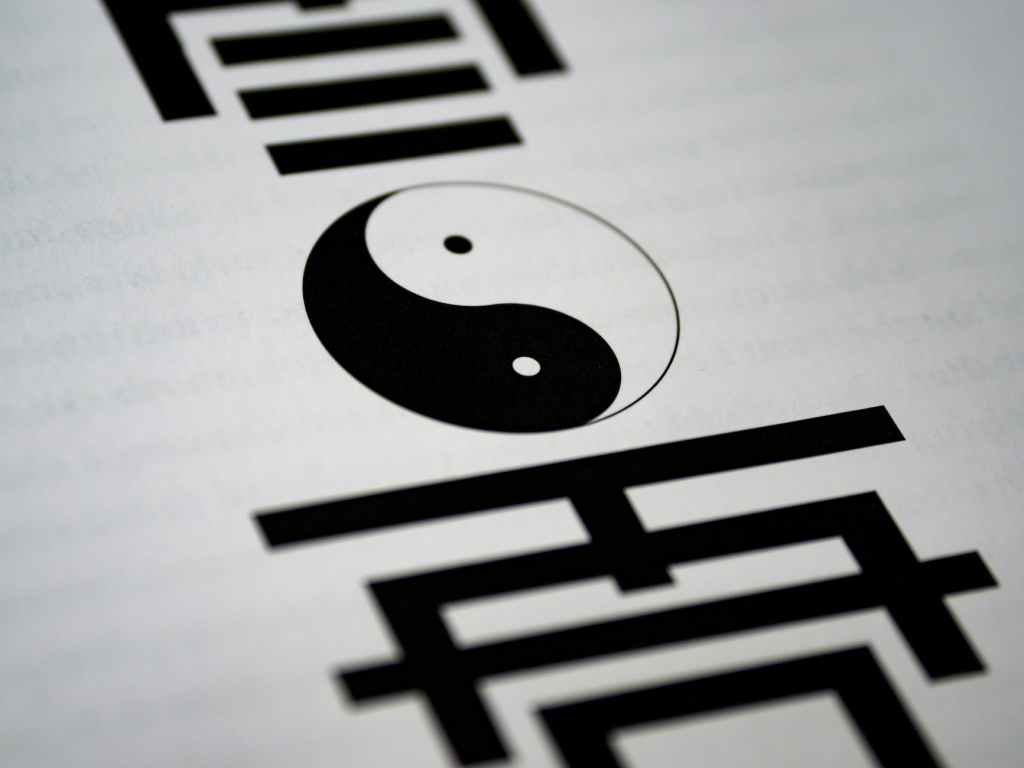
As the latter reasoning is a dubious claim, I am guessing that the organisers are making reference to chi (ki) and the yin (female) and yang (male) energy philosophy. This type of reasoning is an example of mythmaking that organisations draw on to justify a preferencing that maintains inequity in kendo. Perhaps the underlying logic is that women’s presence in a 7 dan event would cause an air of malaise for some men. After all a woman could expose a man’s kendo weaknesses and be respected as equal in status in the sporting arena. Surely that is actually good for men’s kendo learning and the kendo community in general. My thoughts of chi (ki) and the yin (female) and yang (male) energy in relation to kendo will be discussed later in this post.
I will now discuss the deeper underlying issues that permit this type of open discrimination in kendo. It connects with women’s status in kendo. Except for Fine Ladies Worldwide Magazine, kendo media platforms tend to be male dominant. On social media, women’s kendo is under represented and gender related topics invite some positive consideration, but often women’s kendo and issues connected to gender are ignored, trivialised or considered inappropriate for social media.
Sexism in kendo is very real, although silenced, it can impose deleterious conscious and unconscious consequences on women and girls. Compared to men, women’s status building opportunity is restricted or denied. Power and sexual harassment/violence most often affects females more than males, but boys and men lower in status are also impacted by the male dominant power structure in kendo.
In the context of this post, let’s reflect on how women’s opportunities are minimised. At the World Kendo Championships, female referees have been absent, there are few female coaches, women have had less time allocated to their events, and the Japanese women’s team remain untouchable within a higher realm of excellence. At the European Kendo Championships in Germany 2022, I felt that men’s level of kendo is developing more rapidly than women’s. That is not to say that women’s kendo is not developing at all and there are some formidable female kendo athletes in Europe.
Nevertheless, there are very few active female kendo practitioners senior in age and grade outside of Japan.
Many believe kendo provides equal opportunity and women should not complain about inequality but rather remember how far women have come and accept patriarchy as kendo “tradition” and rather focus on their improvement. Sexism permeates throughout kendo and that etiquette is emphasised in kendo makes it sometimes difficult for women to be conscious of inequality or problematise issues publicly.
But why is the general level of men’s kendo so much better (particularly the new generation) and so few senior women in age and grade kendo outside of Japan?
Due to the access to power, support, and opportunity that is often more readily available to men (and perhaps some unpleasant situations), a reason for the decline with age, may be that women lose interest and passion, prioritise other things, or find alternative endeavours more rewarding. I think these women are wise. After all how much power and status is really available to women in kendo? Maybe if my feminist self was wiser, I would find another hobby as many issues in kendo are sluggishly slow to change or ignored to preserve male privilege and “tradition”.
I do, however, love the feeling of doing kendo and cherish my kendo friends and teachers. I am also fortunate to have a highly skilled female sensei in Japan whose friendship and, at times, brutal feedback keeps my motivation high to continue striving in kendo. I am grateful to kendo for the many wonderful opportunities and the personal development I have achieved. However, I strongly feel that kendo can do better by women and girls at a greater speed than it is currently.
Coming back now to this unsound gendered chi (ki) flow logic, I call attention to it as an example of how “traditional” concepts are misconstrued to marginalise women and diminish their kendo prowess at practical and symbolic levels in kendo. I suspect the organisers, or their advisers, have constructed their perspective based on biased understandings of chi (ki) and the yin and yang principle. Perhaps they also hold romanticised ideas on samurai culture and seek to preserve male ego and entitlement in kendo. This is just my speculation, however, but it may be more logical than declaring that insufficient numbers and a gendered chi (ki) flow are valid reasons for denying women high status competitive opportunity.
I will share my perspectives on chi (ki) flow and its connection to yin and yang in a kendo context. Many of us kendo practitioners work arduously on developing our chi (ki) through various details of kendo. Most commonly through our kiai (shout) and seme (pressure). The pressure and intention we apply and draw out from our opponents is driven by our chi (ki) flow.
As we know, yin and yang is originally a Chinese philosophical concept that describes opposite but interconnected forces. Yin is the negative, passive, dark (female) principle and yang the positive, active, light (male). Yin is most commonly associated with weakness and yang with strength, although both energies can faulter in excess or control the other. Energy flow underpins the principles of many martial arts but these philosophies are also culturally particularistic.
In some Asian cultures, women and men are observed as yin and yang characters in socio-political history. This principle has socialised gender and social configurations in some Asian societies. But how applicable is this gender binary to kendo in Europe, or even in Japan since kendo emphasises masculine codes and the utilisation of both passive yin and active yang chi (ki) for our energy and skill to manifest as strongly as possible.
Due to imbalanced gender ratios in kendo, women most frequently train with men, under the male-guided principles of kendo. I am perplexed that female chi (ki) can manifest in women through kendo as kendo is historically linked to male-oriented ideals and these dominate our kendo learning. Perhaps some smaller framed women (and some men) apply passive yin chi (ki) energy when fighting women or men that overuse physical force.
In the case of women’s yin chi (ki) energy application, it is not drawn on because it is an inherent characteristic of women’s kendo, but rather called upon as a strategy to defeat an opponent. I consider that we embody a spectrum of both yin and yang energy levels. We are socialised to have one type of energy dominate our disposition under a gender norm framework. We are, however, all unique individuals. Our kendo is different and the utilisation of our energy depends on our opponent and our level of kendo aptitude.
From my kendo experience, some kendo women use more active yang chi (ki) energy than some men, and, some men are more passive in kendo than some women. Some high-level female and male kendo practitioners have a balance of both energies making them formidable artisans of kendo that can achieve the grade of 7 dan or higher. I would argue the ability to utilise passive yin chi (ki) in kendo, coupled with active yang chi (ki) energy is of a superior level of kendo.
The intuitive skill, control of ego, and technical mastery bolstered by yin chi (ki) energy rises above excessive active yang chi (ki) that is applied more often by men through physically dominating an opponent with ego, body-size, and muscle power. I would argue that an unbridled use of yang energy is a strategy to defeat an opponent and not because yang chi (ki) energy is naturally a characteristic of men’s kendo.
To deny women access to prestigious categories in kendo competitions on the grounds of insufficient numbers and gendered chi (ki) flow differences, are redundant logics and openly discriminatory. Most women’s kendo competitions have started with small numbers and grown. In addition, often women and men train, compete, and grade together and I am yet to see this alleged gendered difference in chi (ki) flow cause chaos on the floor.
It may just be that the organisers of the competition are unaware that their decision is preferential and that it stultifies women’s kendo development. That being the case, such unawareness or inability to reflect on such issues illustrates that an unconscious gender bias exists in kendo and that in itself is deeply problematic for women and men, boys and girls.
Gender inequality in kendo affects everyone. It limits learning and personal development opportunity for both sexes, it can morally corrupt those with power and have deleterious outcomes for practitioners lower in status. Without a greater awareness of the gender blind spots in kendo and proactive strategies to improve gender equality, kendo will not evolve with societal change and women’s kendo will not achieve it’s potential.
 Kate Sylvester Perspectives